Vaginal Estrogen: When You Need It, How It Works, and What to Expect
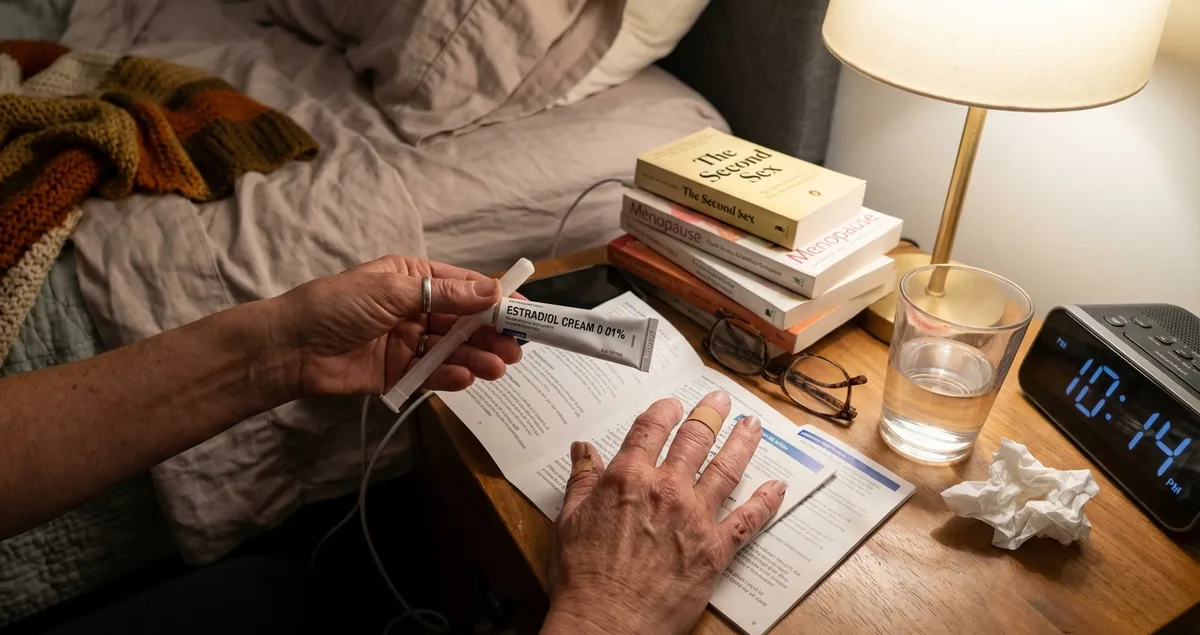
A practical, evidence-based guide to vaginal estrogen therapy. Learn how it works, what forms are available, how to use it, and what to expect. For women considering treatment for genitourinary syndrome of menopause.
Key Takeaways
- Vaginal estrogen is a low-dose, localized hormone therapy that treats genitourinary syndrome of menopause (GSM) with minimal systemic absorption
- It comes in three main forms: cream, ring, or vaginal tablet, each with distinct advantages and application methods
- Clinical evidence shows vaginal estrogen is highly effective (superior to placebo in symptom improvement) and safe, even for breast cancer survivors
- Misconceptions about systemic hormone therapy risks don't apply to vaginal estrogen due to its localized delivery
- Most women notice meaningful improvement within 2-3 weeks, with full tissue restoration taking 3-6 months
- Long-term use is considered safe; this is likely a maintenance therapy rather than short-term treatment
Why This Conversation Matters
Vaginal dryness, painful intercourse, recurrent urinary tract infections, and urinary urgency are common enough to affect the majority of menopausal women. Yet many suffer in silence, assuming these symptoms are an inevitable part of menopause they simply have to endure. Some feel too embarrassed to mention them to their doctor. Others are deterred by confusion about hormone therapy and its risks.
The result: a treatable condition goes untreated, often for years. Sexual function declines. Relationship satisfaction suffers. Urinary tract infections become routine. Women restrict their activities. Their confidence erodes.
This doesn't have to happen.
Vaginal estrogen is one of menopause medicine's most effective, evidence-based, and underutilized treatments. It directly addresses the root cause of genitourinary syndrome of menopause. It is not the same as systemic hormone replacement therapy, and the safety profile is distinct and reassuring.
This guide explains what vaginal estrogen is, how it works, what forms are available, how to use each one, what results you can expect, and how to navigate the practical and emotional aspects of starting treatment.
Understanding Genitourinary Syndrome of Menopause (GSM)
Vaginal estrogen treats a condition called genitourinary syndrome of menopause, or GSM, a term that encompasses a cluster of symptoms affecting the vagina, vulva, bladder, and urethra.
GSM is caused by declining estrogen and androgen during the menopausal transition. The condition is common: approximately 60-75% of postmenopausal women experience at least some symptoms, though not all seek treatment. About 40-54% report symptoms significant enough to affect their quality of life.
Symptoms include:
- Vaginal dryness: A persistent dry, uncomfortable feeling that doesn't resolve with lubrication during sex
- Vaginal irritation and burning: Itching, burning, or a sandpaper-like sensation
- Painful intercourse (dyspareunia): Discomfort during or after sex, sometimes severe enough to make intercourse impossible
- Reduced vaginal elasticity: Tightness, shortened vaginal canal, feeling of narrowing
- Urinary symptoms: Urgency, frequency, incontinence, or pain with urination
- Recurrent urinary tract infections: Thinned tissue becomes more susceptible to infection
Not every woman experiences all of these. The presentation varies. Some women primarily experience dryness; others are most bothered by pain with intercourse or recurring UTIs.
The unifying factor: all of these symptoms result from tissue thinning and changes in the vaginal ecosystem caused by low estrogen.
How Estrogen Shapes Vaginal Tissue
To understand how vaginal estrogen works, it helps to know what healthy estrogen-rich vaginal tissue looks like and what happens when estrogen drops.
When estrogen levels are robust, the vaginal tissue is:
- Thick, well-hydrated, and elastic
- Well-supplied with blood flow
- Rich in glycogen, which feeds protective lactobacilli (good bacteria)
- Coated with natural lubrication from glandular secretions
- Acidic (pH around 3.8-4.5), which prevents harmful bacteria from overgrowing
During menopause, estrogen production drops by approximately 95%. The vaginal tissue responds rapidly and dramatically:
- The epithelial layer (the outer lining) becomes thin and fragile
- Blood flow decreases, reducing oxygen and nutrient delivery
- Glandular secretions decline sharply, reducing natural lubrication
- Glycogen stores diminish, shifting the balance of vaginal bacteria
- The vaginal pH increases (becomes more alkaline), allowing pathogenic bacteria to thrive
- The tissue loses elasticity, the vagina becomes shorter and narrower
These changes happen regardless of whether a woman is symptomatic. Some women's bodies tolerate the transition better; others notice profound discomfort within months of their last period.
Without treatment, the tissue atrophy is progressive. Thinner tissue becomes more fragile. Blood flow decreases further, limiting the tissue's ability to repair itself. Some women develop recurrent UTIs. Others find intercourse becomes painful enough to avoid, which ironically worsens tissue health by reducing blood flow and stimulus for tissue maintenance.
Vaginal estrogen reverses this process by directly replenishing the hormone the tissue needs.
How Vaginal Estrogen Works
Vaginal estrogen is a localized hormone therapy. It delivers estrogen directly to the vaginal tissue in low doses, rather than circulating throughout the entire body like systemic hormone replacement therapy.
When applied to the vagina, estrogen:
- Thickens the epithelial layer, restoring structural integrity
- Restores blood flow to the tissue
- Stimulates glandular secretions, returning natural lubrication
- Rebuilds glycogen stores, allowing beneficial bacteria to re-establish
- Normalizes vaginal pH, creating an inhospitable environment for pathogenic bacteria
- Restores elasticity and tissue flexibility
The result: vaginal tissue becomes thick, well-hydrated, elastic, and protective again. Dryness resolves. Discomfort improves. Urinary symptoms often improve. Recurrent UTI risk decreases.
Clinical evidence supports these outcomes. Systematic reviews comparing vaginal estrogen to placebo show superior improvement across dryness, dyspareunia, urinary symptoms, and objective measures like vaginal pH and epithelial thickness.
Forms of Vaginal Estrogen: Cream, Ring, and Tablet
Vaginal estrogen comes in three main formulations, each with distinct application methods and advantages.
Vaginal Estrogen Cream
Creams like Estrace (estradiol cream) or Premarin (conjugated estrogens) are applied directly into the vagina using a small plastic applicator.
How to use:
During the initial phase: Insert the full applicator dose (typically 0.5-1 gram) into the vagina daily, usually at bedtime. This continues for 2-4 weeks.
After the initial phase: Reduce to twice weekly for maintenance, usually indefinitely or until symptoms warrant adjustment.
Advantages:
- Most women find cream intuitive to apply
- Quick symptom improvement (often within 2-3 weeks)
- If side effects occur, you simply stop using it
- Most affordable option
- Flexible dosing (you can adjust applicator amounts if needed)
Disadvantages:
- Daily application initially requires consistency
- Some women find vaginal insertion uncomfortable or messy
- Leakage can occur, particularly overnight (some women wear a panty liner)
- The applicator creates plastic waste
Who it's for: Women comfortable with daily insertion, looking for quick results, or wanting flexibility.
Vaginal Estrogen Ring (Estring)
The Estring is a flexible silicone ring about the diameter of a diaphragm. It sits in the upper vagina (most women don't feel it after insertion) and releases a consistent low dose of estrogen over three months.
How to use:
Pinch the ring between your thumb and index finger and insert it into the vagina, high up. It stays in place continuously. You remove it after 90 days and insert a fresh ring. Some women remove it for cleaning or to feel more comfortable during menstruation; this is fine and doesn't affect efficacy.
Advantages:
- Insert once every three months (no daily application)
- Most women forget it's there once inserted
- Very low systemic absorption
- No leakage concerns
- Consistent, steady hormone delivery
Disadvantages:
- Higher upfront cost than cream
- If side effects occur or it doesn't work well, you can remove it, but it's not instantly reversible
- Some women experience discomfort or awareness of the ring
- Requires comfort with vaginal insertion
Who it's for: Women wanting the simplicity of infrequent application, those willing to pay more for convenience, or those who find daily insertion tedious.
Vaginal Estrogen Tablet (Vagifem)
Vagifem is a small vaginal tablet containing estradiol. It's inserted with your finger into the vagina and dissolves, releasing estrogen.
How to use:
During the initial phase: Insert one tablet daily, high into the vagina, for 14 days (about two weeks).
After the initial phase: Insert one tablet twice weekly for maintenance.
Advantages:
- Precise, consistent dose
- Compact and portable (easy to travel with)
- No applicator (less waste)
- Quick insertion (takes seconds)
- Comparable efficacy to cream and ring
Disadvantages:
- Requires twice-weekly application (more frequent than ring, less frequent than initial cream)
- Slightly more expensive than cream
- Requires finger insertion (some women don't like this)
- Less flexibility if you want to adjust dose
Who it's for: Women wanting precision and portability without daily application, or those who prefer finger insertion to applicators.
What to Expect: Timeline and Outcomes
Different women experience different timelines, but research and clinical experience offer a rough guide.
Weeks 1-2
Most women don't notice much change in the first one to two weeks. Some notice immediate reduction in discomfort, but this is less common. The tissue is beginning to thicken and rebuild, but changes aren't yet significant enough to feel dramatically different.
Weeks 2-3
This is when most women start noticing improvement. Dryness decreases noticeably. Irritation and burning often improve. If pain during intercourse was a concern, some improvement is usually evident by week three.
Some women report that sexual pleasure increases in the first few weeks, not because tissue is fully restored, but because reduced discomfort removes the psychological bracing that accompanies pain.
Weeks 4-8
Improvement continues. Most women report substantial symptom resolution by week four. Natural lubrication returns. Tissue elasticity improves noticeably. Sexual intercourse, if it was previously painful, is usually significantly more comfortable.
Urinary symptoms often improve during this phase, though sometimes lag slightly behind tissue improvements.
Months 3-6
Tissue continues to thicken and restore. By three months, most women report near-complete symptom resolution. The vagina feels more normal, more elastic. Sensation and responsiveness during sex often improve as tissue fully recovers.
Full tissue restoration takes time. The benefits continue to accrue even as acute symptoms resolve. After six months of treatment, many women report even greater improvement than they noticed at the one-month mark.
Long-Term (Ongoing)
Vaginal atrophy is a permanent consequence of low estrogen. If you stop treatment, symptoms typically return within weeks to months. This doesn't mean you must treat forever, but it does mean most women will need ongoing maintenance therapy postmenopause.
The typical long-term approach: Most women continue twice-weekly application of cream, ring placement every three months, or twice-weekly tablets indefinitely. Some women try interval treatment (using it only when symptoms flare). Others experiment with lower maintenance doses.
Work with your doctor to find what's sustainable for you.
Is Vaginal Estrogen Safe?
The safety question stops many women from pursuing treatment. This is understandable: "Isn't hormone therapy risky?" But the answer for vaginal estrogen is distinctly reassuring.
Systemic Absorption Is Minimal
This is the key difference between vaginal estrogen and systemic hormone replacement therapy. Vaginal estrogen is applied locally to the vagina. Very little is absorbed into the bloodstream.
Studies measuring serum estrogen levels in women using Estring, vaginal tablets, and other low-dose formulations show minimal increase in blood estrogen. In most cases, serum levels remain within the postmenopausal range even during treatment.
By contrast, systemic HRT (pills, patches, or injections) is designed to raise serum estrogen throughout the body. This systemic exposure carries specific risks (increased breast cancer risk, blood clot risk, etc.) documented in large trials.
Because vaginal estrogen doesn't significantly raise serum estrogen, these systemic risks don't apply in the same way.
Endometrial Safety
One specific concern: does vaginal estrogen increase the risk of endometrial hyperplasia (overgrowth of uterine lining)?
Research addressing this question is reassuring. Low-dose vaginal estrogen does not increase the risk of endometrial hyperplasia or uterine cancer. Studies examining endometrial thickness in women using vaginal estrogen found no concerning changes.
The current recommendation: Use the lowest effective dose (typically twice weekly after an initial daily phase). Most women don't require endometrial monitoring, though after one year of treatment, discuss with your doctor whether evaluation is warranted for your specific situation.
Breast Cancer Risk
This is a critical question for women with a personal history of breast cancer. Some women avoid vaginal estrogen out of concern for recurrence.
Recent research is reassuring. Multiple systematic reviews and meta-analyses found that vaginal estrogen use in women with a history of breast cancer is not associated with increased recurrence risk, increased cancer-specific mortality, or increased overall mortality compared to those who did not use vaginal estrogen.
This does not mean your oncologist will automatically prescribe it (individual circumstances and guidelines vary), but the safety data is robust. If you have a history of breast cancer and are considering vaginal estrogen, this is a conversation worth having with both your oncologist and gynecologist. Do not assume you are automatically excluded from treatment.
Other Considerations
Women with a history of endometrial, ovarian, or cervical cancer also show no increased recurrence risk with vaginal estrogen in available studies.
In 2024, the FDA removed the boxed warning that previously appeared on vaginal estrogen products, acknowledging that the safety profile of local vaginal estrogen is distinct from systemic hormone therapy.
Common side effects are rare and usually mild: occasional vaginal irritation, spotting, or headache. Serious adverse events are uncommon.
The Bottom Line on Safety
Low-dose vaginal estrogen has an excellent safety profile. It is not the same as systemic hormone replacement therapy. The evidence supports its use across most populations, including those historically considered higher-risk.
If you have specific health concerns, bring them to your doctor. But do not decline treatment out of generalized fear of "hormones."
Common Misconceptions (and Why They're Misleading)
Because vaginal estrogen is a hormone therapy, it often gets lumped together with systemic hormone replacement therapy in women's minds. This conflation leads to unnecessary hesitation.
Misconception 1: "Vaginal estrogen is just HRT in a different form."
Reality: Vaginal estrogen and systemic HRT are fundamentally different. Systemic HRT raises serum hormone levels throughout the body and is used to treat hot flushes, night sweats, and other systemic menopausal symptoms. Vaginal estrogen is a localized therapy with minimal systemic absorption, used exclusively for genitourinary symptoms. The risks, benefits, and appropriate use cases are distinct.
Misconception 2: "If HRT increases breast cancer risk, vaginal estrogen probably does too."
Reality: The breast cancer risk associated with systemic HRT (specifically combined estrogen-progestin therapy) is related to circulating hormone levels. Vaginal estrogen doesn't significantly elevate serum estrogen, so this risk doesn't apply in the same way. Research in breast cancer survivors supports the safety of vaginal estrogen.
Misconception 3: "Vaginal estrogen will absorb into my bloodstream and cause systemic effects."
Reality: Systemic absorption is minimal. Studies show that vaginal estrogen maintains serum levels in the postmenopausal range. The aim is specifically to treat the vagina, not to change systemic hormone levels.
Misconception 4: "If I start vaginal estrogen, I'll be stuck on it forever."
Reality: Vaginal atrophy is a permanent consequence of low estrogen, so symptoms will return if you stop treatment. But you're not locked into treatment. Some women use it intermittently. Others adjust dose or frequency. Work with your doctor to find what's sustainable. But understand that maintenance therapy (rather than a time-limited course) is typical.
Misconception 5: "Doctors don't recommend vaginal estrogen because it's unsafe."
Reality: Vaginal estrogen is the gold standard treatment for GSM endorsed by major medical organizations (American College of Obstetricians and Gynecologists, American Urological Association, etc.). The reason many women don't hear about it is because women are reluctant to bring up sexual or urogenital symptoms, doctors are under time constraints, and these issues have historically been underaddressed in menopause care. It's not an evidence problem; it's a communication problem.
Starting Vaginal Estrogen: Practical Steps
Step 1: Assess Your Symptoms
Before seeing your doctor, think clearly about what you're experiencing. Is it primarily dryness? Painful intercourse? Urinary symptoms? Recurrent infections? How often does it bother you? How much does it affect your quality of life or sexual function?
This clarity helps your doctor understand the severity of your symptoms and choose the most appropriate initial treatment.
Step 2: Bring It Up with Your Doctor
Many women delay this conversation because of embarrassment. It's worth noting: your gynecologist, primary care doctor, or menopause specialist hears this every day. They understand it's a medical issue, not something to feel shame about.
If you're uncomfortable bringing it up verbally, write it down and hand it to your doctor. Many practices now have symptom intake forms that include genitourinary questions. Use these to document your experience.
Step 3: Get a Diagnosis
Your doctor will ask questions about your symptoms and may do a brief physical exam to rule out other causes (infections, dermatological issues, atrophic vaginitis from other causes, etc.). If you have a personal history of any gynecologic cancer, mention it so your doctor can discuss any specific considerations.
Step 4: Choose a Formulation
Discuss which form of vaginal estrogen suits your preferences and lifestyle. Some doctors have a default recommendation; others ask about your preference.
- Choose cream if: You want the most affordable option, fastest results, or most flexibility
- Choose ring if: You want the simplicity of infrequent application and don't mind the higher cost
- Choose tablet if: You want precision dosing and portability without daily application
Step 5: Start and Commit to the Regimen
Whichever form you choose, consistency matters. During the initial phase (daily cream application, or whatever your regimen), mark it on your calendar or set a phone reminder. Most women find it helpful to do insertion at the same time each day (often bedtime).
During the initial phase, expect to feel some improvement by week two, with more substantial improvement by week three or four.
Step 6: Follow Up at 4 Weeks
Contact your doctor at the four-week mark to discuss how you're doing. If you're experiencing meaningful improvement, you're on track. If not, discuss:
- Whether symptoms warrant a dosage adjustment
- Whether a different formulation might work better (cream to ring, for example)
- Whether additional measures might help (combination therapy with a moisturizer, for example)
- Whether other factors might be contributing (depression, relationship stress, other medical conditions)
Step 7: Plan for Long-Term Management
Vaginal atrophy is a chronic consequence of low estrogen. Once you stop treatment, symptoms typically return. Discuss with your doctor what long-term maintenance looks like for you.
Most women continue twice-weekly application indefinitely (or as long as they want to maintain comfort). This is manageable for most people and becomes automatic over time.
Some women try interval treatment (using vaginal estrogen only when symptoms flare). Others adjust dose based on how they're feeling. The goal is finding an approach that you can sustain comfortably.
Combining Vaginal Estrogen with Other Treatments
Vaginal estrogen often works best as part of a comprehensive approach.
Vaginal Moisturizers
Many women use vaginal estrogen plus a regular vaginal moisturizer (like Hyalo Gyn or Replens). The moisturizer provides ongoing hydration between estrogen applications. This combination often yields better results than either treatment alone.
Lubricants During Sex
Using a lubricant during intercourse (in addition to vaginal estrogen therapy) reduces friction and discomfort during the initial treatment phase, when tissue is still recovering. Some women continue using lubricant indefinitely even after tissue improves, simply because they prefer it.
Water-based options like K-Y Jelly are widely available and compatible with all vaginal preparations. Silicone-based products (like ID Millennium or Pink) last longer but may stain fabric. Avoid oil-based lubricants if you're using vaginal creams, as they can interact with the applicator.
Systemic HRT
Some women are already taking systemic HRT (a pill, patch, or other delivery method) for hot flushes or other systemic menopausal symptoms. Adding local vaginal estrogen on top of systemic HRT is safe and common. Discuss dosing with your doctor to ensure there's no unintended overlap.
Sexual Activity
Regular sexual activity improves blood flow to vaginal tissue and stimulates natural lubrication. Maintaining sexual contact (with adequate lubrication if needed) supports ongoing tissue health. This is not metaphorical self-care; it's direct tissue maintenance.
Relationships and Intimacy
Genitourinary symptoms don't exist in isolation. They affect sexual function, relationship satisfaction, and self-image.
Talking with Your Partner
For many women, bringing up sexual pain or discomfort is harder than bringing it up with a doctor. Cultural messaging suggests women shouldn't be uncomfortable discussing their bodies, let alone sexual dysfunction. Add menopause, and shame multiplies.
Many partners don't understand what's happening. Some assume reduced sexual interest reflects waning attraction. Others feel rejected. A few respond with unkindness.
Direct communication helps. Explain that this is a medical condition caused by hormonal change, not a reflection of attraction or desire. Share this article or similar educational material so your partner understands the physiology. Talk about your treatment plan and the expected timeline for improvement.
Some concrete steps:
- Schedule sex initially so you're not caught off-guard
- Use adequate lubrication (in addition to treatment)
- Prioritize arousal and connection over performance
- Let your partner know what feels good and what doesn't
- Set expectations that improvement may be gradual (dryness may improve in weeks, but full tissue restoration takes months)
If your partner responds with unkindness, refuses reasonable accommodation, or continues pressuring you for sex when intercourse is painful, that's a relationship concern beyond the scope of this article. But know that partners who are willing to problem-solve as a team often find that addressing GSM together strengthens their relationship.
Sex therapists and menopause health specialists also exist for couples struggling with this transition.
Rebuilding After Avoidance
Many women respond to pain by stopping having sex. This feels safer than enduring discomfort. It also removes conflict if a partner has responded poorly to refusal.
The problem: without regular sexual activity and the blood flow it brings, vaginal tissue atrophies further. Pain increases. The interval between sexual encounters widens. Eventually, the thought of resuming intercourse becomes psychologically daunting.
Starting treatment breaks this cycle. Once dryness and pain begin improving, rebuilding sexual activity takes intentionality. Start slowly. Use generous lubrication. Focus on arousal and connection rather than performance. Let your body lead.
Many women report that the process of addressing GSM together with their partner, and gradually reclaiming their sexual life, brings unexpected intimacy and renewed confidence.
When to See a Doctor
Seek evaluation for:
- Significant vaginal dryness causing discomfort or itching
- Pain during intercourse that's affecting your sex life or quality of life
- Recurrent urinary tract infections (more than one per year)
- New or worsening urinary urgency, frequency, or incontinence
- Unusual vaginal discharge or bleeding
- Vaginal symptoms that don't improve with over-the-counter moisturizers after two weeks of consistent use
Also see your doctor if you're considering vaginal estrogen and have a personal history of breast cancer, uterine cancer, or blood clotting disorders. These don't necessarily exclude you from treatment, but they warrant individual discussion.
How Menoa Helps
Menoa is designed to help you understand menopause clearly and navigate it confidently. This article is part of that mission.
If you're tracking symptoms across multiple domains (dryness, hot flushes, mood changes, sleep disruption), Menoa's symptom tracker helps you log patterns over time and share them with your doctor. Patterns matter: your doctor needs to know whether dryness improved after starting treatment, or whether it's worsening despite intervention.
Menoa also provides complementary articles on genitourinary syndrome of menopause, estrogen changes during menopause, and sexual wellness during the menopausal transition.
FAQ
Q: Is vaginal dryness and pain during sex a normal part of menopause?
A: Vaginal dryness is normal in the sense that it's very common (affecting 60-75% of menopausal women) and results from expected hormonal changes. But "normal" doesn't mean "something you have to accept." Many common menopausal symptoms are highly treatable. You don't deserve to live with painful intercourse or chronic dryness.
Q: How long will I need to use vaginal estrogen?
A: Vaginal atrophy is a permanent consequence of low estrogen, so symptoms typically return if you stop treatment. Most women continue maintenance therapy indefinitely (usually twice weekly). Some try intermittent use. The goal is finding a sustainable approach. Long-term use (years or decades) of low-dose vaginal estrogen is considered safe based on current evidence.
Q: Can I use vaginal estrogen if I had breast cancer?
A: This requires individual discussion with your oncologist and gynecologist, as guidelines vary. But current evidence suggests vaginal estrogen is safe even for breast cancer survivors, with no increased recurrence risk. Do not assume you're automatically excluded. Bring it up with your doctor.
Q: What if vaginal estrogen doesn't work?
A: If you're not seeing improvement by week four, talk to your doctor about dosage adjustment, switching formulations, or adding complementary treatment (moisturizer plus estrogen, for example). Sometimes the issue is an underlying condition (depression, relationship problems, other medical factors) that's contributing to symptoms. Your doctor can help investigate.
Q: Can I use vaginal estrogen while on systemic HRT?
A: Yes. Many women take both. Systemic HRT addresses hot flushes and other systemic symptoms; vaginal estrogen addresses genitourinary symptoms. Discuss with your doctor to ensure proper dosing and monitoring.
Q: Is vaginal estrogen different from systemic hormone replacement therapy (HRT)?
A: Yes, fundamentally. Systemic HRT raises serum hormone levels throughout the body and is used for hot flushes, night sweats, and other systemic menopausal symptoms. Vaginal estrogen is localized, with minimal systemic absorption, used exclusively for genitourinary symptoms. The risks, benefits, and appropriate populations differ. Do not confuse them.
Q: How quickly will I feel better?
A: Most women notice improvement in dryness and irritation within two to three weeks. Pain during intercourse often improves within four weeks. Full tissue restoration takes three to six months, so benefits continue to accumulate even after acute symptoms resolve.
Q: What if I want to get pregnant postmenopause?
A: Vaginal estrogen doesn't affect fertility (postmenopausal women are not fertile regardless). You can safely use vaginal estrogen if you want to maintain sexual function postmenopause.
Q: Are there any foods or supplements that help vaginal health?
A: Hydration matters (dehydration worsens dryness systemically). Regular sexual activity supports tissue health. Beyond that, no supplement has strong evidence for treating vaginal atrophy. Vaginal estrogen remains the most effective treatment for moderate to severe symptoms.
Q: My doctor only offered lubricant. Should I push back?
A: Lubricants help during sex but don't treat the underlying tissue atrophy. If you have persistent dryness, pain during intercourse, or urinary symptoms, ask your doctor about vaginal estrogen. If they're hesitant, you can ask why or seek a second opinion from a menopause specialist or gynecologist. Vaginal estrogen is first-line treatment for GSM according to major medical organizations.
Q: What if I'm uncomfortable with vaginal insertion?
A: Ospemifene (Osphena) is an oral medication for moderate to severe dyspareunia related to GSM. It's less effective than local estrogen for pure dryness, but it's an option if you really can't tolerate vaginal insertion. Discuss with your doctor.
Q: Does vaginal estrogen affect sex drive?
A: Not directly. But by reducing pain during intercourse and restoring tissue health, it often improves sexual satisfaction and desire. Many women report renewed sexual interest once pain is no longer a barrier.
Sources
- Vaginal Estrogen Safety for Genitourinary Syndrome of Menopause in Breast Cancer Survivors - American Urological Association
- Efficacy and Safety of Intravaginal Estrogen in the Treatment of Atrophic Vaginitis: A Systematic Review and Meta-Analysis - PMC
- A systematic review of the efficacy and safety of vaginal estrogen products for the treatment of genitourinary syndrome of menopause - PubMed
- Vaginal estrogen therapy for treatment of menopausal genitourinary syndrome among breast cancer survivors: a systematic review and meta-analysis - PMC
- Genitourinary Syndrome of Menopause (GSM) - Brigham and Women's Hospital
- Genitourinary Syndrome of Menopause - Johns Hopkins Medicine
- The Genitourinary Syndrome of Menopause: An Overview of the Recent Data - PMC
- Genitourinary Syndrome of Menopause - StatPearls - NCBI Bookshelf
- Genitourinary Syndrome of Menopause - American College of Obstetricians and Gynecologists
- Barriers to Effective Treatment of Genitourinary Syndrome of Menopause: A Qualitative Study on Patient Perspectives on Vaginal Estrogen - PubMed
- Overcoming resistance and barriers to the use of local estrogen therapy for the treatment of vaginal atrophy - PMC
- Estradiol (vaginal route) - Side effects & dosage - Mayo Clinic
- How and when to use vaginal oestrogen - NHS
- Top Myths About Vaginal Estrogen, Debunked by Experts - Conrad Pearson
- By the way, doctor: Is vaginal estrogen safe? - Harvard Health
- The Menopause Wiki - Vaginal Estrogen
- Genitourinary Syndrome of Menopause: AUA/SUFU/AUGS Guideline (2025) - American Urological Association
Terms in this article
A hormone produced primarily by your ovaries that regulates your menstrual cycle, supports bone and heart health, and affects mood, skin, and vaginal tissue. Estrogen levels decline sharply during menopause, causing many symptoms.
The point when you have gone 12 consecutive months without a period, marking the end of your reproductive years. It happens at 51 on average, usually between 45 and 55.
More articles
 Treatment & Decisions
Progesterone Therapy for Menopause: Forms, Benefits, and Side Effects
A comprehensive guide to progesterone therapy during menopause, including different forms, proven benefits for symptom relief, and side effects to monitor.
 Treatment & Decisions
Menopause Supplements: What Actually Works, According to Science
An honest look at popular menopause supplements. Which have evidence behind them, which do not, and what is safe to try.