Menopause Supplements: What Actually Works, According to Science
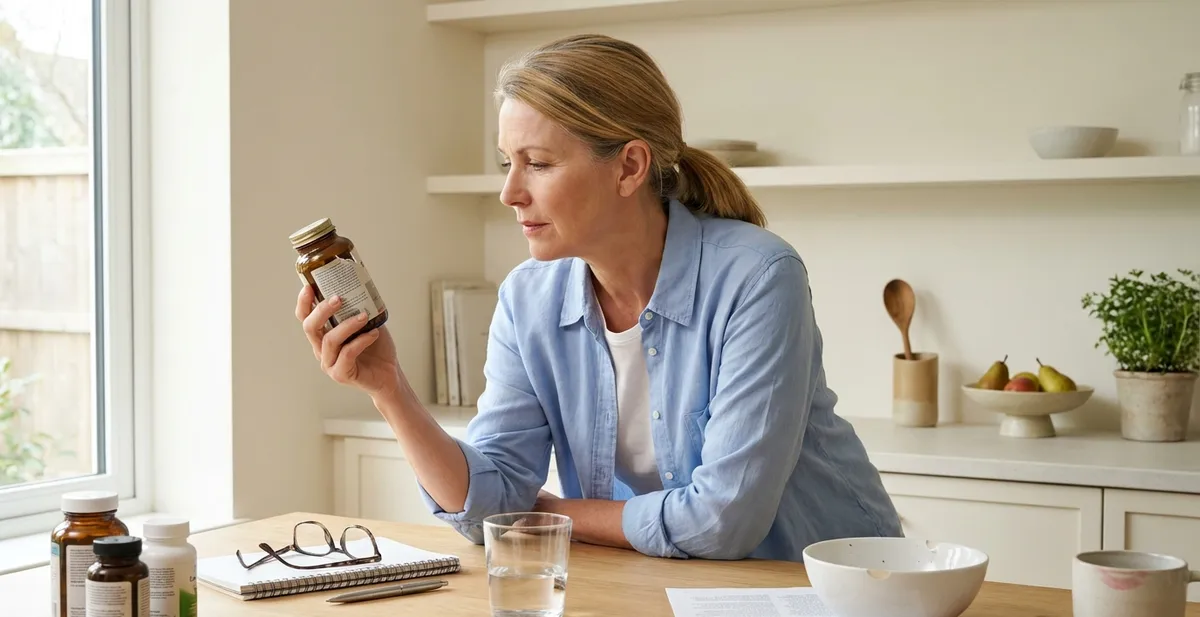
An honest look at popular menopause supplements. Which have evidence behind them, which do not, and what is safe to try.
Key Takeaways
The $40 supplement bottle on the shelf is making a promise: relief. But before you buy the black cohosh, soy isoflavones, or ashwagandha blend, it helps to know what the science actually supports. The evidence for menopause supplements is messier than marketing suggests. Some have solid backing (calcium, vitamin D, magnesium for sleep). Others show weak or mixed results (red clover, evening primrose, omega-3). Several are trending but essentially unproven (maca, collagen, ashwagandha). A few deserve skepticism (high-dose DHEA, kava). This guide cuts through the noise.
The $40 Bottle Question: Why Supplements Remain Popular
You're standing in the supplement aisle after a sleepless night of hot flashes. A bottle promises "menopause symptom relief." The label lists botanicals with names you can't pronounce. You buy it. Maybe it helps; maybe it doesn't. You never know if it was the supplement, time, placebo, or a change in stress.
This is the supplement trap: opaque efficacy combined with the human need to feel like you're doing something.
Menopause supplements are a $2 billion industry, with good reason. Hot flashes, night sweats, brain fog, and mood changes are real and sometimes severe. HRT works better than supplements for vasomotor symptoms, but not all women are candidates or choose to take it. Others use supplements alongside HRT, or before, or after. The question isn't whether supplements exist. It's which ones have evidence behind them.
The Supplement Problem: Regulation, Quality, and Placebo
Before we talk about specific supplements, understand the regulatory landscape. In the United States, dietary supplements are not FDA-approved the way drugs are. Manufacturers don't have to prove efficacy before sale. The FDA can only act if a product is proven unsafe.
This creates three real problems:
Quality varies wildly. Two bottles labeled "black cohosh 500mg" might contain vastly different amounts of active compounds. One study testing 57 commercial black cohosh products found they ranged from 0.7% to 15% of standardized extract content. The more expensive bottle isn't necessarily better.
Dosages in studies often don't match bottles. A trial showing benefit from magnesium glycinate at 400mg daily doesn't guarantee that your 250mg capsule will work.
Placebo effect is powerful in menopause. Studies comparing supplements to placebo often show benefits in both groups. Hot flashes naturally fluctuate. Stress and sleep matter enormously. A consistent daily ritual, even an inert one, can reduce symptoms through attention and expectation.
This doesn't mean supplements are all useless. It means you should scrutinize the evidence before spending money.
How to Read an Evidence Label: The Tier System
Researchers use a hierarchy when evaluating treatments:
Strong evidence: Multiple large, well-designed randomized controlled trials (RCTs) showing consistent benefit, with results confirmed across populations and published in reputable journals. Examples: calcium + vitamin D for bone density, SSRIs for hot flashes.
Moderate evidence: Several solid trials with mostly consistent results, but some conflicting data or smaller sample sizes. Examples: magnesium glycinate for sleep, red clover isoflavones for hot flash frequency.
Weak evidence: A handful of small trials with mixed results, single studies of good quality, or large studies with flawed design. Examples: ashwagandha for overall symptom relief, maca for sexual function.
No evidence: No rigorous trials, or trials showing no benefit vs. placebo. Examples: collagen for skin/joints during menopause, sea moss for energy.
As a benchmark: The 2023 North American Menopause Society (NAMS) position statement on nonhormone therapy recommends against supplements and herbal remedies for vasomotor symptoms (hot flashes and night sweats), citing insufficient evidence.
Strong Evidence: Calcium, Vitamin D, and the Non-Glamorous Ones
These supplements have the most robust evidence. They're not exciting. They don't promise to erase all symptoms. But they work, and menopause demands them.
Calcium and Bone Loss
During perimenopause and menopause, bone loss accelerates. Up to 20% of bone mass can be lost in the first five to eight years after your final menstrual period as estrogen drops. Calcium slows this decline.
NAMS and the Endocrine Society recommend 1,200 mg of elemental calcium per day for postmenopausal women, increasing to 1,500 mg for women over 65, those with osteoporosis, or those on glucocorticoids. Calcium carbonate (the cheapest form) is as effective as fancier versions. You can get 1,200 mg from dairy, leafy greens, fortified foods, and supplements combined. If supplementing, take no more than 500mg at one time; your body absorbs it better in smaller doses.
Vitamin D: The Partner Nutrient
Vitamin D allows your body to absorb calcium. Without it, calcium supplementation is far less effective. The data is clear: vitamin D and calcium together reduce fracture risk. Vitamin D alone shows inconsistent results for bone density.
The evidence supports 700 to 800 IU of vitamin D per day for fracture prevention in postmenopausal women, though some experts recommend 1,000 to 2,000 IU. Your doctor can check your level (a serum 25-hydroxyvitamin D test). The target is above 20 ng/mL, though 30 ng/mL is better.
Vitamin D deficiency is common: in one study of 1,674 Chinese postmenopausal women, 91% had insufficient levels. You're not alone.
Why These Two Matter Most
Bone fractures from osteoporosis cause disability, reduced quality of life, and increased mortality risk. Preventing them is not optional. If you take only two supplements in menopause, calcium and vitamin D are the right choice.
Moderate Evidence: Soy Isoflavones, Red Clover, Magnesium
These have meaningful research support but come with caveats or conflicting data. They're reasonable options if you understand the limits.
Soy Isoflavones and Hot Flashes
Phytoestrogens are plant compounds that weakly mimic estrogen. Soy contains them in high amounts. The logic is intuitive: if estrogen drops in menopause, eating soy (or taking soy extract) might help. The reality is more complicated.
Meta-analyses of soy isoflavone supplements for hot flashes show minimal to no benefit over placebo. One analysis of five randomized trials found no significant reduction in hot flash frequency from soy compared to placebo. Another systematic review concluded that "soy isoflavones were not effective in reducing the frequency of hot flashes."
However, soy is not harmful. A large meta-analysis of breast cancer risk and soy isoflavone intake found no increased risk in postmenopausal women in Western countries (there was a small protective effect in Asian populations, though diet differs substantially). If you have a personal or family history of estrogen receptor-positive breast cancer, talk to your oncologist. Otherwise, eating soy foods is safe and nutritious.
Supplemental soy isoflavones (not whole food soy) in high doses are less well-studied long-term, so whole soy foods are preferable.
Red Clover: Better Than Soy, Still Modest
Red clover contains isoflavones similar to soy but in different proportions. Multiple meta-analyses show modest benefit for hot flash frequency. One analysis of eight trials found red clover reduced daily hot flashes by a weighted mean of 1.73 per day compared to placebo. Another found benefit only in women with severe hot flashes (five or more per day).
The effective dose is 80 mg of isoflavones daily, and benefits appear in 3 to 4 months but may not persist at 12 months. Promensil is the most-studied brand.
Red clover is safe and inexpensive. If you want to try something beyond calcium and vitamin D, it's a reasonable next step, especially if your hot flashes are frequent.
Magnesium: Sleep, Not Hot Flashes
Over 50% of postmenopausal women experience insomnia. Magnesium plays a role in sleep regulation by supporting the neurotransmitter GABA, which calms the nervous system.
A 2021 meta-analysis found that magnesium supplementation in older adults reduced sleep onset latency (time to fall asleep) by about 17 minutes and increased total sleep time by 16 minutes. These are modest but meaningful gains for someone awake at 3 a.m.
The evidence is not overwhelming, but it's positive. Magnesium is safe, inexpensive, and has other benefits (muscle relaxation, constipation relief).
Dosage matters: aim for 300 to 500 mg daily. The form matters too. Magnesium oxide is poorly absorbed and mainly acts as a laxative. Magnesium glycinate, citrate, or threonate are better absorbed.
Weak But Popular: Black Cohosh, Omega-3, Evening Primrose
These are widely sold and often recommended. The evidence is less convincing.
Black Cohosh: The Disappointing Standard
Black cohosh has been used for decades and is heavily marketed. A 2012 Cochrane review evaluated 16 randomized trials (2,027 women total) and found no difference between black cohosh and placebo for hot flash frequency. Hormone therapy outperformed it significantly.
NAMS does not recommend black cohosh, stating there is no demonstrated evidence of benefit.
Why is it still everywhere? Partly marketing, partly history, partly the fact that individual women report it helps them (and it may, via placebo or other mechanisms we don't fully understand).
If you want to try it, understand it's not backed by strong evidence. Cost is also an issue: it's not cheap, and quality varies. If your hot flashes are severe, HRT or prescription options like gabapentin or venlafaxine are more proven.
Omega-3: Mixed Results for Mood
Omega-3 fatty acids (EPA and DHA from fish oil or algae) have broad health benefits. For menopause mood and anxiety, the evidence is less clear.
Studies show mixed results: some found omega-3 supplementation improved depression in menopausal women, others found no effect. A systematic review concluded there is insufficient evidence. For anxiety during perimenopause, one study found omega-3 did not improve symptoms, but general population studies suggest benefits.
The data is sparse and inconclusive. Omega-3 does support brain and heart health broadly, so it's not a wasted supplement. But don't expect it to rescue menopausal mood on its own.
Evening Primrose Oil: Mostly No
Evening primrose oil (EPO) contains gamma-linolenic acid (GLA) and has anti-inflammatory properties. A recent meta-analysis of four randomized trials found no clear effect on hot flash frequency or duration. One trial showed EPO reduced hot flash severity slightly (but not frequency) compared to placebo, and only for treatment periods shorter than 6 months.
The evidence is weak enough that NAMS recommends against it.
Trendy and Unproven: Maca, Ashwagandha, Collagen, Sea Moss
These are popular right now. Be cautious.
Maca: Limited Data, Specific Use
Maca is a Peruvian root promoted for sexual function and energy. Two small randomized trials found benefit in postmenopausal women for sexual dysfunction, with one showing improvements in mood and anxiety. However, a systematic review noted the evidence is limited by small sample sizes and poor methodological quality.
If menopausal sexual dysfunction is your issue, maca is worth discussing with your doctor. The evidence is weak but not zero. It's also unlikely to harm you. One trial used 3.5 grams daily. Standard supplements vary widely.
Ashwagandha: Recent Trials Look Promising But Stay Cautious
Ashwagandha (Withania somnifera) is an adaptogenic herb used in Ayurveda. Recent 2024-2025 randomized trials show statistically significant improvements in menopausal symptoms, stress reduction, cortisol levels, and hot flash frequency. One trial of 250-600 mg daily for 56-60 days found reduced hot flashes and night sweats, lower cortisol, and improved stress scores.
This is the strongest recent evidence for any botanical supplement. However:
- The trials are small to medium-sized.
- They're new; longer-term safety data are lacking.
- NAMS has not yet incorporated ashwagandha into its guidelines.
- Quality and standardization vary among brands.
Ashwagandha may be helpful, but don't treat it as proven like calcium and vitamin D. If you try it, choose a standardized extract (KSM-66 was used in the best trials) and expect to wait 8 to 12 weeks. Dosages in trials ranged from 250 mg to 600 mg daily.
Collagen: No Evidence for Menopause Symptoms
Collagen supplements are heavily marketed to women over 40. No rigorous trials show collagen supplements reduce hot flashes, night sweats, mood issues, or other menopause symptoms. The theory is that estrogen decline leads to collagen loss, so supplementing helps. The practice lacks support.
Collagen may support skin, hair, and joint health in general, but that's separate from menopause symptom relief. Don't buy collagen specifically for menopause.
Sea Moss and Other Trendy Algae: Unproven
Sea moss is promoted as energy and hormone support during menopause. There are no published clinical trials on sea moss for menopausal symptoms. Marketing claims are not evidence.
Things to Actually Avoid
A small list of supplements deserve caution or avoidance.
DHEA Without Medical Supervision
DHEA (dehydroepiandrosterone) is a hormone that naturally declines with age. It's sold over the counter as a supplement, which is unusual because it's a hormone.
NAMS says DHEA is FDA-approved only in vaginal form (ospemifene) for vaginal dryness due to estrogen loss. Oral DHEA for menopause symptoms is not well-studied. Long-term safety is unknown. It can raise testosterone and estrogen levels, which raises theoretical concerns in women with hormone-sensitive cancers. If you're interested in DHEA, talk to your doctor first.
Kava: Liver Risk
Kava is a Pacific plant used for relaxation. Case reports and some studies link it to liver damage, including hepatitis. The FDA has warned about it. Avoid it.
Soy Supplements in Very High Doses if You Have Breast Cancer History
While whole soy foods are safe and not linked to increased breast cancer risk, the long-term safety of high-dose soy isoflavone supplements in women with a personal history of estrogen receptor-positive cancer is unknown. Discuss with your oncologist before supplementing.
The Foundational Stack Most Women Benefit From
If you're starting from zero and want a science-backed approach, here's what the evidence supports:
-
Calcium (1,200 mg daily, split into 500mg doses) because bone loss during menopause is real and calcium prevents fractures.
-
Vitamin D (700-800 IU daily, higher if deficient) because it works with calcium and most menopausal women are deficient.
-
Magnesium glycinate (300-500 mg daily) because sleep disruption is nearly universal in menopause and magnesium has modest benefit with no downside.
-
Omega-3 (1,000-2,000 mg daily EPA/DHA combined) because it supports brain, heart, and mood health broadly, even if menopause-specific data are sparse.
These four are inexpensive, safe at normal doses, and have reasonable evidence. They won't cure all your symptoms. They'll support the foundational nutritional needs that menopause disrupts.
If your symptoms are severe (disabling hot flashes, bone loss confirmed on DEXA scan, significant depression), don't rely on supplements. Talk to your doctor about HRT, prescription options, or both.
Drug and Supplement Interactions Worth Knowing
Supplements aren't inert. Some interact with medications.
Calcium and Antibiotics/Thyroid Medications
Calcium binds to certain antibiotics (fluoroquinolones, tetracyclines) and reduces absorption. If you take these, take your calcium supplement at least 2 hours before or 4 to 6 hours after the antibiotic. The same applies to thyroid hormone replacement (levothyroxine). Take them separately by several hours.
Magnesium and Other Minerals
Magnesium can reduce absorption of some antibiotics and bisphosphonates (osteoporosis drugs like alendronate). Again, separate by several hours.
Vitamin D and Calcium Absorption
They work together; no conflict.
Antacids and Calcium
Aluminum and magnesium-based antacids increase calcium loss in urine. If you take these regularly, increase your calcium intake or take calcium at a different time.
General Rule
If you take prescription medications, mention all supplements to your pharmacist. Most interactions are manageable by timing doses hours apart.
What the Research Says
The North American Menopause Society released its 2023 position statement on nonhormone therapy for menopause. Key recommendations:
- Hormone therapy (estrogen plus progesterone for those with a uterus, estrogen alone for those without) remains the most effective treatment for hot flashes and night sweats.
- For women who cannot or choose not to take HRT, cognitive-behavioral therapy, gabapentin, SNRIs (venlafaxine, paroxetine), and fezolinetant (a new NK3 receptor antagonist) have the strongest evidence for vasomotor symptoms.
- Supplements and herbal remedies are not recommended for vasomotor symptoms (Level I evidence against).
- Lifestyle measures (weight loss, avoiding triggers) have modest support.
The NIH Office of Dietary Supplements provides fact sheets on most menopause supplements, updated regularly and based on published research.
The Cochrane Collaboration, which conducts rigorous systematic reviews, has found insufficient evidence for black cohosh and inconsistent evidence for most other botanicals.
The takeaway: academic medicine is skeptical of most menopause supplements for symptom relief. This doesn't mean they're all useless (some have modest benefit), but it's not the enthusiasm marketing implies.
Practical Steps You Can Take This Week
-
Get your vitamin D level tested if you haven't in the past two years. A simple blood test. If you're deficient, start supplementing.
-
Calculate your current calcium intake. An 8-ounce cup of milk has 300 mg. A cup of fortified yogurt has 450 mg. Leafy greens add some. Track for a day or two. If you're below 1,000 mg from food alone, add a supplement.
-
If you're not sleeping, try magnesium glycinate. Start with 300 mg before bed. It's cheap (under $15/month), safe, and takes 2-3 weeks to notice effect.
-
Choose one symptom to address. If it's hot flashes, discuss HRT or prescription options with your doctor first. If you prefer to try a supplement, red clover (80 mg isoflavones daily) or ashwagandha (500 mg daily for 8-12 weeks) have the most moderate-to-recent evidence.
-
If you're already buying supplements, check the brand on ConsumerLab.com or NSF's product database. See if someone has tested it for what's actually in the bottle.
When to Talk to Your Doctor
Before starting any supplement, tell your doctor if you:
- Take any prescription medications (interactions are rare but possible).
- Have a personal or family history of hormone-sensitive cancer.
- Have been diagnosed with osteoporosis or osteopenia on DEXA scan.
- Are experiencing severe, disabling hot flashes or mood changes (you may benefit from HRT or prescription options instead).
- Are taking blood thinners like warfarin (some supplements can interact).
- Have liver or kidney disease (dosing may need adjustment).
A good doctor will listen to your supplement interest and help you prioritize based on your specific symptoms and risk factors.
How Menoa Can Help
At Menoa, we know menopause supplement marketing is overwhelming. Our glossary and articles break down the evidence on individual compounds and ingredients. When you're reading a supplement bottle and want to know if black cohosh actually works, you have a place to check. We're building a evidence-focused resource so you can make informed choices, not just hopeful ones.
Frequently Asked Questions
Are menopause "gummy" supplements worth it?
Gummy supplements are popular because they taste better than pills. Effectiveness depends on the ingredient, not the form. A gummy containing 80 mg of red clover isoflavones is no better or worse than a capsule with 80 mg of the same. The issue is that gummy supplements often contain less active ingredient per serving than tablets (due to size and stability constraints) and may be more expensive per dose. Check the label. If you prefer gummies and the dose is adequate, they're fine.
Will soy increase breast cancer risk?
No, not according to current evidence. Multiple meta-analyses of soy food intake show no increased breast cancer risk in postmenopausal Western women. Some studies show a small protective effect in Asian populations, though diet and genetics differ. Whole soy foods (tofu, tempeh, edamame, soy milk) are nutritious and safe. If you have a personal history of estrogen receptor-positive breast cancer, discuss soy with your oncologist, particularly high-dose soy isoflavone supplements (not whole foods).
What's the single most useful supplement?
If you had to choose one, vitamin D. Most menopausal women are deficient, it's essential for calcium absorption and bone health, it supports mood, and it's inexpensive. But honestly, calcium and vitamin D together matter more than either alone. That's the one-two punch.
Should I take a menopause multivitamin?
Most menopause-specific multivitamins include a mix of calcium, magnesium, vitamin D, and some botanicals. Compare the dose of each nutrient to standalone supplements. Often, multivitamins have less of what you actually need (especially calcium, which is bulky) and more of trendy ingredients with weak evidence. You might be better off buying calcium, vitamin D, and magnesium separately and skipping the botanical blend. Read the label and do the math.
Are natural supplements safer than HRT?
"Natural" is not synonymous with "safe," and HRT is not inherently dangerous. Hormone therapy has been extensively studied in large trials. Supplements often have minimal long-term safety data. The Women's Health Initiative found HRT increased certain risks (breast cancer, blood clots) in some subgroups and decreased others (colorectal cancer, hip fracture). For short-term use in recently menopausal women, HRT is generally well-tolerated and effective. For women within 10 years of menopause with moderate to severe symptoms, HRT is often the best choice. For women who can't take HRT or prefer not to, supplements and lifestyle changes are reasonable next steps, but they're less proven. Ask your doctor which option fits your risk profile and symptoms.
Sources
The 2025 Menopausal Hormone Therapy Guidelines - Korean Society of Menopause
The 2023 nonhormone therapy position statement of The North American Menopause Society
Complementary therapies for management of menopausal symptoms: a systematic review - Maturitas
Black Cohosh - Health Professional Fact Sheet - NIH Office of Dietary Supplements
Black cohosh (Cimicifuga spp.) for menopausal symptoms - PMC
Association between Soy Isoflavone Intake and Breast Cancer Risk: A Meta-analysis - In Vivo
Soy, Red Clover, and Isoflavones and Breast Cancer: A Systematic Review - PLOS One
The Role of Magnesium in Sleep Health: a Systematic Review - PMC
Vitamin D and bone health in postmenopausal women - PubMed
Menopause and Bone Loss - Endocrine Society
Vitamin D and Calcium in Osteoporosis, and the Role of Bone Turnover Markers - PMC
Omega-3 fatty acids for major depressive disorder associated with the menopausal transition - PMC
n-3 PUFA Improve Emotion and Cognition during Menopause: A Systematic Review - Nutrients
Omega-3 fatty acids, brain health and the menopause - PMC
The Effect of Evening Primrose Oil Capsule on Hot Flashes and Night Sweats - PMC
Evening Primrose Oil for Menopause Hot Flashes: Systematic Review and Meta-Analysis - PMC
Effects of red clover on hot flash and circulating hormone concentrations in menopausal women - PMC
Evaluation of Clinical Meaningfulness of Red Clover Extract to Relieve Hot Flushes - PubMed
Calcium Supplementation in Postmenopausal Women - American Academy of Family Physicians
Calcium and calcium supplements: Achieving the right balance - Mayo Clinic
Influence of drugs on vitamin D and calcium metabolism - PMC agentId: a4df9afbcc3c1e816 (use SendMessage with to: 'a4df9afbcc3c1e816' to continue this agent) <usage>total_tokens: 61127 tool_uses: 14 duration_ms: 105205</usage>
Terms in this article
Hormone replacement therapy: estrogen, usually with progesterone, taken to replace the hormones your body stops making. It is the most effective treatment for moderate to severe menopause symptoms.
Plant compounds with estrogen-like properties, including isoflavones from soy and red clover, used by some women to manage menopausal symptoms.
More articles
 Treatment & Decisions
Progesterone Therapy for Menopause: Forms, Benefits, and Side Effects
A comprehensive guide to progesterone therapy during menopause, including different forms, proven benefits for symptom relief, and side effects to monitor.
 Treatment & Decisions
CBT for Menopause: Does Cognitive Behavioral Therapy Actually Work?
The evidence on cognitive behavioral therapy for hot flashes, mood, and sleep in menopause. What research shows, and how to get started.