Night Sweats: Why You're Waking Up Drenched and What Actually Helps
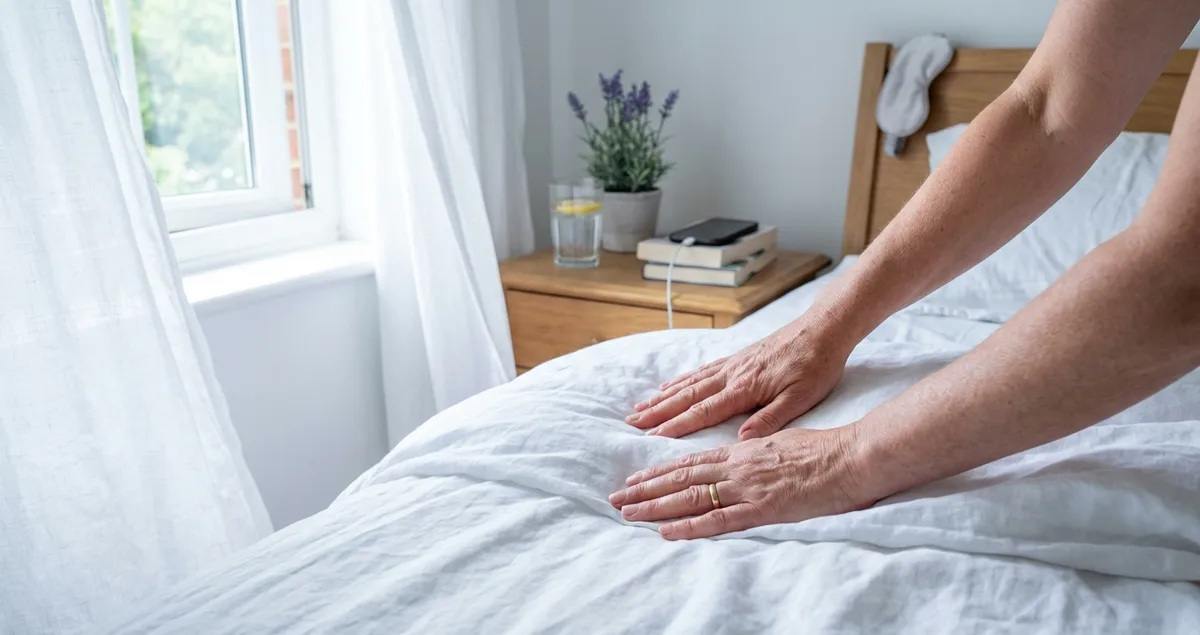
Discover why menopause night sweats happen, how they differ from hot flashes, and the evidence-backed strategies that actually work to help you sleep through the night.
Key Takeaways
- About 75% of perimenopausal and menopausal women experience night sweats, often more severe than hot flashes
- Night sweats happen because declining estrogen and progesterone levels disrupt your hypothalamus, your brain's temperature control center
- Unlike hot flashes that pass in seconds, night sweats can soak your sheets and interrupt sleep for 30 minutes or longer
- Hormone Replacement Therapy (HRT) eliminates night sweats in up to 75% of women within weeks
- Lifestyle changes like lowering bedroom temperature, wearing breathable sleepwear, and avoiding alcohol before bed work best when combined with medical treatment
- If night sweats persist for more than a few months or feel unbearable, talking to your doctor is the right move
You Wake Up at 2 AM Soaked
Your nightshirt clings to your skin. The sheets are damp. Your pillow is wet enough that you flip it to find the cool side, knowing it won't stay cool for long. You lie there for a moment, uncomfortable, frustrated, wondering what's happening to your body. You check the thermostat. The room is cool. The windows are open. So why are you drenched?
This is what night sweats feel like. Not the gentle glow of a hot flash that passes in a few minutes. This is the kind of sweating that wakes you up, leaves you reaching for a towel, and has you seriously considering sleeping on top of a beach towel instead of a fitted sheet.
If you're in perimenopause or menopause, you're not alone. About 75% of women experiencing the menopausal transition have night sweats. Some have them occasionally. Others deal with them several times a night for months or years.
This article explains what's actually happening when you sweat through your nightclothes, why it happens, and what approaches have real evidence behind them.
How Night Sweats Are Different From Hot Flashes
People often use "night sweats" and "hot flashes" as if they're the same thing. They're not.
A hot flash is a sudden, intense sensation of heat that spreads across your face, neck, and chest. It lasts a few minutes, and you might sweat, but the sweating is usually light. You stay aware of what's happening around you. You might fan yourself, take off a layer, step outside for air. Then it's over.
A night sweat, by contrast, happens while you're asleep. You don't feel the heat building. You just wake up when your body is already drenched. The sweating is intense and prolonged, often lasting 30 minutes or longer. Your pajamas and sheets are soaked. You might have to get up, change clothes, maybe even change the sheets.
What makes night sweats more disruptive than hot flashes is the impact on sleep. A hot flash during the day might annoy you. A night sweat wakes you. And when you're in perimenopause or menopause, you're already dealing with sleep disruption from other causes. Night sweats pile on top of insomnia and lighter sleep cycles, creating a compounding problem.
Here's another difference: hot flashes are almost always about menopause. But night sweats can have other causes. Infections, certain medications, thyroid problems, and anxiety all cause night sweats. That's why your doctor might run tests before assuming your night sweats are hormonal.
Why This Happens to Your Body
Your hypothalamus is a pea-sized part of your brain that does a lot of heavy lifting. It controls hunger, thirst, mood, and crucially for this conversation, your body temperature. It's your brain's thermostat.
Your hypothalamus works by reading your current body temperature and comparing it to a target temperature range it maintains. When you're cold, it triggers shivering and blood vessel constriction to warm you up. When you're hot, it triggers sweating and blood vessel dilation to cool you down.
During perimenopause and menopause, your ovaries produce less estrogen and progesterone. Estrogen helps your hypothalamus regulate temperature accurately. When estrogen drops, your hypothalamus becomes more sensitive. It interprets normal body temperature as "too hot," even though you're actually at a normal temperature. Your body responds by sweating aggressively to cool down.
It's like someone adjusting the thermostat in your house down by several degrees while you're asleep. Your heating system kicks in hard to reach the new, lower target, even though the actual temperature is comfortable.
Here's what makes it worse: at night, your core body temperature naturally drops. So your already-confused hypothalamus is working overtime trying to maintain balance. That's why night sweats often hit hardest in the middle of the night, when you're in deep sleep and your core temperature has already declined.
The sweating response is also an evolutionary hangover. Your body is flooded with hormonal signals that your internal environment has changed dramatically. It responds with classic "something is wrong, cool down immediately" sweating. It's excessive and dysregulated because your hormonal regulation system is genuinely disrupted.
How Long Night Sweats Last
This is a question many women ask their doctors, hoping for a specific timeline. The answer is frustratingly variable.
For some women, night sweats resolve within a year or two of starting perimenopause. For others, they last much longer. Research shows that about 25% of postmenopausal women still experience night sweats, sometimes for a decade or more after their final menstrual period.
This variation has to do with individual hormone levels, how quickly your body adjusts to changing hormones, and what other factors are at play. Some women have night sweats that occur in waves, vanishing for months, then returning. Others have them consistently throughout the transition.
The reassuring news: they don't last forever. But "eventually" isn't helpful when you're losing sleep now.
Medical Treatments That Work
Hormone Replacement Therapy (HRT)
HRT is the most effective treatment for night sweats. Here's what the evidence shows.
Women taking estrogen-based HRT, either estrogen alone or estrogen combined with progesterone, see improvement in vasomotor symptoms (the medical term for hot flashes and night sweats) in 80 to 90% of cases. For night sweats specifically, studies show that estradiol (a bioidentical form of estrogen) eliminates sweating in up to 75% of women within 3 weeks to 3 months of starting treatment.
Why is it so effective? Because HRT directly replaces the estrogen your body is no longer producing, stabilizing your hypothalamus. Your brain's thermostat recalibrates. The constant false alarms stop.
HRT comes in several forms: pills, patches, creams, gels. Your doctor will work with you to find the dose and delivery method that works best for your body. Some women see results quickly. Others need dose adjustments. It's not always straightforward, but when it works, it works well.
HRT isn't right for everyone, and there are considerations to discuss with your doctor. But if night sweats are significantly disrupting your sleep and quality of life, HRT is worth the conversation.
Non-Hormonal Medications
If HRT isn't an option for you, several non-hormonal medications can help.
Selective Serotonin Reuptake Inhibitors (SSRIs) and Serotonin-Norepinephrine Reuptake Inhibitors (SNRIs) are antidepressants that also reduce vasomotor symptoms. Paroxetine (Brisdelle) is FDA-approved specifically for menopausal hot flashes and night sweats. SSRIs work by regulating neurotransmitters involved in temperature regulation. They're less effective than HRT, but they help 30 to 40% of women.
Gabapentin, an anticonvulsant medication, helps with night sweats by affecting calcium channels in the brain, stabilizing temperature regulation. It's particularly useful if you also have anxiety.
Clonidine, a blood pressure medication, can reduce night sweats. It's not a first-line treatment, but it's an option worth discussing with your doctor.
All of these work better when you're also making lifestyle changes. Medication plus behavior change beats medication or behavior change alone.
Lifestyle Changes That Actually Help
Cool Your Sleep Environment
This is the simplest and most effective non-medication strategy.
Lower your bedroom temperature. Aim for 60 to 67 degrees Fahrenheit (16 to 19 degrees Celsius). A cool room makes it harder for night sweats to get out of control. Some women find that even a few degrees of difference is significant.
Use a fan. Point it at yourself, not just at the general room. The moving air helps evaporate sweat and gives your body a cue that you're cooling down.
Open a window if weather permits. Fresh air, air movement, and the cooler outside temperature all help.
Bedding matters. Use breathable fabrics: cotton, linen, bamboo sheets. Avoid synthetic materials and heavy comforters. Many women with night sweats switch to layered bedding, so they can adjust throughout the night. Start with a lightweight sheet and a thin blanket, so you can kick off layers as needed.
What You Eat and Drink
Alcohol and caffeine both trigger night sweats. If you're drinking wine in the evening or having a cup of tea at 6 PM, it could be making things worse. Try cutting them out completely for a few weeks and see if night sweats improve.
Spicy foods trigger the same heat-response pathway as hormonal changes. If you love hot peppers, experiment with timing. Eating spicy food at breakfast is less likely to affect nighttime sweats than eating it at dinner.
Large meals close to bedtime can raise your metabolism and core body temperature. Eat earlier, and keep evening meals lighter.
Staying well-hydrated during the day helps, but don't load up on fluids right before bed. You'll be uncomfortable and more likely to need bathroom trips that disrupt sleep further.
Exercise and Movement
Regular exercise reduces the severity and frequency of vasomotor symptoms. Aerobic exercise, strength training, even regular walking help. Aim for 150 minutes of moderate activity per week.
Yoga and tai chi have particular evidence behind them for menopause-related symptoms. They combine movement with breathing and relaxation, addressing both the physical and the anxiety component often tied to night sweats.
Exercise also improves sleep hygiene more broadly, helping you sleep deeper and wake less easily when you do sweat.
Sleep Routine and Environment
Your brain needs consistency. Go to bed and wake up at the same time every day, even weekends. This stabilizes your circadian rhythm and deepens sleep, making you less likely to wake when you sweat.
Keep your bedroom dark. Blackout curtains work. An eye mask works. Light disrupts melatonin production and makes sleep lighter and more fragmented.
Avoid screens for at least 30 minutes before bed. Blue light suppresses melatonin and makes it harder to fall into deep sleep.
If you're lying awake worrying about sweating, you're making it worse. Your anxiety raises cortisol, which can actually trigger or worsen night sweats. If racing thoughts are keeping you awake, consider cognitive behavioral therapy for insomnia (CBT-I), which is specifically designed to break the anxiety-insomnia cycle.
Stress and Mindfulness
Stress and anxiety directly worsen night sweats. When you're stressed, your body releases more cortisol and adrenaline, which increase core body temperature and sensitivity.
Mindfulness meditation, even 10 minutes a day, has research backing it for reducing vasomotor symptoms. Progressive muscle relaxation also helps. The goal is to give your nervous system permission to settle before you sleep.
If anxiety is a major factor in your night sweats, this is worth addressing directly with your doctor. Anxiety and night sweats feed each other.
What Doesn't Work (Even Though It Sounds Appealing)
Phytoestrogens (plant compounds that mimic estrogen) like soy and red clover have weak evidence at best. Some studies show modest improvement, others show no difference from placebo. They're not harmful, but don't expect them to replace medication.
Black cohosh has been studied extensively. The evidence is mixed, and it doesn't come close to the effectiveness of HRT.
Supplements in general have minimal evidence. The regulation of supplements is loose, and most haven't been studied in rigorous clinical trials. Always talk to your doctor before starting anything new, because supplements can interact with medications and have side effects of their own.
This isn't to say these things are useless. But if you're losing sleep multiple times a night, a supplement is unlikely to be enough. You need a more robust approach.
When Night Sweats Might Signal Something Else
Night sweats are most commonly caused by menopause. But they can also indicate other conditions.
If your night sweats are accompanied by fever, unexplained weight loss, cough, or other illness symptoms, this could be infection or something else entirely. See your doctor.
If you're on a new medication and suddenly started having night sweats, the medication might be the cause. Talk to your doctor about alternatives.
If you're not in perimenopause or postmenopause, night sweats might signal thyroid problems, sleep apnea, or other conditions. Get it checked.
The point: don't just assume it's menopause. But if you are in menopause and it fits the pattern, you can usually address it.
When to Talk to Your Doctor
You don't need to suffer through night sweats waiting for them to resolve on their own.
Talk to your doctor if:
- Night sweats are happening more than a few times per week
- They're disrupting your sleep significantly
- You've been dealing with them for more than a few months
- You're exhausted from poor sleep
- You've tried lifestyle changes alone and they haven't helped enough
Come prepared with information: when did they start, how many times per night, what makes them better or worse, how they're affecting your sleep and your life. Your doctor will want to know this.
Also mention any other symptoms, medications you're taking, and whether you've been through a recent stressor or illness. This helps your doctor determine whether night sweats are menopause-related or something else.
How Menoa Can Help
Menoa is a personal tracking app designed for exactly this phase of your life. It lets you log night sweats, track patterns, and understand what makes them better or worse in your specific body.
When you take this data to your doctor, you're giving them the information they need to make better decisions about treatment. You're no longer saying "I have night sweats." You're saying "I have night sweats 4 times a week, they last about 40 minutes, they're worse when I drink alcohol the evening before, and they're disrupting my sleep enough that I'm struggling the next day."
That specificity changes the conversation with your doctor. It helps them decide whether you need medication, how to adjust your dose if you're already on something, and whether lifestyle changes alone might be enough for your situation.
Menoa also connects you with knowledge. The menopause glossary explains what's happening in your body. Articles break down treatment options. You're not navigating this alone.
Frequently Asked Questions
Q: Are night sweats worse than hot flashes?
Night sweats are more disruptive because they happen while you're sleeping, interrupting the one thing your body desperately needs during this transition. Vasomotor symptoms are stressful either way, but sleep loss compounds everything else you're dealing with.
Q: Can I just sleep naked to stay cooler?
Some women find this helpful. Others wake up too cold and can't sleep. Experiment. The key is being able to adjust easily. Wearing a thin, breathable sleep shirt that you can take off if needed is often better than sleeping naked, because you have options.
Q: How quickly does HRT work for night sweats?
Most women see improvement within 2 to 4 weeks of starting HRT. Some see results within days. A few take a bit longer or need a dose adjustment. If you're 8 weeks in with no improvement, talk to your doctor about whether your current dose is right.
Q: If I get night sweats again after they went away, does that mean I need to adjust my treatment?
Not necessarily. Even on HRT, some women have occasional breakthrough night sweats, especially if they're stressed, sleep-deprived, or have had disruptions to their routine. But if they come back frequently, it's worth discussing with your doctor.
Q: Do night sweats mean my hormones are out of balance?
During menopause, yes, your hormones are changing. But "out of balance" suggests something has gone wrong. What's actually happening is a normal biological transition. Your body isn't broken. It's adapting to a new phase. Night sweats are a symptom of that transition, not a sign of failure.
Q: Can I prevent night sweats if I'm approaching perimenopause?
Not reliably. Some women breeze through the transition with minimal symptoms. Others don't. A lot depends on genetics and individual physiology. The best approach is staying healthy, managing sleep hygiene and stress, and then addressing symptoms as they arise.
Q: Should I use prescription antiperspirant?
No. Your body needs to sweat. Antiperspirant blocks sweating entirely, which can cause your core temperature to rise dangerously during a night sweat episode. You want the sweat. You want to stay cool. You just want to manage the disruption, not prevent the protective response.
Sources
Night Sweats: Menopause, Other Causes & Treatment — Cleveland Clinic
Hot Flashes: What Can I Do? — National Institute on Aging, U.S. National Institutes of Health
Menopause and Sleep: How to Manage Night Sweats — Willow OB/GYN
Stopping Night Sweats During & After Menopause — Menopause Care UK
Night Sweats — National Health Service, UK
Menopausal hot flashes and night sweats: Causes and remedies — Medical News Today
Night Sweats in Women: Causes, Remedies, and Tips — Sleep Foundation
Terms in this article
Intense episodes of excessive sweating during sleep, often soaking through clothes and bedding, caused by hormonal fluctuations during perimenopause and menopause.
Sudden, intense waves of heat that spread through the upper body, often with flushing, sweating, and a racing heart. Hot flashes affect around 80% of women during menopause and can last anywhere from a few months to over a decade.
A hormone produced primarily by your ovaries that regulates your menstrual cycle, supports bone and heart health, and affects mood, skin, and vaginal tissue. Estrogen levels decline sharply during menopause, causing many symptoms.
A hormone produced primarily by the ovaries that regulates the menstrual cycle, supports mood and sleep, and protects the uterine lining; levels decline during perimenopause and menopause.
Hormone replacement therapy: estrogen, usually with progesterone, taken to replace the hormones your body stops making. It is the most effective treatment for moderate to severe menopause symptoms.
The transitional period leading up to menopause, typically lasting 4 to 8 years, when your ovaries gradually produce less estrogen and progesterone, causing irregular periods and a range of symptoms. Perimenopause ends when you've gone 12 consecutive months without a period.
The point when you have gone 12 consecutive months without a period, marking the end of your reproductive years. It happens at 51 on average, usually between 45 and 55.
Persistent difficulty falling asleep, staying asleep, or achieving restorative sleep during menopause, driven by hormonal fluctuations and vasomotor symptoms like night sweats and hot flashes.
More articles
 Symptoms & Management
Menopause and Dizziness: Causes, When to Worry, and Relief Strategies
About 36% of women experience dizziness at least once a week during perimenopause and menopause. Learn what causes menopause-related dizziness, when to worry, and evidence-based relief strategies.
 Healthcare & Support
Preparing for Your Menopause Appointment: Tracking, Documentation, and Questions
A practical guide to preparing for menopause-related doctor visits. Learn how to track symptoms, organize your health history, and ask the right questions.