Preparing for Your Menopause Appointment: Tracking, Documentation, and Questions
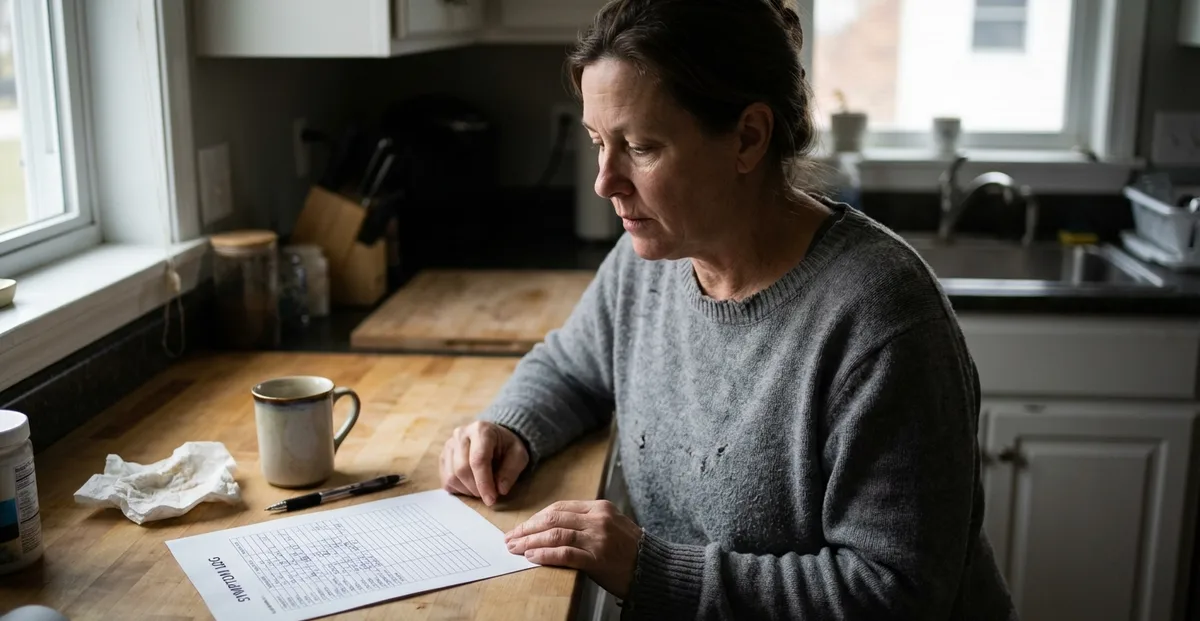
A practical guide to preparing for menopause-related doctor visits. Learn how to track symptoms, organize your health history, and ask the right questions.
Key Takeaways
- Track your symptoms for 2-4 weeks before your appointment, including frequency, severity, and when they occur
- Bring a detailed health history document covering family medical background, current medications and supplements, and past health conditions
- Prepare 8-10 specific questions about symptoms, treatment options, and long-term health planning to maximize your appointment time
- Document how symptoms affect your daily life: sleep, work performance, relationships, and emotional wellbeing
- Schedule your appointment when you feel most alert and consider bringing a trusted companion for support and note-taking
Opening: Your Doctor's Appointment is Your Power Move
Walking into a menopause appointment unprepared can feel like showing up to a test you didn't study for. You arrive with a vague sense that something's wrong, a list of symptoms you half-remember, and maybe a question or two you've been meaning to ask. Then the appointment ends 15 minutes later, you've forgotten half of what you wanted to discuss, and you leave feeling just as confused as when you walked in.
This doesn't have to be your experience. A menopause appointment is one of the most important medical conversations you'll have in your lifetime. Yet many women approach it hoping their doctor will magically know what's happening in their body without being given the information they need to help. The reality is that your doctor can only work with what you tell them. The more prepared you are, the better they can help you.
This isn't about being perfect or remembering everything from memory. It's about showing up with evidence, clarity, and intentionality. When you prepare thoughtfully for your menopause appointment, you transform it from a rushed check-box visit into a partnership where you and your doctor can actually solve problems together.
Why Preparation Matters: The Evidence Behind Being Ready
Most women spend more time planning a vacation than preparing for a menopause appointment. This is partly because we're taught that doctors will handle the medical side and we just need to show up and answer questions. But the research suggests something different.
A study using a nurse educator intervention with an accompanying menopause booklet found that women who were informed about menopause symptoms and treatment options beforehand reported 94% felt better prepared to talk to their provider about their symptoms. They also experienced decreased conflict about treatment choices and significantly higher knowledge about menopause overall. In other words, being informed doesn't just help you feel better. It actually changes the quality of care you receive.
This matters because perimenopause and menopause aren't one-size-fits-all experiences. You might have severe hot flashes but tolerate mood changes fine. Your neighbour might have the opposite problem. One woman's symptoms might disrupt her sleep for three hours per night while another's might last just 30 seconds. Without bringing specific information about how menopause is affecting your life, your doctor has to make assumptions. With preparation, you give them the exact map they need to navigate your care.
The time you invest before your appointment also signals to yourself that your health matters. This sounds small, but it's important. Preparation is an act of self-advocacy. You're saying that your symptoms are real enough to document, that your questions deserve answers, and that your wellbeing is worth the effort.
What Symptoms to Track and How to Track Them
Tracking your symptoms sounds straightforward until you try to do it. Which symptoms matter? How do you measure something as subjective as a hot flash? Do you need to track everything or just the worst symptoms?
Start by focusing on what bothers you most. If you're losing sleep over night sweats, prioritize tracking those. If mood changes are affecting your relationships, those get tracked. If you have joint pain that limits your exercise, that's worth documenting. This doesn't mean ignore your other symptoms. It means start with your biggest concerns, then expand from there.
For vasomotor symptoms like hot flashes, track three specific things: frequency (how many per day or week), severity (rate from 1-10 where 1 is barely noticeable and 10 is completely disruptive), and triggers (does spicy food make them worse? Does stress trigger them? Do they happen at certain times of day?). If you have night sweats, note how many times they wake you and whether you're changing clothes or bedding. This level of specificity helps your doctor understand not just that you have the symptom, but how significantly it's impacting your functioning.
For mood and cognitive symptoms, track patterns of anxiety, irritability, or that foggy feeling people call "brain fog." Note when irritability strikes (are you snapping at partners over small things?), how long it lasts, and whether certain situations make it worse or better. For memory or concentration issues, describe what that looks like in your actual life. Is it forgetting why you walked into a room, or is it struggling to complete complex work tasks? This distinction matters for your doctor's understanding.
Physical symptoms like weight changes, joint pain, vaginal dryness, or skin changes also need specifics. If you're experiencing joint pain, where is it? Does movement help or hurt? Is it affecting your ability to exercise or do activities you enjoy? If you've noticed weight gain, has your diet or exercise changed, or do you feel like weight is accumulating even though nothing else changed? These details matter.
Sleep disruption deserves special attention because it often isn't just from night sweats. Many people report waking in the middle of the night without obvious cause, struggling to fall back asleep, or waking too early. How many nights per week? How long does it take to fall back asleep? How does this affect your next day? Your doctor needs this information to understand whether your sleep problem is vasomotor-driven or something else.
Track for 2-4 weeks before your appointment. A week might not capture your full pattern, especially if your symptoms vary across your cycle (which they often do in perimenopause) or depend on stress levels. Two to four weeks gives you enough data to identify real patterns. Write these down. Don't trust your memory. Use a simple notebook, your phone, a symptom tracker app, or even a calendar where you mark the days you experience each symptom. The format doesn't matter. What matters is that you have written evidence of what your body is doing.
Document one more crucial thing: how these symptoms are affecting your life. This is what doctors call "functional impact," and it's actually more important to your treatment decisions than the symptom alone. Yes, you have joint pain, but is it stopping you from hiking, your favourite activity? Yes, you have hot flashes, but is that affecting your work performance because you're embarrassed or uncomfortable? Yes, you have mood changes, but is it damaging your relationship? Write down how menopause symptoms are touching your actual daily experience. This context is invaluable.
Building Your Health History Document
Walking into an appointment with a casual list of symptoms is one thing. Walking in with a comprehensive health document is another. The second approach gets better results and saves time.
Create a one-page summary (or two pages if needed) that covers the following sections. At the top, put your name, date of birth, and date of the appointment. This might seem obvious, but it ensures your information goes into the right chart.
Start with your menstrual history. When did your periods start (your age at menarche)? How regular have they been over your lifetime? Have you noticed changes in the last 1-2 years? Write your most recent period date if you remember it. If you're unsure, give your best estimate. This gives your doctor crucial context about where you are in the menopause transition.
Next, list every medication you're currently taking, including dose and how long you've been taking it. Include prescription medications, over-the-counter drugs you take regularly, birth control if applicable, and any hormonal medications. This matters because several medications can mimic or worsen menopause symptoms, and your doctor needs to know what you're on to rule out other causes of your symptoms.
Then list supplements. This includes vitamins, minerals, herbs, and any other products you're taking. Many women assume their doctor doesn't need to know about supplements because they're "natural." But supplements interact with medications and can have their own side effects. Be thorough here. Include what you're taking, the dose, and how often.
Include your family medical history. This is important because certain conditions run in families, and menopause symptoms can cluster with specific health risks. Document whether your mother, grandmother, or sisters had early menopause, severe symptoms, or menopause-related conditions. Note any family history of osteoporosis, breast cancer, cardiovascular disease, blood clots, stroke, or thyroid disease. You don't need to be an expert on your relatives' medical histories. Just write down what you know.
Document your own medical history. Have you had any surgeries, especially hysterectomy or ovary removal? Do you have any chronic conditions like diabetes, heart disease, thyroid issues, or autoimmune conditions? Have you had blood clots, stroke, or breast cancer? These all affect menopause treatment options and planning.
Add a section about your lifestyle. How often do you exercise, and what kind of exercise? How's your diet generally (no need to list every meal, just give your doctor a sense)? How many hours of sleep are you typically getting? Are you managing stress okay, or is stress high right now? Do you smoke or drink alcohol? How much? This information helps your doctor understand the full picture of your health and what lifestyle changes might genuinely be possible for you.
Then comes your symptom tracking. Either paste or summarize the tracking you've done over the past 2-4 weeks. If you tracked on an app, you might print it out or write a summary. The key is having data, not just memory.
Finally, add your questions and concerns (we'll cover questions more thoroughly in the next section). Just list them at the bottom so you don't forget what you wanted to discuss.
Keep this document to one or two pages. Use bullet points. Organize clearly with headers. Your doctor probably has 15-20 minutes for your visit and a two-page document is much more useful than five pages of narrative. Email this document to your doctor before the appointment if their office allows, or bring printed copies to hand out. This simple act often results in a more focused, efficient appointment.
Questions to Ask Your Doctor: Specific and Evidence-Based
The most common reason women leave menopause appointments unsatisfied is that they didn't ask their most important questions. Sometimes this is because they forgot what they wanted to ask. Sometimes it's because they weren't sure what to ask. Sometimes they felt rushed or uncomfortable speaking up.
Write your questions down beforehand. This is non-negotiable. You will forget some of them in the moment. Writing them down ensures you don't.
Start with symptom-focused questions. Ask which of your symptoms are definitely menopause-related and which might be caused by something else. Ask what you can realistically expect: will these symptoms get better on their own, and if so, how long might that take? Ask what treatment options exist for your specific symptoms. Don't just ask "what about HRT?" Ask about the specific routes available: pill, patch, cream, or vaginal. Ask about what hormones are involved and what doses are typical. Ask about non-hormonal options. If you've heard about drugs like paroxetine, elinzanetant, or fezolisetant, you can ask specifically about those. Your doctor can tell you whether they're appropriate for your situation.
Ask about risks and benefits as they apply to you. HRT has real benefits for menopause symptoms and some health conditions, but it also carries risks, especially around breast cancer, stroke, and blood clots. These risks aren't the same for everyone. Your personal risk depends on your age, how long you've been without periods, your family history, and your own health history. Ask your doctor to explain which benefits and risks are most relevant for you specifically.
Ask about supplements. Few plant and herbal supplements have been rigorously studied for menopause, but some people find benefit from options like red clover or black cohosh. If you're considering supplements, ask your doctor about the evidence, about interactions with medications you're on, and about which supplements might actually help versus those that are mostly marketing hype.
Ask about monitoring and follow-up. If you start a treatment, how will your doctor know if it's working? How often will you check in? What side effects should prompt you to call? What screening tests might you need before or during treatment? Are there blood tests or ultrasounds needed? What happens after your first follow-up appointment?
Ask about mental health specifically. Some menopause symptoms are psychological, not just physiological. Anxiety and depression can spike during perimenopause and menopause. Ask your doctor what they'd recommend if mood changes are significant. Would therapy help? Would medication? What's their approach?
Ask about long-term health planning. Menopause is a transition that sets the stage for the next 30-40 years of your life. Ask what screening tests you need (bone density, cholesterol, blood pressure, cancer screening). Ask what changes to diet, exercise, or supplements might help prevent heart disease, osteoporosis, or other age-related conditions. Ask whether your current lifestyle is setting you up well for healthy aging. Your menopause appointment is a perfect moment to think bigger than just this year.
Ask about sexual health if it's relevant to you. Estrogen changes affect vaginal tissue, lubrication, and sometimes desire. These are normal and treatable. But many women don't bring them up with their doctors because they feel embarrassed. Don't. Ask what options exist for vaginal dryness or pain with intercourse. Ask whether decreased desire is something to investigate or a normal part of the transition. Ask how your partner can be involved if appropriate.
Ask what you can do right now before your next appointment. Should you start exercising differently? Change your diet? Reduce caffeine? Try stress management techniques? Your doctor probably has recommendations, and these changes often take time to have an effect. Getting started early makes sense.
Finally, ask how you'll communicate between appointments. If you have a question or concern arises, should you call the office, email, use an online patient portal, or wait until your next visit?
Here's a meta-question worth asking: "What's the one thing you'd most recommend I focus on for my menopause health right now?" This helps your doctor prioritize when they might feel you need to address many things. Sometimes narrowing focus onto one or two key changes is more realistic and effective than trying to overhaul everything at once.
What to Expect During the Appointment
Understanding what happens during a standard menopause appointment can ease anxiety and help you make the most of your time.
Your doctor will likely start by taking a history. They'll ask when your periods started, when they became irregular, what symptoms you're experiencing, and how significantly symptoms are affecting your life. They might ask about mood, sleep, sexual function, or other systems. Some of this you'll have already documented in your health history, but they want to hear it from you directly. Answer honestly and specifically. If the appointment is running short and the doctor seems rushed, you can reference your written summary.
Your doctor will do a physical examination. This usually includes blood pressure, weight, and a general physical exam. You might have a pelvic exam, though this isn't always necessary for menopause diagnosis. If you're uncomfortable with any part of the exam, you can ask your doctor to explain why it's needed or to skip it if it's optional.
Your doctor might order blood tests. Contrary to popular belief, there's no single "menopause test." If you're having regular periods, blood tests to check hormone levels aren't actually very helpful because hormones fluctuate day to day. If you've been without periods for a full year and your symptoms are clear, testing usually isn't necessary either. However, your doctor might order tests to rule out other conditions that mimic menopause (like thyroid disease) or to establish a baseline for bone density and cardiovascular risk as you age. Ask which tests are being done and why.
Your doctor will discuss treatment options with you. They'll explain what's available, what's recommended for your situation, and what the pros and cons are. Don't feel pressured to make a decision right then if you're not ready. It's okay to say you want to think about it and follow up next week. You can also ask for written information about options to review at home.
If you're starting a treatment, your doctor will explain how to use it, what to expect, when side effects might show up, and when you should follow up. Take notes or ask them to write this down for you. If they recommend lifestyle changes, ask for specific guidance. "Exercise more" is vague. "Start walking 30 minutes, 5 days a week" is specific and actionable.
Red Flags: When Symptoms Warrant Urgent Attention
Most menopause symptoms don't require emergency care, but some do. Knowing the difference is important for your safety.
Contact your doctor immediately if you experience severe chest pain, shortness of breath, or signs of stroke (facial drooping, arm weakness, speech difficulty). These aren't menopause symptoms. These are medical emergencies.
Contact your doctor urgently (within days, not weeks) if you experience heavy vaginal bleeding that soaks through a pad in an hour, bleeding that lasts longer than 7-10 days even with treatment, or bleeding that's different from your normal pattern in a way that concerns you. While heavy bleeding can be a normal part of perimenopause, it can also signal other problems that need evaluation.
Contact your doctor if you develop severe depression or suicidal thoughts. The mood changes of menopause can be serious. If you find yourself unable to cope, experiencing hopelessness, or having thoughts of harming yourself, reach out to a mental health professional or crisis line immediately in addition to your doctor.
Contact your doctor if you develop a sudden new symptom that doesn't fit your usual menopause pattern, especially if it's accompanied by fever, severe pain, or other concerning signs. Sometimes things that seem unrelated to menopause actually aren't.
Contact your doctor if you start a menopause treatment and experience concerning side effects: unusual headaches, signs of blood clots (calf pain or swelling), severe mood changes, or anything that genuinely worries you. Don't wait months hoping it will improve.
What the Research Says
The most credible guidance on menopause management comes from major health organizations that synthesize the research. The NHS (National Health Service) in the UK emphasizes that menopause is a normal life transition, not a disease, and that treatment should be individualized to your symptoms and health profile. The NHS recommends beginning with lifestyle modifications like regular exercise, good sleep, balanced nutrition, and stress management, then adding medical treatment if lifestyle changes don't adequately address symptoms.
The North American Menopause Society, which works closely with research institutions and medical schools across North America, emphasizes that menopause is a transition with wide variations in symptom severity. They note that while HRT is effective for many symptoms, it's not the only option, and treatment decisions should involve shared decision-making between patient and doctor. The NIH supports this approach, indicating that informed women who understand their options report better satisfaction with their care and experience less conflict about treatment decisions.
Both major organizations emphasize the importance of screening for cardiovascular risk, bone health, and cancer as you move through menopause, since the hormonal changes of menopause affect long-term disease risk. This screening often happens through routine checks (blood pressure, cholesterol testing, bone density scanning) and shouldn't be skipped even if you decide not to pursue menopause-specific treatment.
Practical Steps You Can Take Today
You don't need to wait for your appointment to start preparing. Here's what you can do immediately.
-
Schedule your appointment if you haven't already. Give yourself at least 2-4 weeks between scheduling and the appointment itself. This gives you enough time to track symptoms without having to rush the process.
-
Start symptom tracking today. Keep a simple record of when symptoms occur, how severe they are, and what triggers them. Use whatever method works for you: a notebook, your phone's note app, a spreadsheet, or a dedicated symptom tracking app. The consistency matters more than the format.
-
Gather your medication and supplement list. Look in your medicine cabinet and make a complete list of everything you're taking, including doses. Include any prescription medications, over-the-counter drugs you take regularly, vitamins, minerals, and herbal supplements.
-
Recall your family medical history. Call your mother or other relatives if needed and ask about their menopause experiences, any menopause-related conditions, and relevant family health history like early heart disease, osteoporosis, cancer, or blood clots. Write this down.
-
Document your medical history. Write down any surgeries you've had, especially hysterectomy or ovary removal. List any chronic health conditions, previous blood clots or stroke, and any cancer diagnoses. Include your menstrual history (when your periods started, whether they've been regular, recent changes).
-
Think about your lifestyle. Assess your current exercise, diet, sleep, stress, and alcohol or tobacco use. You don't need to change anything yet. Just get honest with yourself about where you stand.
-
Write down your top concerns and questions. What bothers you most about your current symptoms? What do you want your doctor to help you with? What are you worried about? What changes are you hoping for? Write these down now while you're thinking about them.
-
Book time on your calendar for the preparation work. You need at least an hour to create your health document and list of questions. Do this before your appointment, ideally a few days prior so you have time to add to it if you think of something.
When to Talk to Your Doctor
Most menopause symptoms aren't emergencies, but they're worth discussing with a medical professional. If you're experiencing symptoms that are affecting your work, relationships, sleep, or quality of life, that's when to schedule an appointment.
You don't need to wait until symptoms are catastrophic. You don't need permission to discuss menopause with your doctor. You don't need to have tried every home remedy first. If you think you're in perimenopause or menopause and you want help, that's reason enough to make an appointment.
Some people worry they're "bothering" their doctor with menopause concerns. Don't let that stop you. Menopause care is legitimate healthcare. Your symptoms are real. Your desire for help is valid. Schedule the appointment.
If you're unsure whether what you're experiencing is actually menopause, that's also okay. Your doctor can help you figure that out. You don't need to have your menopause diagnosis confirmed before reaching out. That's what doctors are for.
If you've been managing menopause for a year or more and your current approach isn't working, that's a good time to book another appointment. Menopause is a transition that changes over time. A treatment that worked six months ago might need adjustment. Your symptoms might evolve. Follow-up appointments are normal and expected.
How Menoa Can Help
Tracking your symptoms consistently is the foundation of good menopause care. The Menoa app makes this tracking frictionless by letting you log symptoms, mood, sleep, and lifestyle factors in just a few taps. Over weeks and months, the app shows you patterns you might not notice otherwise and generates clear summaries you can share directly with your doctor.
Rather than relying on memory or hastily handwritten notes, you'll have organized, timestamped data. You can identify what actually triggers your symptoms, whether your treatment is working, and how your menopause experience is genuinely evolving. This is exactly the kind of specific information your doctor needs to help you well.
Frequently Asked Questions
Will my doctor order blood tests to diagnose menopause?
Maybe, maybe not. Blood tests to measure estrogen and FSH (follicle-stimulating hormone) don't reliably diagnose menopause in people who still have regular periods, because hormone levels fluctuate significantly day to day. If you've been without periods for a full year and your symptoms are clear, diagnosis can usually be made clinically without testing. However, your doctor might order blood tests to rule out other conditions that cause similar symptoms (like thyroid disease) or to establish a baseline for your cardiovascular and bone health. Ask your doctor which tests they're recommending and why.
Should I bring a family member or friend to my appointment?
Absolutely, if you want to. Bringing a trusted person can help you remember information, take notes, and feel more comfortable speaking up. However, make sure your doctor knows your companion is there and that you're comfortable discussing your health in front of them. Many clinics will ask your companion to step out for parts of the exam.
What if my doctor dismisses my symptoms or says I'm too young for menopause?
Get a second opinion. Menopause can begin in your 30s or 40s, though it's more common in your 50s. More importantly, your symptoms deserve to be taken seriously regardless of your age. If your doctor isn't taking your concerns seriously, find one who will. Your health matters too much for a rushed or dismissive conversation.
How long does a typical menopause appointment take?
This varies widely. Some appointments are 15 minutes. Others are 45 minutes or more if your doctor takes time to thoroughly discuss options. Let your doctor's office know upfront that you'd like to discuss menopause in detail. They might schedule you for a longer appointment or block extra time. If you show up with thorough preparation, you use your time much more efficiently regardless of how long you have.
Sources
Terms in this article
The transitional period leading up to menopause, typically lasting 4 to 8 years, when your ovaries gradually produce less estrogen and progesterone, causing irregular periods and a range of symptoms. Perimenopause ends when you've gone 12 consecutive months without a period.
Sudden, intense waves of heat that spread through the upper body, often with flushing, sweating, and a racing heart. Hot flashes affect around 80% of women during menopause and can last anywhere from a few months to over a decade.
A hormone produced primarily by your ovaries that regulates your menstrual cycle, supports bone and heart health, and affects mood, skin, and vaginal tissue. Estrogen levels decline sharply during menopause, causing many symptoms.
Hormone replacement therapy: estrogen, usually with progesterone, taken to replace the hormones your body stops making. It is the most effective treatment for moderate to severe menopause symptoms.
More articles
 Healthcare & Support
Menopause Self-Advocacy: How to Get the Care You Deserve
Learn how to advocate for yourself with healthcare providers and get the menopause care you deserve. Expert strategies for symptom documentation, speaking with doctors, finding specialists, and more.
 Healthcare & Support
Talking to Your Partner About Menopause: What They Need to Know
Partners often struggle because menopause isn't taught in school. Learn how to have the conversation and build a stronger partnership through education and communication.