Talking to Your Partner About Menopause: What They Need to Know
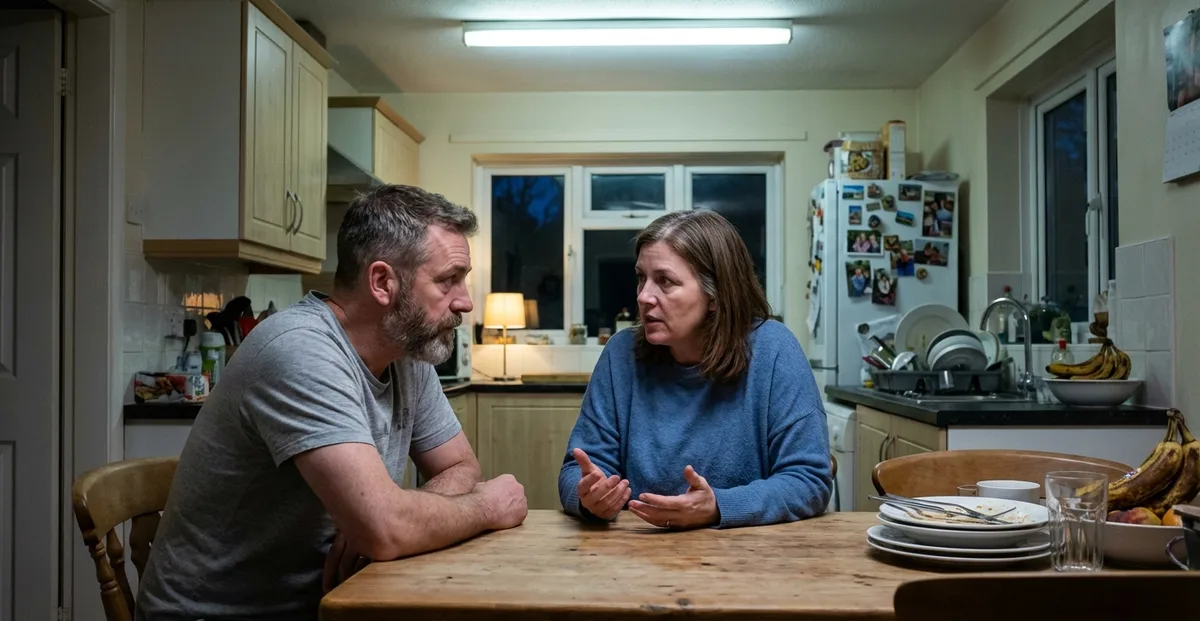
Partners often struggle because menopause isn't taught in school. Learn how to have the conversation and build a stronger partnership through education and communication.
Key Takeaways
- Menopause affects your relationship, not because something is wrong between you, but because hormonal changes are real and impact mood, energy, intimacy, and daily life.
- Partners often struggle because menopause isn't taught in school. Education, not blame, transforms understanding.
- The conversation you've been avoiding is actually the bridge to a stronger partnership.
- Specific symptoms—hot flashes, sleep disruption, mood changes, and vaginal dryness—have concrete names and often treatable solutions.
- Professional support, whether medical or couples counseling, isn't a sign of failure. It's a sign you both care enough to get help.
The Conversation You've Been Avoiding
You've noticed it. Maybe he has too. The irritability that doesn't quite feel like you. The sudden exhaustion that no amount of sleep fixes. The way sex feels different—or doesn't feel like anything at all. And then there's the distance. Not anger. Not rejection. Just... distance.
Here's what might be happening: you're navigating menopause or perimenopause, and he's living in a house where the rules seem to have changed without an instruction manual. Neither of you is wrong. You're both just trying to figure out a massive life transition without the language for it.
The research is clear: when partners understand what's happening, relationships don't just survive menopause. They often get stronger. A 2023 study found that postmenopausal women whose husbands received education about menopause reported significantly better marital satisfaction and communication than those whose partners had no information. But that requires one thing first: the conversation.
Why Partners Struggle to Understand Menopause
Your partner isn't being dismissive when he seems confused. He's not uncaring when he doesn't immediately know what to do. He's operating without a framework. Menopause isn't taught in schools. It's not something most men grow up expecting to navigate. When you suddenly need more time alone, or when you're frustrated about something small, or when you're not interested in sex, his brain doesn't automatically connect those dots to hormonal shifts. He might wonder if something is wrong between you instead of understanding something is changing within you.
The physical symptoms of menopause—the hot flashes that wake you at 3 a.m., the brain fog that makes you forget what you walked into a room for, the joint pain that wasn't there last year—these are invisible to him. He sees you exhausted but might not understand why sleep isn't helping. He notices you're withdrawn but doesn't realize it's because anxiety is making social situations feel overwhelming.
And here's the part that strains relationships most: mood changes. Estrogen and progesterone don't just regulate your period. They influence neurotransmitters like serotonin and dopamine. When hormone levels plummet, irritability and anxiety can spike. Studies show that 73% of women surveyed blame menopause for contributing to marriage breakdown, and a significant portion of that comes down to mood shifts that partners interpret as personal rejection.
Without context, he might think your frustration is directed at him. Without information, he doesn't realize that your "I need space" actually means "my nervous system is overwhelmed and I need to regulate." He doesn't know that when you're not interested in sex, it's not about him. It's about vaginal dryness making penetration uncomfortable, or the weight of fatigue making physical intimacy feel like another demand on your exhausted body, or the fact that your brain has temporarily stopped producing the hormones that trigger desire.
The gap between what's happening in your body and what he understands creates isolation. But that gap closes with information and communication.
What You Need Him to Know (And How to Explain It)
Start with validation. Not his validation of you, but his understanding that what you're experiencing is real and medically documented. These aren't mood swings, they're hormonal fluctuations. These aren't excuses, they're symptoms. This distinction matters because it shifts the conversation from blame to teamwork.
Here's what research shows partners need to understand:
Menopause is a 10+ year journey, not a temporary phase. Perimenopause—the transition leading up to menopause—can last 4 to 10 years. Menopause is officially when you've gone 12 months without a period, but hormonal chaos continues for years after. This isn't something you're going through for six months. It's a life stage you're both navigating together.
Symptoms are not personality flaws. When you're irritable, you're not becoming a difficult person. When you're anxious, you're not "freaking out over nothing." When you cry at a commercial, you're not being emotional for attention. These are measurable changes in brain chemistry. Research shows that hormonal shifts affect the amygdala (the brain's emotional processing center) and the prefrontal cortex (responsible for emotional regulation). You're not overreacting. Your brain is operating with different chemical signals.
Fatigue is not laziness. Menopause fatigue is different from regular tiredness. It's a heaviness that sleep doesn't necessarily fix. It comes from hormonal shifts, sleep disruption (caused by night sweats and hot flashes), and the energy demand of your body trying to adapt to new hormone levels. When you say you're too tired for sex or too tired to go out, you're not rejecting him. You're managing your energy to survive the day.
Sexual changes are physiological, not emotional. Vaginal dryness, reduced estrogen production, and lower testosterone (yes, women produce testosterone too) all affect desire and sensation. If penetration hurts, that's not psychological. If you don't orgasm as easily, that's not about attraction. If desire has flatlined, that's not because you love him less. These are body changes, and they're manageable with treatment, communication, and patience.
Menopause doesn't define you, but it does affect your daily life. You're still you. You still love him. You still want to be close to him. But right now, you're also managing symptoms that might include migraines, joint pain, cognitive fog, mood swings, sleep disruption, and changes to your body. Acknowledging that these are happening doesn't mean you're weak or broken. It means you're being honest about what's real.
How to Start the Conversation
Timing matters. Choose a moment when you're both calm and neither of you is rushed. Not during an argument about something else. Not when you're already frustrated. Pick a time when you can talk without distractions.
Use "I" statements. Instead of "You never understand what I'm going through," try: "I'm experiencing something significant right now, and I need your help to understand it together. I'm going through menopause, and I want to explain what that means for me and for us."
Bring resources. Don't expect him to absorb everything from one conversation. Share an article. Watch a 10-minute video together. Give him something concrete to reference. This removes the burden from you to be the educator and signals that this is a documented, normal life event, not something unique to you.
Be specific about symptoms. Instead of "I'm not myself," say "I'm having hot flashes that wake me up six times a night, which is why I'm so exhausted. When I'm exhausted, I don't have patience for anything, including things I normally enjoy. This isn't about you. It's about my body right now." Specificity creates understanding. Vagueness creates confusion.
Ask for what you need. "I need you to know this is happening" is different from "I need you to help me manage it" or "I need you to listen when I talk about how I'm feeling" or "I need you to understand that I'm not rejecting you, I'm just exhausted." Be clear about what support looks like to you.
How to Ask for the Support You Actually Need
Partners want to help. But they often don't know how. Research from the Menopause Charity shows that the most effective support comes when women are specific about what they need rather than expecting partners to intuitively understand.
Here are some things you might need during menopause:
Emotional space: "I need time when I can be quiet and not have to manage anyone else's energy. This isn't about you. It's about my nervous system needing to settle."
Patience with mood shifts: "When I'm irritable, I might need you to step back rather than push closer. I might need quiet instead of a conversation. I don't need you to fix it. I need you to understand it's not about you."
Practical help: "Can you take the kids this Saturday afternoon so I can rest without guilt? Can you handle dinner tonight because I'm too exhausted?" Concrete, specific help is easier to give than vague emotional support.
Honesty about intimacy: "Sex doesn't feel good to me right now because of vaginal dryness. I want to stay close to you, but penetration is uncomfortable. Can we explore other ways to be intimate?" This opens conversation instead of creating silence.
Accountability: "When I'm struggling, I might ask you to help me remember to breathe or to notice if I'm spiraling. Can I count on you to gently point out if I seem stuck?" Partners can be excellent mirrors when you give them permission.
Medical partnership: "I'm going to see a doctor about what I'm experiencing. I'd like you to come to an appointment so you can hear directly about options like HRT." When he hears directly from a clinician, it lands differently than hearing it from you.
Don't ask him to read your mind. Ask him to ask questions. Create a culture where "How are you doing?" and "What do you need right now?" become regular conversations, not just crisis conversations.
Changes to Intimacy and How to Navigate Them
This is the piece that often causes the most distance if it's not addressed. Sexual intimacy usually changes during menopause. This doesn't mean it ends or becomes worse. It means it changes, and most changes are manageable.
What's happening physically: Declining estrogen and testosterone reduce blood flow to genital tissues. Vaginal dryness makes penetration uncomfortable. Orgasm might take longer or feel different. Desire might drop significantly. Sleep disruption and fatigue make you less interested in physical exertion. None of this reflects your attraction to him or the health of your relationship.
What's happening emotionally: Sex is often the thing that gets dropped first when everything else feels overwhelming. If you're managing hot flashes, mood shifts, and exhaustion, sex might feel like one more demand on your already depleted body. When you don't initiate, he might feel rejected. When he initiates, you might feel pressured. The silence around this creates distance faster than the physiological changes themselves.
How to talk about it: "I love you and I want physical closeness with you. But menopause has changed how my body responds. I need us to figure out what works now, and I need you to know it's not about you." Then get specific: What does feel good? Would a lubricant help? Would different timing (morning instead of evening) help? Is there a form of intimacy that feels easier? Would longer foreplay help? Would less pressure around orgasm help?
What often works: Couples who survive and thrive through menopause's sexual changes often do three things: they talk openly about what's changed, they're willing to try new approaches, and they redefine intimacy beyond penetrative sex. Massage, oral sex, manual stimulation, or simply holding each other can all be forms of sexual intimacy that work when traditional sex is uncomfortable.
The research is clear: couples who address intimacy changes directly report better satisfaction than those who pretend nothing has changed or avoid the conversation entirely.
When You Might Need Professional Help
There's a threshold where having the conversation at home hits a wall. If that happens, professional support isn't a failure. It's a tool.
Consider couples therapy or counseling if:
- The emotional distance feels permanent or you're not reconnecting after conversations.
- You're both triggered when you try to talk about menopause or intimacy.
- He's not accepting that what you're experiencing is real, or is minimizing your symptoms.
- You're considering separation or divorce, and menopause feels like the breaking point.
- You need an objective third party to help translate what each of you needs to the other.
Consider individual therapy if:
- Your mood changes are severe enough to affect daily functioning (depression, suicidal thoughts, severe anxiety).
- You're struggling to accept the changes in your body or your sexuality.
- You're grieving the identity you're losing or the relationship you had before menopause.
Consider medical support (seeing a gynecologist, menopause specialist, or functional medicine doctor) if:
- Symptoms are severe and interfering with your quality of life or your relationship.
- You want to explore HRT, supplements, or other treatment options.
- You want a clinician to speak directly to both of you about what's happening and options going forward.
Professional support works because it creates a container. It makes the conversation safer. It brings expertise. And it sends a clear signal: "We care about this enough to get help."
What the Research Says
The data is reassuring. Multiple studies show that relationships don't break because of menopause. But they do break when menopause is unaddressed.
A 2023 study of marital satisfaction during menopause found that sexual dysfunction occurred in 91.3% of women and 77.2% of their partners, yet marital adjustment was low in 74.1% of couples. But when husbands received education about menopause, that figure shifted significantly. Marital communication improved. Conflict resolution improved. Satisfaction improved.
A 2024 qualitative study found that women often felt unsupported by partners during menopause, even when partners loved them and wanted to help. The gap wasn't about care. It was about knowledge. Partners simply didn't know what menopause was doing, what symptoms looked like, or how to respond.
Research from the Menopause Foundation of Canada emphasizes that partner education is one of the most underutilized interventions for improving relationship satisfaction during this life stage. When partners receive clear information about what's happening hormonally, they shift from confusion or defensiveness to compassion and practical support. They stop personalizing mood swings. They stop assuming withdrawn behavior means rejection. They start seeing menopause for what it is: a significant biological transition that requires both partners to adapt.
One study tracking couples over three years found that those who addressed menopause openly in the first year of perimenopause reported stronger relationships at the five-year mark than couples who avoided the conversation. The couples who thrived weren't the ones without problems. They were the ones who named the problems, took them seriously, and worked on them together.
The research also shows that partners who understand menopause become better advocates for their wives' health. They're more likely to encourage medical appointments, attend those appointments with their partners, and support treatment decisions like HRT without judgment. This advocacy creates a sense of partnership that extends beyond the bedroom into every area of life.
The takeaway: your relationship can absolutely survive and strengthen during menopause. But it requires the conversation. It requires education. It requires both of you showing up.
Practical Steps to Start
This week:
- Pick one conversation starter from the "How to Start the Conversation" section above. Use those exact words or adapt them.
- Share one specific symptom you've been managing silently. Example: "I haven't told you, but I'm having night sweats that wake me up four times a night. That's why I'm so tired and why I've been short with you."
This month:
- Have the conversation about intimacy. Be specific about what's changed and what you need.
- Share a resource: an article, a book, a podcast episode about menopause and relationships. Let him engage with it on his own time.
- Ask him one specific question: "What's been hardest for you during this time?" Let him answer without fixing or correcting.
This season:
- Consider making an appointment with a menopause specialist or your regular doctor. Invite him to come.
- Check in monthly about how things are going. Not a heavy conversation. Just a "How are we doing?" check-in.
- Notice and acknowledge moments when he shows up for you. Gratitude reinforces the behavior you want to see.
When to Talk to Your Doctor
Menopause is a medical event, not just a relationship event. You deserve clinical support alongside relationship support.
Talk to your doctor if:
- Symptoms are affecting your quality of life (sleep, mood, functioning at work or home).
- You want to explore HRT or other medical treatment options.
- You're experiencing severe mood changes that might indicate depression or anxiety.
- Sexual symptoms like vaginal dryness are causing pain or distress.
- You want to discuss preventative health measures during menopause.
Bring your partner to the appointment if possible. Hearing directly from a clinician that what you're experiencing is normal and treatable often lands differently than hearing it from you.
Beyond the Conversation: Building a Menopause-Aware Partnership
After you've had the initial conversation, the work isn't finished. A menopause-aware partnership requires ongoing attention, compassion, and adjustment. This means checking in regularly about how both of you are doing, not just how your symptoms are progressing. It means acknowledging that menopause doesn't follow a neat timeline. Some weeks you'll feel like yourself again. Other weeks, symptoms will spike unexpectedly.
It also means recognizing that your partner's experience matters too. He's navigating changes alongside you, even if they're not biological. He might be grieving the relationship dynamic you had before menopause. He might feel helpless watching you struggle. He might be managing his own anxiety about aging and what menopause means for your future together. Creating space for his feelings isn't about diminishing yours. It's about building mutual understanding.
Many couples find that menopause becomes a turning point in their relationship. The forced conversation about what's changing in your body leads naturally to conversations about what you both need, what you both fear, and what you both want from your remaining years together. When approached this way, menopause isn't a threat to your partnership. It's an opportunity to rebuild it on more honest, compassionate ground.
How Menoa Can Help
Navigating menopause while managing a relationship means you need support on multiple fronts. Menoa is designed to help you track what's happening to your body so you can understand patterns and communicate them clearly to your partner and your doctor.
With Menoa, you can:
- Track symptoms in real time: Log hot flashes, mood, sleep, and everything else that's changing. When you see the pattern, your partner can see it too.
- Share insights with your partner: Show him the data. Sometimes numbers create understanding where words alone don't.
- Build a health record: Bring your tracked data to appointments so clinicians can see what's actually happening, not just what you remember.
- Connect with others: Read stories from other women going through menopause. Feel less alone.
Menoa isn't a substitute for conversation, medical care, or couples therapy. But it's a tool that makes all three more effective by giving you clarity about what's happening in your body.
FAQ
Q: He says menopause isn't that big a deal. How do I respond? A: That's coming from not understanding, not from not caring. Share specific data: "91% of couples experience sexual changes during menopause. That's huge. What's happening to me is normal and documented. I need you to understand that because it affects both of us."
Q: We haven't had sex in six months because of menopause symptoms. Is this normal? A: It's common, but it's not something you have to accept. Talk to your doctor about vaginal dryness or low desire. There are treatments. Have the conversation with your partner about what intimacy looks like now. This is a solvable problem, but it requires addressing both the medical and relational pieces.
Q: My partner is blaming menopause for relationship problems that existed before. How do I handle this? A: Menopause doesn't create relationship problems, but it can illuminate them. If there were issues before, menopause might make them more visible or harder to ignore. This might be a moment to address the deeper issues with a couples therapist rather than trying to solve them alone.
Q: How do I know if menopause symptoms are the issue or if we've just grown apart? A: The answer is often both. Menopause can create distance, and distance can feel like you've grown apart. The way to untangle it is through conversation: "I think menopause has created distance between us. I also think we need to reconnect beyond menopause. Can we work on both?" That's usually couples therapy territory.
Q: He says he's scared of how menopause is changing me. What does that mean? A: He might be scared of losing the person he married, or scared he can't help, or scared the changes are permanent. Ask him: "What specifically scares you? Help me understand." Fear often hides under silence. Bringing it out opens the door to reassurance.
Q: Is it normal that I feel less attracted to him during menopause? A: It's common, especially if low estrogen and testosterone are affecting your desire generally. But sometimes reduced attraction to a partner is connected to emotional distance that's built up around unaddressed menopause symptoms. Address the symptoms first. If attraction still doesn't return, that's worth exploring with a therapist.
Sources
- Essentia Health. "How to Talk With Your Partner About Perimenopause." https://www.essentiahealth.org/about/essentia-health-newsroom/obgyn-how-to-talk-with-your-partner-about-perimenopause
- Healthline. "8 Things Every Woman Wants Men to Know About Menopause." https://www.healthline.com/health/8-things-every-woman-wants-men-to-know-about-menopause
- The Menopause Charity. "Supporting Your Partner Through Menopause." https://themenopausecharity.org/information-and-support/for-those-supporting-others/supporting-your-partner-through-menopause/
- Psychology Today. "10 Ways to Help a Partner During Menopause." https://www.psychologytoday.com/us/blog/women-autism-spectrum-disorder/202203/10-ways-help-partner-during-menopause
- NHS Inform. "Supporting Someone Through the Menopause." https://www.nhsinform.scot/healthy-living/womens-health/later-years-around-50-years-and-over/menopause-and-post-menopause-health/supporting-someone-through-the-menopause/
- The Menopause Foundation of Canada. "Supporting Your Partner Through Menopause." https://menopausefoundationcanada.ca/resources/supporting-your-partner-through-menopause/
- PMC. "The Effect of Menopause on the Sexual Functions and Marital Adjustment of the Spouses." https://pmc.ncbi.nlm.nih.gov/articles/PMC10836430/
- PMC. "The Effect of Husbands' Education Regarding Menopausal Health on Marital Satisfaction of Their Wives." https://pmc.ncbi.nlm.nih.gov/articles/PMC5432462/
Terms in this article
Sudden, intense waves of heat that spread through the upper body, often with flushing, sweating, and a racing heart. Hot flashes affect around 80% of women during menopause and can last anywhere from a few months to over a decade.
A reduction in vaginal moisture and lubrication caused by declining estrogen levels during menopause, leading to discomfort, irritation, and pain during sexual activity.
The point when you have gone 12 consecutive months without a period, marking the end of your reproductive years. It happens at 51 on average, usually between 45 and 55.
The transitional period leading up to menopause, typically lasting 4 to 8 years, when your ovaries gradually produce less estrogen and progesterone, causing irregular periods and a range of symptoms. Perimenopause ends when you've gone 12 consecutive months without a period.
A hormone produced primarily by your ovaries that regulates your menstrual cycle, supports bone and heart health, and affects mood, skin, and vaginal tissue. Estrogen levels decline sharply during menopause, causing many symptoms.
Intense episodes of excessive sweating during sleep, often soaking through clothes and bedding, caused by hormonal fluctuations during perimenopause and menopause.
Hormone replacement therapy: estrogen, usually with progesterone, taken to replace the hormones your body stops making. It is the most effective treatment for moderate to severe menopause symptoms.
More articles
 Healthcare & Support
Preparing for Your Menopause Appointment: Tracking, Documentation, and Questions
A practical guide to preparing for menopause-related doctor visits. Learn how to track symptoms, organize your health history, and ask the right questions.
 Healthcare & Support
Menopause Self-Advocacy: How to Get the Care You Deserve
Learn how to advocate for yourself with healthcare providers and get the menopause care you deserve. Expert strategies for symptom documentation, speaking with doctors, finding specialists, and more.