Identity and Menopause: Navigating Life Changes Beyond the Physical
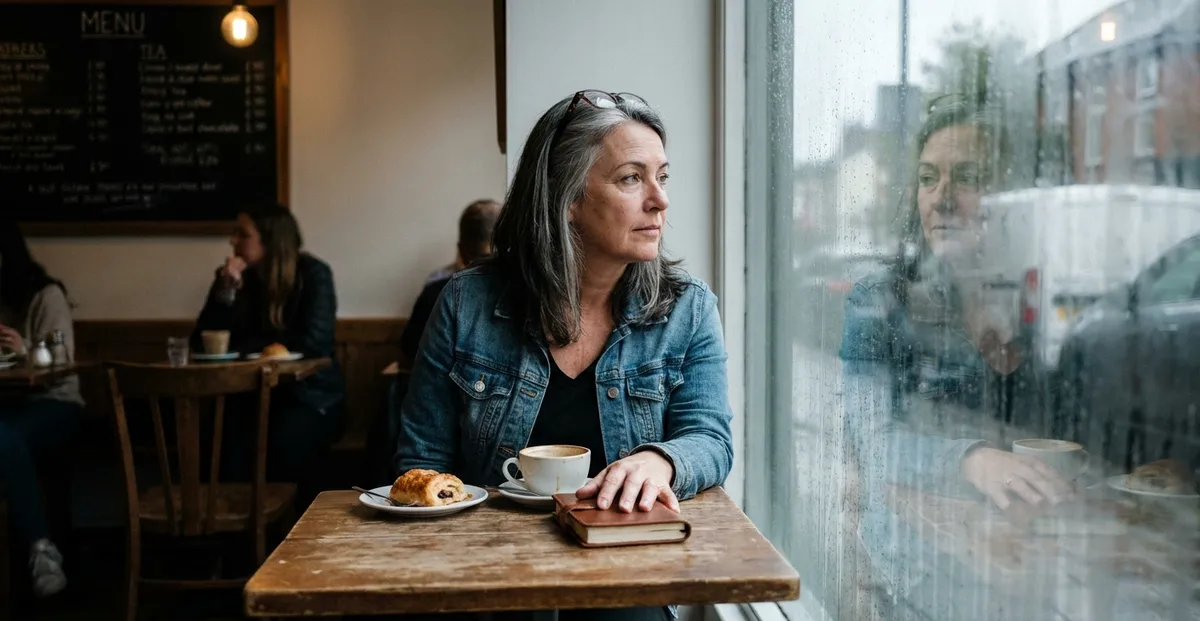
Your body is changing, yes. But something else is shifting too: your sense of who you are. This is the identity work of menopause, and it's just as real as the hot flashes.
Key Takeaways
- 63% of women report not feeling like themselves during menopause, a disruption rooted in hormonal shifts that affect cognition, mood, and emotional processing
- Identity loss during menopause involves grief for fertility, youth, physical capability, and the roles that have defined you for decades
- Hormonal decline directly impacts brain chemistry: estrogen affects serotonin, progesterone regulates calm, and testosterone influences motivation and assertiveness
- Body image changes, cognitive shifts, and workplace invisibility compound the psychological weight of menopause
- Recovery is possible: women on the other side report reclaiming identity by grieving what's lost, redefining roles, and building new sources of meaning
You're Not Recognizing the Person in the Mirror
Menopause arrives quietly at first. Then one day you snap at your partner over nothing. Your mind goes blank during a presentation at work. You avoid photos because you don't recognize your own face. You stand in the shower and feel disconnected from your body, as if you're inhabiting someone else's skin.
This isn't aging. This is identity disruption.
According to research on women's experiences during menopause, 63% of women report not feeling like themselves 50% of the time or more over a three-month period. It's not that you're changing gradually, the way people drift through life. It's that you're changing rapidly, in ways that contradict who you thought you were.
The woman who prided herself on patience is now irritable. The one who never forgot a detail now struggles to find words. The mother whose identity was built on nurturing suddenly feels touched out. The professional who commanded rooms now questions whether she belongs there.
This is the identity crisis of menopause. And you're not overreacting to feel it deeply.
The Biology Behind Who You Thought You Were
Your identity isn't purely psychological. It's wired into your brain chemistry.
Estrogen does far more than regulate your menstrual cycle. It affects serotonin production, the neurotransmitter that stabilizes mood and helps you feel like yourself. Progesterone promotes calm and restful sleep. Testosterone influences motivation, assertiveness, and sexual desire. When these hormones decline during perimenopause and menopause, the brain is deprived of chemical signals it's relied on for decades.
The result is measurable. Women report problems with memory and concentration. Brain fog becomes so real that simple tasks feel exhausting. Motivation evaporates. Anxiety spikes. Sleep fractures, which further destabilizes mood and cognition. Within months, you've lost the mental clarity that let you navigate your identity with confidence.
This isn't weakness or aging in the traditional sense. This is your brain chemistry shifting so dramatically that the cognitive architecture of your identity becomes unstable.
Estrogen decline also affects dopamine, which regulates reward and motivation. Women often describe losing interest in activities they once loved, not because they've changed their minds, but because the neurochemistry that made those activities feel rewarding has vanished. You show up to book club and feel empty. You scroll social media searching for something to engage you and find nothing. You wonder: have I changed, or has my brain?
The answer is both. Your brain is changing. And that change is forcing your identity to change whether you're ready or not.
"Who Am I Now?" The Identity Disruption
The statistics are sobering. Sixty-three percent of women don't feel like themselves during menopause. But the lived experience is even more complex.
Many women describe identity disruption in layers. There's the cognitive layer: you're not the sharp, organized person who manages three jobs and a household. There's the emotional layer: you're not the calm mediator in conflicts anymore, you're the one losing your temper. There's the physical layer: you're not the woman who felt comfortable in her body, you're someone who feels like a stranger to her own skin.
One layer makes sense in isolation. Three layers at once creates an existential crisis.
Women who spent decades building their identity around competence now question whether they can do their jobs. Women who defined themselves as lovers or partners notice their desire flattening. Women whose identity was rooted in their role as mothers face that role transforming as children grow and menopause arrives simultaneously, often leaving them asking: if I'm not actively mothering, if I'm not visibly needed, who am I?
This isn't vanity. It's not overthinking. It's a real reorganization of the self forced by biological change. And it happens at a time when cultural messaging tells women they should be grateful for freedom from periods, grateful to move into wisdom, grateful to finally stop worrying about fertility.
Many women feel anything but grateful. They feel lost.
Grief: The Emotion Menopause Doesn't Name
Menopause brings an unexpected cascade of grief. And like grief itself, it's often invisible to the people around you.
The loss of fertility is the most acute form. For women who wanted more children, menopause closes a door permanently. But even for women who didn't want more children, the loss of the capacity hits differently. Fertility isn't just about reproduction. It represents youth. It represents sexual desirability. It represents potential. For many women, fertility is so tightly bound to their sense of being female that its absence feels like a small death.
One woman described it as "the sudden switch from fertile woman to irrevocably infertile woman." Not a gradual fading. A switch flipped. And with it, a profound sense of loss.
Beyond fertility, there's grief for other identities that are slipping away. Grief for the body that responded the way you wanted it to. Grief for the energy you had at 35 that you don't have at 50. Grief for the version of yourself that felt visible in the world. Grief for the skin texture, the metabolism, the desire, the focus. Grief for being needed in the way you were needed before.
Neuroscience shows us why this grief feels so heavy. From a brain perspective, grief activates the same neural regions that respond to physical pain. Your brain literally cannot distinguish between the pain of a loss and the pain of physical injury. Menopause grief is not metaphorical pain. It's pain your brain registers as real as any other trauma.
The problem is that menopause grief is culturally invisible. You don't get a funeral. You don't get time off work. You don't get people asking how you're coping. Instead, you're supposed to move into this new phase and feel fine about it. You're supposed to be relieved. Grateful. Excited about freedom.
And underneath that supposed relief, you're grieving.
The Cultural Silence That Compounds the Loss
One of the cruelest aspects of menopause identity disruption is that it happens in near total silence.
Your mother probably didn't talk about how she lost herself during menopause. Your friends might be experiencing it too, but you're not comparing notes because menopause is still treated as a medical event, not a life transition. You might search online for reassurance and find either gynecological information about hot flashes or vague wellness advice about self-care routines.
What you don't find is recognition. Validation. An honest conversation about the fact that menopause is an identity crisis, not just a hormonal inconvenience.
And that silence has consequences. Women internalize the experience as personal failure. You think you're weak for not bouncing back. You think you're vain for caring about physical changes. You think you're overreacting to mood swings. You think you should just handle this quietly and move on.
But menopause is not a problem you should handle alone. It's a fundamental life transition that deserves to be named, acknowledged, and grieved.
Western culture has a particular investment in keeping menopause quiet. In a culture that prizes youth, a woman's transition out of her reproductive years represents invisibility. You're no longer useful for bearing children. You're entering the phase of life where women become culturally invisible, especially compared to younger women. That invisibility is real, and it compounds the identity loss that menopause brings biologically.
Many women describe a feeling of being unseen. Not just by partners or family, but by the world. When you combine biological identity disruption with cultural invisibility, you're dealing with a double loss.
Relationships and Roles: Everything Shifts at Once
Menopause rarely happens in isolation. It overlaps with other major life transitions that reshape identity.
Your children might be leaving home. The role that defined your identity for two decades is ending. Simultaneously, your body is changing, your mood is destabilizing, your energy is dropping, and your partner might be hoping for more intimacy at precisely the moment when you feel least sexual or desirable.
At work, you might be hitting a plateau in your career, watching younger colleagues advance while you feel your mental sharpness slipping. The competence that used to come naturally now requires conscious effort. You're forgetting names. You're losing focus in meetings. The professional identity you built is fraying.
Or you might be aging out of the roles you held. The boss who listened to everyone's problems becomes the older woman whose opinions are overlooked. The woman who was the life of social gatherings finds herself sitting on the sidelines. Not because you've changed your personality, but because your age has changed how others perceive you.
Your partnership changes too. Some couples find new intimacy on the other side of menopause, freed from birth control and fertile-window timing. But many couples struggle as desire mismatches, physical discomfort during sex, and identity loss create distance. Your partner might not understand why you're grieving. They might be waiting for you to be okay again so things can return to normal. But things can't return to normal because you're not the same person anymore.
All of these transitions happening at once create a perfect storm. You're losing your role as active parent, losing your sexual identity, losing your professional momentum, losing your visibility, and losing your body. The fact that you're holding it together at all is remarkable.
Body Image and Physical Estrangement
You look down at your hands and don't recognize them. When did you become your mother? When did your neck develop this texture? When did your stomach lose its shape?
Physical changes during menopause are real and significant. Body weight often increases despite no change in diet or exercise. Skin becomes drier, less elastic, more wrinkled. Muscle tone decreases. Hair thins on your head and thickens in places you don't want it. Breast tissue changes. Your body literally becomes unfamiliar.
Research shows that the severity of menopausal symptoms is significantly correlated with body image concerns. The more hot flashes, night sweats, and other symptoms you experience, the worse you feel about your body. And it's not just about looks. It's about functionality. You can't exercise the way you used to. Your body hurts differently. It responds differently. It betrays you.
For women whose identity was built partly on physical attractiveness or sexual desirability, these changes are especially disorienting. You might have spent your life receiving validation for how you looked. Now that validation is withering. Men stop turning heads when you enter a room. Strangers treat you differently. You become, in a real sense, invisible.
But body estrangement during menopause goes beyond beauty standards. It's also about control. For decades, you understood your body. You knew what would happen when you exercised, how your body would respond to food, how your energy would be distributed through the day. During menopause, none of that is reliable anymore. Your body does things without warning. It sweats through your clothes in important meetings. It bloats without explanation. It changes shape despite your efforts. You've lost the predictability that made your body feel like yours.
This loss of bodily autonomy is deeply connected to identity loss. Your body is the physical container of your self. When you don't recognize it, when it doesn't respond as expected, when you feel estranged from it, the loss extends to your identity.
Cognitive Changes and the Loss of Confidence
Brain fog is the symptom that surprises women most. You expect hot flashes and mood swings. You don't expect to lose your mind.
But that's what many women describe. The inability to find words mid-sentence. The sudden blank when you're meeting a client and can't remember details you've known for years. The feeling of being less sharp, less capable, less impressive than you used to be. If your identity has been built on being the smart one, the competent one, the person who doesn't forget things, this change is identity-shattering.
Research confirms what women experience: memory problems, concentration difficulties, processing speed decline, and new anxiety can all accompany menopause. These aren't permanent changes, but they feel permanent when you're experiencing them. You might start questioning whether you're developing dementia. You might worry that this is what the rest of your life looks like. You might begin to distance yourself from professional opportunities because you don't trust your mind anymore.
The cognitive changes also affect how you move through the world socially. If you've been the friend who remembers everyone's birthdays and offers thoughtful advice, and suddenly you're dropping balls and losing the thread of conversations, your social identity shifts too. You're less available. Less present. Less like yourself.
What often happens is that women retreat. They step back from work. They reduce social commitments. They tell themselves they're being realistic about their limitations. But what's actually happening is they're letting the cognitive changes reshape their identity downward. They're accepting a smaller version of themselves as permanent truth.
In most cases, cognitive symptoms improve significantly once hormonal stability returns, whether through hormone therapy, lifestyle changes, or time. But while you're in it, it feels like loss.
Rebuilding: What Women on the Other Side Say
There's a moment on the other side of menopause when things shift. Not back to before, but forward into something different.
For some women, it comes after a few years. For others, after a decade. But women who've moved through menopause and out the other side consistently describe a similar pattern: reclamation.
They talk about grieving first. Really grieving, not glossing over it. Women who allowed themselves to feel the loss of fertility, the loss of youth, the loss of the body they knew, report being able to move past it more completely than women who tried to skip the grief and move straight to acceptance.
They talk about redefining what their identity means without those old anchors. The woman whose identity was rooted in mothering learns to mother differently, as her children become adults. She also finds other sources of meaning. Some women discover professional ambitions they'd set aside. Some develop new creative practices. Some deepen friendships or start new ones. Some find that without the constant demands of active parenting or the urgency of fertility, they finally have space to discover who they are beyond the roles they've played.
They talk about accepting the body without necessarily loving it. The body is older. It will continue to age. But it's also the body that's carried them through their lives. That bore their children or didn't. That danced and worked and embraced people they loved. Menopause body estrangement begins to ease when women can shift from resistance to acceptance. Not resignation. Acceptance.
They talk about confidence returning, often stronger than before. When you've survived the loss of multiple identity anchors and come through it, you develop a kind of resilience. You realize you're still there, still capable, still valuable, even without the external validations that once defined you. That realization is powerful.
And they talk about invisibility becoming freedom. Yes, the world notices you less as an older woman. But in that lesser noticing, there's also less judgment. You're free to take up space differently. To say no without explaining. To pursue things because you want to, not because you need approval. The invisibility that felt like a loss reveals itself as a kind of liberation.
Professional Identity and Workplace Impact
Your career identity doesn't pause during menopause. Your job expects you to show up as the same professional you've always been, even as your brain is swimming in fog and your confidence is collapsing.
The impacts are measurable. Women often describe decreased performance during perimenopause and menopause. Memory lapses affect your ability to manage complex projects. Concentration problems make meetings more difficult. Mood changes can affect how you interact with colleagues. Hot flashes happen during important presentations. You're managing a vasomotor symptom while trying to present quarterly results.
And the cultural aspect is real. In many workplaces, aging is viewed as declining value. A woman navigating menopause symptoms while also being perceived as aging out of her prime is doubly vulnerable. Your contributions might be questioned. Your leadership might be undermined. The assumption might be that you're losing your edge.
What makes this harder is that you can't easily name it. You can't tell your boss that menopause is affecting your cognitive function right now. Menopause remains a taboo topic in many workplaces. So you suffer in silence, wondering if you should be seeking a different role, if this is a sign to step back, if your career is effectively ending.
In reality, many of the cognitive and mood symptoms of menopause are treatable, and performance often rebounds significantly when symptoms are managed. But women frequently don't get support in their workplaces to address menopause symptoms. So they make career decisions from a place of loss and fear rather than from informed choice.
Professional identity loss during menopause is real and consequential. But it's also often temporary if you can get through it with proper support.
What the Research Says
The research confirms what women experience. A systematic review on menopause and body image found that severity of menopausal symptoms is significantly correlated with body image concerns across all studied dimensions. Another research finding noted that 75% of women welcomed the end of menstruation, yet many reported significant anxiety about identity changes, sexual identity shifts, and uncertainty about who they would become.
On mental health specifically, research from the National Institute of Health shows that late perimenopause is the peak risk phase for major depressive disorder, with studies documenting a four-fold increase in depression in women without prior history of depression. This isn't caused by circumstances or life stress alone. It's the biological transition itself.
The same research highlights that estrogen decline affects serotonin, dopamine, and GABA pathways, the neurochemical systems critical to mood regulation and emotional processing. This is why menopause depression often feels different from other depressions. It can feel more physical, more neurochemical, less responsive to talk therapy alone.
On identity specifically, research documents that menopause prompts a reassessment of sexual and gender identity, with identity changes being mediated by both biological factors and cultural narratives about aging, femininity, and women's value in society. This means that your menopause experience is shaped both by your hormones and by the cultural messages you've internalized about what it means to be an older woman.
The hopeful research finding is that cognitive symptoms improve, often dramatically, once hormonal stability is achieved through any number of methods, from hormone replacement therapy to lifestyle changes to simple passage of time. The brain fog, the memory problems, the concentration difficulties are not permanent. They're responsive to treatment.
Practical Steps You Can Take Today
Start by naming the experience. If you're not feeling like yourself during menopause, that's a recognized pattern, not a personal failure. You can say it out loud. To your partner, your doctor, your therapist, a friend. Naming it matters.
Second, grieve. If you're experiencing loss, let yourself feel it. This doesn't mean wallowing, but it does mean not suppressing or minimizing. You've lost something real. Fertility. A familiar body. Cognitive clarity. Roles that defined you. These are significant losses. They deserve to be acknowledged.
Third, seek medical support if symptoms are significantly affecting your quality of life. Whether through hormone therapy, other medications, or lifestyle changes, many menopause symptoms are treatable. Treating them matters not just for the physical symptoms but for supporting your psychological identity stability while you navigate this transition.
Fourth, consider working with a therapist, especially someone who understands menopause. The combination of biological changes and identity disruption warrants professional support. Therapy can help you process grief, build resilience, and begin redefining identity beyond the roles and physical anchors that are shifting.
Fifth, find your people. Women who are going through menopause or have been through it. Whether in formal support groups or informal conversations, talking with other women about identity changes during menopause is normalizing and grounding. You're not crazy. You're not alone.
Sixth, start exploring identity beyond the familiar anchors. Even while you're still in the thick of menopause, you can begin asking: who am I beyond mother, beyond partner, beyond this body, beyond this career? What interests me? What do I want to create or experience? What values matter to me now? These questions can feel urgent and desperate while you're grieving, but they can also begin opening doors to a new version of yourself that's not yet visible.
Finally, be patient with yourself. Identity reorganization takes time. The fog will lift. The body will stabilize, even if it's never exactly as it was. The grief will integrate. But none of that happens overnight. Give yourself permission to move slowly through this transition.
When to Talk to Your Doctor
You should talk to your doctor about menopause and identity if:
You're experiencing symptoms that significantly affect your quality of life, including mood changes, cognitive problems, sleep disruption, or physical symptoms like hot flashes that are affecting your ability to work or socialize. Your doctor can assess whether hormone therapy or other treatments might help stabilize your chemistry while you navigate identity changes.
You're experiencing depression, anxiety, panic, or suicidal thoughts. Menopause increases risk for depression, and combined with identity loss, some women develop serious mental health symptoms that need professional care. This is treatable.
You're experiencing cognitive changes that concern you. If brain fog is significantly affecting your ability to function at work or in life, talk to your doctor. These symptoms often improve with hormonal support.
You're contemplating major life changes because of menopause. Before you quit your job, leave your relationship, or make other significant decisions, talk to your doctor about whether symptoms are affecting your judgment. Once symptoms are managed, your perspective might shift.
You need help finding mental health support. Your doctor can refer you to a therapist or counselor who understands menopause and identity transitions.
How Menoa Can Help
Menoa is built on the understanding that menopause is far more than a collection of physical symptoms. It's a life transition that affects your mind, your identity, and how you move through the world.
Our resources on menopause cover the psychological and identity aspects alongside the physical ones. We talk honestly about grief, loss, and the identity disruption that research confirms so many women experience.
Our Glossary gives you clear, evidence-based explanations of how hormonal changes affect cognition, mood, and self-perception, so you understand the biological substrate beneath the identity changes you're experiencing.
We're building a community where women can talk about menopause as an identity transition, not just a medical event. Where you can find recognition and validation for what you're experiencing.
Most importantly, Menoa treats menopause as what it is: a significant life transition that deserves to be understood, supported, and grieved, so that you can emerge on the other side with a clear sense of who you are becoming.
Frequently Asked Questions
Q: Is it normal to feel like you're having an identity crisis during menopause?
Yes. Research shows that 63% of women report not feeling like themselves during menopause. Identity disruption is a normal response to the combination of rapid hormonal change, physical changes, cognitive changes, and life transitions that often coincide with menopause. What's important is that you don't have to navigate it alone.
Q: Will I ever feel like myself again?
Yes. Women who have moved through menopause consistently report that their sense of self does stabilize, often within a few years. But "yourself again" might mean something different than it did before menopause. Many women describe feeling like themselves, just a different, deeper version. One with more resilience, more clarity about what matters, and more freedom.
Q: What if I don't want to feel grieving during menopause? Can I just accept it and move on?
Grief that's not processed often lingers. Women who try to skip grieving and go straight to acceptance often find the grief surfacing later, or find themselves stuck in a smaller version of themselves. Allowing yourself to feel the loss, even though it's painful, often leads to more complete healing than trying to bypass it.
Sources
-
"Not feeling like myself" in perimenopause: observations from the Women Living Better survey. PMC/NIH. https://pmc.ncbi.nlm.nih.gov/articles/PMC11465791/
-
Low self-esteem and menopause. Dr Louise Newson. https://www.drlouisenewson.co.uk/knowledge/low-self-esteem-and-menopause
-
Associations between menopause and body image: A systematic review. SAGE Open Nursing. https://journals.sagepub.com/doi/10.1177/17455057231209536
-
Menopause and Mental Health. PMC/NIH. https://pmc.ncbi.nlm.nih.gov/articles/PMC12237151/
-
Psychological Changes at Menopause: Anxiety, Mood Swings, and Sexual Health in the Biopsychosocial Context. SAGE Journals. https://journals.sagepub.com/doi/10.1177/26318318251324577
-
The Silent Goodbye: Grieving Identity Shifts in Menopause. Sara Ouimette California Psychotherapy. https://www.saraouimette.com/blog/2025/3/4/the-silent-goodbye
Terms in this article
The point when you have gone 12 consecutive months without a period, marking the end of your reproductive years. It happens at 51 on average, usually between 45 and 55.
A hormone produced primarily by your ovaries that regulates your menstrual cycle, supports bone and heart health, and affects mood, skin, and vaginal tissue. Estrogen levels decline sharply during menopause, causing many symptoms.
A hormone produced primarily by the ovaries that regulates the menstrual cycle, supports mood and sleep, and protects the uterine lining; levels decline during perimenopause and menopause.
The transitional period leading up to menopause, typically lasting 4 to 8 years, when your ovaries gradually produce less estrogen and progesterone, causing irregular periods and a range of symptoms. Perimenopause ends when you've gone 12 consecutive months without a period.
Sudden, intense waves of heat that spread through the upper body, often with flushing, sweating, and a racing heart. Hot flashes affect around 80% of women during menopause and can last anywhere from a few months to over a decade.
Cognitive difficulties during perimenopause and menopause, including memory problems, difficulty concentrating, word-finding challenges, and confusion caused by hormonal changes and related factors like sleep disruption.
More articles
 Mind & Mood
Burnout and Menopause: Why This Life Stage Amplifies Professional Exhaustion
Menopause and burnout create a perfect storm. Learn why this life stage amplifies professional exhaustion and what actually helps.
 Healthcare & Support
Preparing for Your Menopause Appointment: Tracking, Documentation, and Questions
A practical guide to preparing for menopause-related doctor visits. Learn how to track symptoms, organize your health history, and ask the right questions.