Menopause and Hair Loss: Why It Happens and What Can Actually Stop It
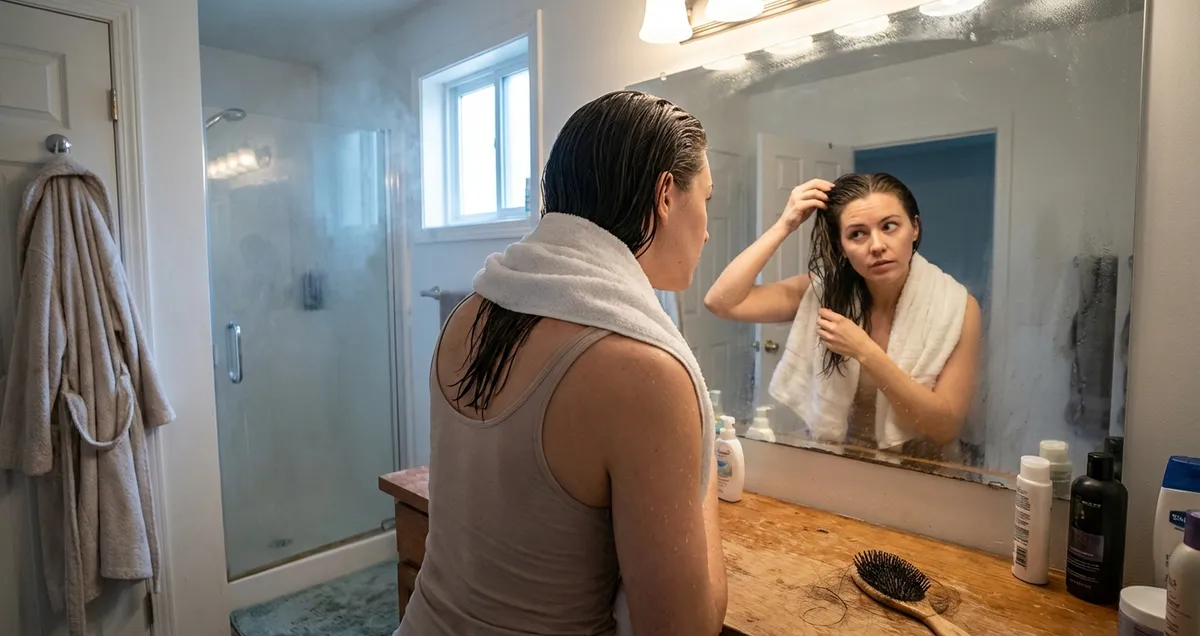
Up to 52% of postmenopausal women experience noticeable hair thinning. Learn why menopause causes hair loss and what treatments and lifestyle changes actually work.
Key Takeaways
- Hair loss during perimenopause and menopause is extremely common (affecting up to 40% of women by age 50) and is driven by changing hormone ratios, not simply low estrogen.
- The two main types of menopause-related hair loss are female pattern hair loss (gradual thinning that follows a pattern) and telogen effluvium (sudden, widespread shedding).
- Labs matter: before assuming it's just menopause, get tested for ferritin, TSH, B12, vitamin D, and zinc. Deficiencies in these are treatable and often overlooked.
- Topical minoxidil 2% (or 5%) is the only FDA-approved treatment for female pattern hair loss and works in about 60% of women; oral minoxidil and spironolactone show promising results in studies.
- MHT (menopausal hormone therapy) can stabilize hair loss in some women, especially when combined with other treatments, but won't work alone for everyone.
- Lifestyle changes (adequate protein, iron, omega-3 fats, sleep, and stress management) are foundational. Biotin supplements and most commercial "hair growth" formulas lack solid evidence.
The Hair Loss That Arrives with Menopause
You're in the shower and notice more hair than usual coating the drain. A few weeks later, your part looks wider. Your hairdresser comments that your hair feels thinner. Maybe it's not dramatic yet, but something has shifted. You know your body is changing (hot flashes, sleep disruption, mood swings) and now this. Hair loss during menopause is so common that you might expect it to be one of those symptoms everyone talks about openly. Instead, many women are surprised to learn it's happening to them and unsure whether it's temporary or permanent, or what on earth might actually help.
The silence around menopause hair loss is frustrating because it's real, it's widespread, and it is treatable. What isn't always clear is why it happens, which type you have, and which interventions actually have clinical evidence behind them. If you've searched online, you've probably found a bewildering mix of supplement ads, testimonials, and contradictory advice. This article cuts through the noise and gives you the medical facts, plus actionable steps you can take starting this week.
Hair loss during menopause is not vanity. It's a physiological response to hormonal change, and it deserves the same clinical attention as any other symptom.
Why Hair Changes During Perimenopause and Menopause
Your hair follicles are exquisitely sensitive to hormones. During your reproductive years, estrogen supports hair growth and keeps hairs in the active growth phase (called anagen) longer. When estrogen production begins to decline during perimenopause and drops sharply after menopause, several things happen simultaneously.
First, the ratio of estrogen to androgens shifts. You aren't necessarily producing more androgens (testosterone and its more potent form, DHT), but the relative balance changes. In some women, this shift is enough to trigger female pattern hair loss, a gradual thinning that often starts at the crown or widening part line. Importantly, most women with menopause-related hair loss do not have elevated androgen levels on blood tests. What matters is the hormone ratio, not absolute amounts.
Second, declining estrogen affects blood vessel function. Estrogen normally helps blood vessels dilate and maintain healthy blood flow. When estrogen drops, blood vessels contract, and the blood supply to hair follicles diminishes. This is called vascular aging, and it's a direct consequence of declining estrogen.
Third, lower estrogen disrupts the hair growth cycle itself. During your reproductive years, the growth phase is long and the resting phase short. As estrogen declines, hair spends more time in the telogen phase (resting and shedding phase) and less time in active growth. Additionally, progesterone production also changes during perimenopause and menopause. Progesterone normally inhibits the enzyme 5-alpha-reductase, which converts testosterone to DHT. With less progesterone, there's less inhibition, so more testosterone gets converted to DHT, the androgen most implicated in hair loss.
The result is that many women experience both a chronic, progressive thinning (female pattern hair loss) and periods of excessive shedding (telogen effluvium) during the menopause transition. Some women experience both simultaneously.
Female Pattern Hair Loss vs. Telogen Effluvium: Telling Them Apart
The treatment and prognosis differ depending on which type of hair loss you have. Here's how to tell them apart.
Female pattern hair loss (androgenetic alopecia) develops gradually over months to years. You'll notice a widening part line, less volume at the crown, or thinning all over the scalp. The hairline usually remains intact (unlike male pattern baldness), but the hair becomes shorter, finer, and lighter in color. This is driven by hormones and genetics. Approximately 15% of postmenopausal women are affected by female pattern hair loss, and the prevalence increases with age.
Telogen effluvium is different: it's sudden, diffuse shedding that happens when a trigger pushes hair follicles into the resting phase all at once. You might shed 50 to 100+ hairs per day (normal is 50 to 100 hairs shed per day at baseline, but telogen effluvium is more extreme). The trigger is usually a physical or emotional stressor (surgery, illness, major life stress, or the hormonal shock of perimenopause). Telogen effluvium typically starts 2 to 3 months after the trigger and lasts 3 to 6 months if the trigger resolves. It is self-limiting, meaning it goes away on its own once the cause is addressed.
The key distinction: female pattern hair loss is chronic and progressive without treatment. Telogen effluvium is temporary and resolves when the stressor ends. Many women in perimenopause experience telogen effluvium triggered by hormonal changes, and some also have underlying female pattern hair loss that becomes apparent once shedding stabilizes.
How to assess your own hair loss: Look at where the thinning is happening. Is it all over your scalp, or concentrated at the crown and part line? If it's all over, especially if it came on suddenly, suspect telogen effluvium. If it's gradual and follows a pattern, female pattern hair loss is more likely. If you're unsure, or if you've been shedding heavily for more than 6 months, see a dermatologist.
Medical Evaluation: The Labs You Should Ask For
Before jumping to supplements or expensive treatments, get a full workup. Hair loss can signal nutritional deficiencies, thyroid disease, or iron insufficiency, all of which are treatable and are often overlooked in menopause.
Ask your doctor to check:
Ferritin (iron storage): Low ferritin can trigger telogen effluvium. The healthy range is roughly 30 to 100 ng/mL, though some experts suggest ferritin should be at least 50 ng/mL for optimal hair health. Oral iron supplementation or dietary changes can correct this.
TSH and free T4 (thyroid function): Thyroid disease is common in midlife and can cause hair loss. Both hypothyroidism and hyperthyroidism can trigger telogen effluvium.
Vitamin B12: Deficiency is more common in women over 50 and is associated with hair loss. Many people assume they're getting enough B12 from food, but absorption declines with age. A simple blood test shows your level.
Vitamin D: Low vitamin D is linked to hair loss and is nearly universal in people who don't get regular sun exposure or supplementation.
Zinc: Zinc deficiency can cause telogen effluvium. This is less commonly tested but worth asking about if other labs are normal.
Testosterone and DHEAS: If you suspect androgenic hair loss (pattern thinning), ask for total and free testosterone and DHEAS. Most women with menopause-related hair loss will have normal androgen levels, but ruling it out is important.
Getting these tests done takes one office visit and might reveal a simple, fixable cause. Even if the results are normal, you'll know your hair loss is hormonally driven and can choose treatments accordingly.
Evidence-Based Treatments That Actually Work
Here's what the clinical evidence supports for menopause-related hair loss.
Topical Minoxidil 2% and 5%
Minoxidil is the only FDA-approved treatment for female pattern hair loss in women and is available over the counter. It works by extending the growth phase of the hair cycle and increasing blood flow to hair follicles. The standard dose is 2% applied to the scalp twice daily, though some women use 5%.
Clinical data shows minoxidil works in about 60% of women. It takes 4 to 6 months to see noticeable improvement, and benefits plateau around 12 months. If you stop using it, hair loss resumes within a few months. It's a long-term commitment, but it is evidence-based and safe for most women.
Side effects are minimal but include irritation or dermatitis at the application site and, rarely, unwanted hair growth on the face (which resolves when you stop). If you're pregnant or breastfeeding, avoid minoxidil; it's not been studied in these populations.
For postmenopausal women with menopause-driven hair loss, minoxidil is a reasonable first-line treatment to discuss with your dermatologist.
Oral Minoxidil
Oral minoxidil (administered as a daily tablet) is newer and not yet FDA-approved for hair loss, but several studies show promise. Early data suggest it works in up to 80% of women, which is higher than the topical version. The mechanism is similar: extending the growth phase and improving blood flow.
Oral minoxidil carries more systemic risk than topical (it was originally used for blood pressure management), including potential effects on heart rate and fluid retention. It requires close monitoring and is typically prescribed off-label by dermatologists experienced with it. If you're interested, discuss it with a dermatologist who is familiar with this use.
Spironolactone
Spironolactone is an antiandrogen, meaning it blocks the action of androgens on hair follicles. It is not FDA-approved for hair loss but is commonly prescribed off-label, especially for women with androgenic alopecia.
A 2024 systematic review and meta-analysis found that spironolactone alone improved hair loss in approximately 60% of patients. When combined with topical minoxidil, the improvement rate was 56.6% for the combination versus 43.2% for minoxidil alone. In one comparative study, the minoxidil-spironolactone combination resulted in improved hair density in 70% of patients versus 33% in a minoxidil-plus-finasteride group.
Typical doses range from 50 to 200 mg daily. Side effects include breast tenderness, irregular menstrual bleeding (less relevant postmenopausally), and hyperkalemia (elevated potassium), which requires periodic monitoring. It also requires regular blood work to monitor kidney function and electrolytes.
For postmenopausal women, spironolactone is a reasonable option, especially in combination with minoxidil.
Menopausal Hormone Therapy (MHT) and Hair Loss
The relationship between hormone replacement and hair loss is not straightforward. Estrogen in MHT theoretically should help because it supports the growth phase of hair and antagonizes androgens. However, clinical trials specifically testing MHT for hair loss are limited.
Some women report that starting MHT stabilizes their hair loss or improves it. Others see no change. The effect likely depends on the specific hormones used, the dose, how long you've been losing hair, and individual genetics.
If you're considering MHT primarily for hair loss, manage your expectations. MHT may help, especially when combined with minoxidil or spironolactone, but it's unlikely to reverse significant hair loss on its own. Its primary benefit for hair loss is stabilization, not regrowth.
Low-Level Laser Therapy (LLLT)
Low-level laser therapy uses red or near-infrared light to stimulate hair follicles. The proposed mechanism is that light energy stimulates stem cells in the hair follicle and shifts follicles into the growth phase. Some evidence suggests LLLT improves hair density, though the effect sizes are generally smaller than minoxidil.
Most studies report that LLLT has few side effects and shows statistically significant improvements in hair count compared to controls. When combined with other treatments like minoxidil or PRP (see below), the results are better than any single treatment alone.
LLLT devices range from inexpensive LED combs to expensive in-office laser treatments. Evidence supports both, though in-office treatments tend to use higher energy. If you're interested, look for devices cleared by the FDA for this indication and be prepared to use them for several months to assess benefit.
Platelet-Rich Plasma (PRP)
PRP therapy involves drawing your blood, spinning it to concentrate growth factors and platelets, and injecting the concentrate into the scalp. The growth factors theoretically stimulate hair follicle stem cells and prolong the growth phase.
Recent meta-analyses show that PRP therapy enhances hair density and thickness in women with hair loss, with a favorable safety profile. One analysis found a substantial increase in hair density from PRP treatment (averaging 405 hairs per square centimeter compared to controls).
PRP requires a series of injections (often 3 to 4 sessions spaced 4 to 6 weeks apart) and costs are high (typically $500 to $2,000 per session). It's not covered by insurance. The evidence is promising but still emerging, and results vary. When combined with laser therapy or minoxidil, outcomes improve.
Hair Transplantation
If you've already lost significant density and other treatments haven't worked, hair transplantation is an option. This is a surgical procedure in which hair follicles from areas of the scalp with good density are moved to thinning areas. It's effective but invasive, expensive ($10,000 to $20,000 or more), and requires a skilled surgeon. It's typically reserved for women with significant, long-standing hair loss.
Nutrition and Lifestyle: The Foundation
Before or alongside any medical treatment, address the fundamentals. Hair is protein, and your body prioritizes other tissues over hair when nutrients are short.
Protein: Aim for 1.2 to 1.6 grams of protein per kilogram of body weight daily. Hair is made of keratin, a structural protein, and your body won't invest in hair growth if protein intake is borderline. Include sources like fish, poultry, eggs, legumes, and dairy.
Iron: Adequate iron is essential for hair growth. Red meat, poultry, legumes, and fortified grains are good sources. Pair iron-rich foods with vitamin C (citrus, berries) to enhance absorption. If you're vegetarian or have documented low ferritin, consider supplementation under medical guidance.
Omega-3 fatty acids: Omega-3s support scalp health and hair follicle function. Fatty fish (salmon, mackerel), flaxseeds, chia seeds, and walnuts are good sources. If you don't eat these regularly, a fish oil or algae supplement is reasonable.
Sleep: During deep sleep, your body produces growth hormone and repairs tissues, including hair follicles. Inadequate sleep worsens hair loss. Aim for 7 to 9 hours per night. If menopause-related hot flashes are disrupting your sleep, address them with your doctor.
Stress management: Chronic psychological stress can trigger or worsen telogen effluvium. Exercise, meditation, time in nature, and adequate social connection all help. Even moderate regular exercise (30 minutes most days) reduces stress hormones and supports hair health.
Scalp care: Avoid tight hairstyles that pull on hair (high ponytails, tight braids), which can cause traction alopecia. Use lukewarm water (not hot) when washing hair, and be gentle when brushing or combing, especially when hair is wet and fragile.
What Doesn't Work: The Supplements and Myths
You've probably seen ads for hair growth supplements with names like "hair vitamins" or formulas containing biotin, collagen, or proprietary blends. The honest truth: most lack robust clinical evidence.
Biotin: While biotin is essential for hair health, supplementing with biotin only helps if you're truly deficient, which is rare in people eating a normal diet. Multiple studies show that high-dose biotin supplementation does not improve hair growth in people with normal biotin levels. It's overhyped and oversold.
Collagen: Collagen supplements are broken down in your stomach into amino acids, just like any protein source. There's no evidence that collagen supplements specifically improve hair compared to eating adequate protein from food. Save your money.
Multi-ingredient hair supplements: Many commercial products combine biotin, saw palmetto, zinc, and other ingredients. Individually, the components may have some evidence (though weak), but the combinations haven't been rigorously tested. These products are expensive and their benefit is unproven.
Saw palmetto: This herb is purported to block DHT, similar to finasteride. However, the evidence is weak and inconsistent. It's not FDA-approved for hair loss in women and isn't recommended by major dermatology guidelines.
Inositol, peptides, and other trending ingredients: These pop up in wellness circles regularly, but clinical evidence is sparse or absent. A few small studies might show promise, but large, rigorous trials are needed before these can be recommended.
The supplement industry is loosely regulated, and marketing often outpaces evidence. Before spending money on a supplement, ask your doctor whether it's been studied in clinical trials and whether the evidence is strong. For most "hair growth" supplements, the answer is no.
What the Research Says
Several recent large studies have clarified the menopause-hair loss relationship.
A 2025 structured literature review published in Maturitas synthesized evidence from PubMed, Ovid, and Scopus, examining the hormonal mechanisms of hair loss during menopause. The review confirmed that the ratio of estrogen to androgens, declining estrogen with maintained or relatively increased androgen sensitivity, and vascular changes are the primary drivers. Importantly, the majority of women with menopausal alopecia do not have elevated androgen levels on blood tests, indicating that the absolute hormone levels matter less than the ratio and tissue sensitivity.
A 2024 meta-analysis in the Journal of the American Academy of Dermatology evaluating minoxidil plus spironolactone combination therapy found that this pairing significantly outperformed minoxidil alone, with 70% of patients showing improved hair density versus 33% in minoxidil-monotherapy groups. This establishes combination therapy as an evidence-based approach.
The American Academy of Dermatology, at its 2025 annual meeting, presented data showing that menopause is associated with increased risk and severity of female pattern hair loss and frontal fibrosing alopecia. This institutional recognition validates that dermatologists now view menopause as a significant risk factor for hair loss and are incorporating this into clinical practice guidelines.
Practical Steps You Can Take This Week
-
Schedule a dermatology appointment if you haven't already. You need a professional evaluation to distinguish between female pattern hair loss and telogen effluvium and to rule out other causes.
-
Ask your primary care doctor for the lab tests listed earlier (ferritin, TSH, B12, vitamin D, zinc). These take one office visit and might reveal a simple, treatable cause.
-
Assess your protein intake. Count your grams of protein over one day. If you're below 1.2 grams per kilogram of body weight, add a serving of fish, poultry, eggs, or legumes to one meal.
-
Review your sleep. Are you getting 7 to 9 hours? If not, adjust your bedtime this week. Sleep quality matters more for hair than most people realize.
-
If you're interested in minoxidil, ask your dermatologist about starting topical 2% or 5%. It takes 4 to 6 months to see results, so the sooner you start, the sooner you'll know if it works for you.
-
Start a stress-management practice, even a simple one. Ten minutes of walking, meditation, or stretching daily is enough to move the needle on stress hormones.
-
Avoid tight hairstyles that pull on hair. Your follicles are stressed enough without physical tension.
When to Talk to Your Doctor
Schedule an appointment with your primary care doctor or a dermatologist if:
- You're shedding more than 100 hairs per day consistently for more than 3 months.
- Your hair loss is affecting your quality of life or mental health (this is valid; hair loss during menopause can trigger grief and frustration).
- You've had other major life stressors (surgery, illness, significant emotional stress) and want to rule out telogen effluvium as the trigger.
- You're interested in MHT, minoxidil, spironolactone, or other prescription treatments.
- You have a family history of early-onset baldness or have noticed hair loss in your mother or grandmother (this increases the likelihood of female pattern hair loss).
- Your hair loss is accompanied by other symptoms like fatigue, weight changes, cold intolerance, or irregular heartbeat (these might point to thyroid disease or other medical issues).
Dermatologists are trained to diagnose and treat hair loss and are your best resource for personalized guidance.
How Menoa Can Help
Hair loss is a visible, sometimes distressing part of menopause, and it shouldn't be navigated alone. Menoa lets you track your hair loss alongside other menopause symptoms so you can identify patterns and monitor whether treatments are working. Many women find that seeing their symptoms documented (when they started, how they've changed, what you've tried) helps them feel more in control and gives them concrete data to share with their doctor.
You can also connect with menopause specialists through Menoa to discuss treatment options, whether medical or lifestyle-based. Hair loss is real, it's common, and there are effective solutions.
Frequently Asked Questions
Q: Is hair loss during menopause permanent?
A: It depends on the type. Telogen effluvium, which causes sudden shedding, is usually temporary and reverses when the stressor ends. Female pattern hair loss is chronic and progressive without treatment, but it can be stabilized or partially reversed with minoxidil, spironolactone, or other interventions. The key is starting treatment early and being consistent.
Q: Will my hair grow back if I start MHT?
A: Some women report stabilization or improvement of hair loss when starting MHT, especially estrogen-containing therapy. However, clinical trials specifically testing MHT for hair regrowth are limited. MHT may prevent further loss but is unlikely to dramatically reverse significant thinning on its own. Combining MHT with minoxidil or other treatments works better than MHT alone.
Q: How long does minoxidil take to work?
A: Most women see noticeable improvement by 4 to 6 months, though some see results as early as 3 months. Maximum benefit is typically reached around 12 months. You need to use it consistently and indefinitely to maintain results. If you stop, hair loss resumes within a few months.
Q: Can I combine minoxidil and spironolactone?
A: Yes, and the evidence suggests this combination is more effective than either treatment alone. Clinical studies show minoxidil-plus-spironolactone results in improved hair density in 56% to 70% of women, compared to 43% for minoxidil alone. This combination is commonly prescribed by dermatologists and requires periodic blood work to monitor potassium and kidney function.
Q: Are there any natural or supplement treatments that work?
A: The most important "natural" treatments are the fundamentals: adequate protein, iron, sleep, and stress management. These have real evidence behind them. Most herbal or supplement remedies (saw palmetto, biotin, collagen, inositol) lack robust clinical evidence. If a supplement interests you, ask your doctor whether it's been studied in rigorous trials and what the evidence shows.
Q: If I'm on MHT, do I still need minoxidil?
A: It depends. Some women on MHT alone stabilize their hair loss. Others continue to lose hair and benefit from adding minoxidil. Your dermatologist can help you decide based on your individual response. Starting with MHT alone is reasonable, and adding minoxidil later if needed is always an option.
Sources
-
Goldberg, L. J., & Lenzy, Y. (2025). Menopause and hair loss in women: exploring the hormonal transition. Maturitas, 180, 107866. doi:10.1016/j.maturitas.2025.01.186
-
Olsen, E. A., & Messenger, A. G. (2025). Hair loss in women. New England Journal of Medicine, 392(9), 768-779.
-
Kaliyadan, F., & Singal, A. (2024). The efficacy and safety of oral spironolactone in the treatment of female pattern hair loss: A systematic review and meta-analysis. Journal of Cosmetic Dermatology, 23(2), 412-421.
-
Rathnayake, D., & Sinclair, R. (2023). Androgenetic alopecia: An update. JAAD International, 11, 43-54.
-
Rossi, A., Muglia, V., Starace, M., & Cempanari, M. (2024). Platelet-rich plasma for androgenetic alopecia: A review of the literature and proposed treatment protocol. Dermatologic Surgery, 50(2), 125-135.
-
American Academy of Dermatology. (2025). Thinning hair and hair loss: Could it be female pattern hair loss? Retrieved from https://www.aad.org/public/diseases/hair-loss/types/female-pattern
-
National Institutes of Health, National Library of Medicine. (2024). Female pattern hair loss and menopause [PubMed database]. Retrieved from https://pubmed.ncbi.nlm.nih.gov/
-
The Menopause Society. (2024). Menopause guidebook (9th ed.). Cleveland, OH: The Menopause Society.
-
Sinclair, R. D. (2023). Hair loss in women: medical and cosmetic approaches to enhance self-esteem. Menopause Review, 22(1), 8-16.
-
Madani, S., & Shapiro, J. (2023). Alopecia areata update. Journal of the American Academy of Dermatology, 88(6), 1254-1268.
More articles
 Symptoms & Management
Menopause and Dizziness: Causes, When to Worry, and Relief Strategies
About 36% of women experience dizziness at least once a week during perimenopause and menopause. Learn what causes menopause-related dizziness, when to worry, and evidence-based relief strategies.
 Healthcare & Support
Preparing for Your Menopause Appointment: Tracking, Documentation, and Questions
A practical guide to preparing for menopause-related doctor visits. Learn how to track symptoms, organize your health history, and ask the right questions.