How to Find a Menopause Doctor and What to Ask

How to find a menopause specialist, what credentials matter, and the exact questions to ask at your first appointment.
Key Takeaways
- Most GPs receive fewer than two hours of menopause training in medical school, with 41% of UK medical schools offering no mandatory menopause curriculum at all.
- NAMS-Certified Menopause Practitioners (MSCP) and BMS-accredited specialists have demonstrable expertise, but credentials vary widely.
- 42% of women discussing menopause symptoms with doctors receive no treatment advice, and 23% report their symptoms were dismissed.
- Red flags include dismissing hot flashes as "normal aging," refusing HRT based on myths, or using only FSH testing for diagnosis.
- The NHS "postcode lottery" means care varies drastically; waiting times for specialist clinics can exceed six months in some regions.
- Private specialists and telehealth offer faster access but at varying costs; NHS remains free but requires more persistence.
- A written summary of your appointment findings and a second opinion are your right as a patient.
The Appointment That Shouldn't Happen
You've made the appointment. You've typed out your symptoms: night sweats soaking through two sets of sheets, brain fog so thick you forgot what you walked into the kitchen for, vaginal dryness that makes intimacy painful. You've timed your hot flashes for three weeks.
The appointment lasts ten minutes. Your doctor listens for perhaps half of it while entering notes into the computer. When you mention your symptoms, you hear one of these responses:
"It's just stress. Have you tried yoga?"
"You're too young for menopause. Get your thyroid checked."
"HRT causes cancer. You don't want to go down that path."
"These things pass. Come back in six months if it's still bothering you."
If this sounds familiar, you're not alone. Research shows that 42% of women who raise menopause concerns with their doctor receive no treatment advice at all. Another 23% report feeling their symptoms were dismissed or inadequately addressed.
The problem isn't you. It's your doctor's training, or rather, the shocking lack of it.
Why Most Doctors Aren't Trained in Menopause
Here's a sobering fact: only 6.8% of medical residents in North America report feeling adequately prepared to manage menopausal complaints. In the UK, 77.5% of GPs say menopause training in medical school needs improvement. Only 60.7% of GPs feel genuinely comfortable managing menopausal women.
The numbers reveal why.
A 2021 Menopause Support survey found that 41% of UK medical schools have no mandatory menopause education program at all. This means thousands of doctors graduate without ever studying menopause in any formal way. Instead, many are expected to pick up menopause knowledge during GP training placements, if it's even offered.
In the United States, only 20% of OB-GYN residency programs include any formal menopause training. The American College of Graduate Medical Education has no clear standards requiring it. Menopause isn't tested on medical licensing exams in most countries, so it's easy for educators to deprioritize it.
When doctors do receive training, it's often minimal. A 2022 UK survey published in peer-reviewed research found that medical students received an average of fewer than two hours of menopause education across their entire training.
This gap has real consequences. One study found that 24% of medical residents said they wouldn't prescribe HRT to a symptomatic menopause-stage woman even if she had no health risks that would contraindicate it. Their reason wasn't evidence-based; it was outdated fear about hormone therapy safety, rooted in a misinterpretation of the Women's Health Initiative study from 2002.
The NICE 2024 update on menopause guidance acknowledges this training deficit and recommends that doctors with expertise in menopause should have received training recognized by professional bodies like the British Menopause Society, the Faculty of Sexual and Reproductive Healthcare, or the Royal College of Obstetricians and Gynaecologists. But this is a recommendation, not a requirement. Your GP did not necessarily complete such training.
The Credentials That Actually Matter
Not all doctors who treat menopause have the same level of knowledge. Understanding what credentials mean can help you find someone with real expertise.
NAMS-Certified Menopause Practitioner (MSCP) is a real credential. It means a healthcare professional (doctor, nurse practitioner, or physician assistant) has passed a rigorous competency examination administered by The Menopause Society (formerly NAMS). To use this credential, practitioners must maintain it by earning 45 continuing education credits every three years, with at least 15 from The Menopause Society itself. This credential is available across North America and internationally.
The downside: any licensed healthcare provider can sit for the exam, so you're verifying that someone passed a test, not that they have a minimum number of years of specialist experience. But it's still a meaningful marker.
BMS-accredited specialists in the UK have undergone advanced menopause training and demonstrated specialist competency in menopause care. They're qualified to lead menopause services and accept referrals from other GPs. Finding someone BMS-accredited means they have both current knowledge and recognition from a professional body that sets standards.
Beyond specific menopause certifications, look for:
A gynaecologist or women's health doctor with a stated interest or specialization in menopause. This shows they've chosen to focus on it professionally.
A doctor who references NICE 2024 guidance, NAMS position statements, or the British Menopause Society literature when discussing your care.
Someone who attended menopause-specific continuing education recently. It's fair to ask: "Have you attended any menopause education courses in the last two years?"
A practitioner who is a current member of a relevant professional body (BMS, RCOG Faculty of Sexual and Reproductive Healthcare, etc.).
The absence of these credentials doesn't automatically mean a doctor is unhelpful. Some excellent GPs simply haven't pursued additional certification. But credentials do remove one layer of guesswork and give you confidence that someone is staying current with the evidence.
Where to Find a Certified Specialist
If your current GP isn't meeting your needs, these are the main directories:
The Menopause Society's Find a Provider tool (portal.menopause.org) allows you to search by location and filter for MSCP-certified practitioners. It's most useful in the US but includes some international listings.
The British Menopause Society's Find a Menopause Specialist directory (thebms.org.uk/find-a-menopause-specialist) lets you enter your postcode and search for BMS-accredited specialists across the UK, with contact details and online booking links available for many.
Menopause Support (menopausesupport.co.uk) provides guidance on finding NHS menopause clinics near you, though availability varies by region.
Your GP can refer you to a specialist. You don't always need to find one privately first. If you ask for a referral to a menopause specialist and your GP refuses or says there's no one available locally, ask for a referral to a gynecologist with an interest in menopause, or request they refer you under the NHS Choose and Book system so you can access specialists further afield.
Private menopause clinics and telehealth services are also available, particularly in larger cities and online. These typically offer shorter waiting times (days rather than months) but at a cost.
Red Flags in Your Current Provider
If your doctor says any of the following, it's worth seeking a second opinion.
"HRT causes cancer." This reflects outdated fears from a misreading of the Women's Health Initiative study. The current evidence, including NICE 2024 guidance, shows that HRT at standard prescribed doses carries very small risks for most women and significant protective benefits for bone health and cardiovascular health in early perimenopause. A doctor making blanket statements against HRT without discussing individual risk factors isn't practicing evidence-based medicine.
"You're too young to be menopausal. Your FSH levels are normal." Diagnosis of menopause should be symptom-based for women over 45, not test-based, according to NICE 2024. A single normal FSH test during a symptom cluster doesn't rule out perimenopause. FSH fluctuates wildly in perimenopause; testing at the wrong time of the month gives meaningless results.
"Just wait it out. Menopause only lasts a few years." For many women, menopausal symptoms last a decade or longer. Telling someone to suffer through it without exploring treatment options dismisses the real quality-of-life impact of symptoms like night sweats, brain fog, and vaginal dryness.
"I don't prescribe HRT after 60." There is no age cutoff for HRT eligibility. NICE 2024 does not recommend an upper age limit. If a woman has no contraindications to HRT and wants to try it at 62, 72, or 82, she should be offered it based on individual assessment, not a rigid age rule.
"Your symptoms are just depression. Here's an antidepressant." While depression can occur alongside menopause, hot flashes, night sweats, vaginal dryness, and joint pain are not depression. A doctor who assumes all menopausal symptoms are psychiatric is not listening carefully to what you're describing.
"You can't use testosterone. It's not FDA-approved/not licensed for women." While systemic testosterone for menopausal women is not widely approved, some jurisdictions do license it, and off-label prescription by a knowledgeable doctor may be appropriate for select symptoms. A blanket refusal to discuss testosterone suggests limited menopause knowledge.
If you encounter these attitudes, your instinct to find someone else is sound.
Green Flags Worth Keeping
Conversely, a doctor who does the following is likely worth staying with.
They ask detailed questions about your symptom timeline, severity, and impact on your life. Not all symptoms need the same treatment, and a good assessment takes time.
They discuss perimenopause and menopause as distinct phases with different treatment approaches.
They mention NICE 2024 guidance, NAMS position statements, or BMS resources when discussing your options.
They discuss the risks and benefits of HRT specifically for your situation, rather than giving a blanket yes or no.
They ask about your family history of osteoporosis, cardiovascular disease, and breast cancer, understanding that individual risk context matters for treatment decisions.
They offer multiple treatment options. HRT isn't right for everyone, and a doctor should be conversant in non-hormonal treatments like estradiol-releasing vaginal inserts for dryness, CBT for hot flashes, or antidepressants for mood symptoms, if needed.
They listen to your goals. Maybe you want to resume intimacy without pain. Maybe you want to stop the night sweats so you can function at work. Maybe you want the absolute lowest-risk approach. A good doctor treats your priorities as real.
They provide written information and are willing to answer follow-up questions by email or at a follow-up appointment.
How to Prepare for the First Appointment with a Specialist
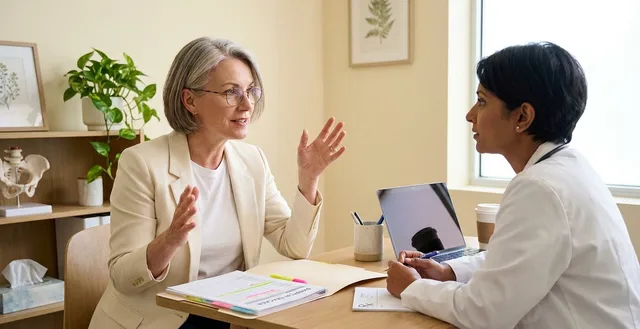
Whether you're seeing a new GP or a private specialist, come prepared.
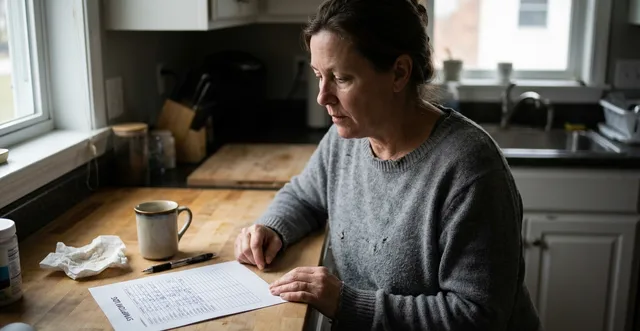
Keep a symptom log for two to four weeks before your appointment. Record the date, time of day, severity (1-10), duration, and any triggers for each symptom. Include impact: Did you have to leave a meeting? Did you struggle to concentrate? Note sleep disruption, mood changes, changes in menstrual bleeding, and any symptoms you might not think of as menopause-related, like joint pain or memory fog.
Bring a complete medication list, including over-the-counter supplements, contraceptive pills, and any past hormone use. Include the names, doses, and how long you've been on each.
List your questions in advance. Write down what matters most to you. What symptom bothers you most? What are your concerns about treatment?
Provide your family history: any close relatives with breast cancer, osteoporosis, cardiovascular events, or blood clots. This is relevant to HRT decisions.
Describe any previous attempts at treatment, including how long you tried them and why you stopped.
Ask for a printed or emailed summary of the appointment, including the diagnosis, any test results, the recommended treatment plan, and follow-up dates. Don't rely on memory.
Request that they note in your medical record if any treatment is declined and why, so the next doctor you see understands what was already offered.
Questions Every Menopause Doctor Should Welcome
"What changes in my symptoms should prompt me to get a second opinion?"
"How will we know if this treatment is working? How long should I give it?"
"If this HRT prescription doesn't feel right, what are the alternatives?"
"What's your approach to vaginal dryness and sexual health?"
"Do you work with a psychotherapist or other practitioners? Should I consider CBT alongside HRT?"
"How do you stay current with menopause research? What resources do you use?"
"What's your experience with patients whose symptoms started in their late 30s [or early 50s, etc.]?"
"If I want a second opinion, how can we make sure I'm not repeating the same tests?"
A doctor who gets defensive about these questions or refuses to answer them is signaling that menopause may not be their priority.
What to Do If You're Dismissed
If a doctor dismisses your symptoms, you have options. None of them involve accepting inadequate care.
Ask for a second opinion in writing. Say: "I'd like a second opinion on this. Can you refer me to another doctor?" Your GP is obliged to do so, or to explain why they won't. If they refuse, escalate to the practice manager.
Request a copy of your medical record and the full details of what was discussed and recommended (or not recommended) at your appointment. You're entitled to this under data protection law.
Write a summary email to your doctor after the appointment, documenting what you told them, what they said, and what you understood the plan to be. Send it from your patient portal or registered email. This creates a record.
Ask for a referral to a gynaecologist, gynae-oncologist, or menopause specialist. You don't have to accept your GP's first response if they say none are available. Request a referral under the NHS Choose and Book system.
Contact your local Integrated Care Board (ICB) patient advocacy service if you feel you've been unfairly denied care. Many areas have menopause champions or patient advocates who can advocate on your behalf.
Consider a private second opinion if NHS waiting times are prohibitive. Even one appointment with a specialist can clarify the diagnosis and provide you with evidence-based recommendations that you can then discuss with your NHS GP.
NHS vs Private vs Telehealth: Trade-offs
All three options are legitimate. The right choice depends on your situation, budget, and urgency.
NHS Care (in the UK)
Pros: Free. GPs can prescribe HRT. NICE 2024 provides a clear evidence-based framework. Specialist menopause clinics exist, though availability varies.
Cons: GP appointments are typically ten minutes. Waiting times for specialist referrals range from a few weeks to six months, depending on your region. Some regions have dedicated menopause clinics; others offer only general gynecology referrals. This "postcode lottery" means the quality and speed of care depend heavily on where you live. 59% of NHS regions lack a dedicated specialist menopause clinic.
Private Specialists
Pros: Typically 30-60 minute appointments. Faster access (days to weeks rather than months). More comprehensive testing and review. Your choice of practitioner.
Cons: Significant cost (typically £150-400 per appointment in the UK). Follow-up prescriptions may need NHS support, which can be difficult if your GP doesn't agree with the private specialist's recommendations.
Telehealth
Pros: Convenient, accessible from home. Many platforms have MSCP-certified practitioners. No geographic barriers. Prescription services often available. Appointments can be scheduled within days.
Cons: Quality and credentials vary widely between providers. Online consultations may feel less thorough than in-person ones. Some practitioners don't have deep menopause expertise despite offering the service. Cost varies; some are subscription-based, others charge per visit.
The ideal scenario for many women is a combination: an NHS GP who listens and is willing to prescribe, or a private first consultation that provides a clear plan, which is then managed through the NHS where possible.
What the Research Says
The evidence on menopause care, training gaps, and treatment effectiveness is now substantial.
NICE 2024 menopause guidance, published in November 2024, emphasizes symptom-based diagnosis for women over 45 (no FSH testing needed), recognizes HRT as the most effective treatment for hot flashes and perimenopause-related symptoms, and recommends CBT and other non-hormonal approaches as complementary options. It also addresses genitourinary syndrome (vaginal dryness and atrophy) and recommends vaginal estradiol treatments alongside systemic HRT.
Research on doctor training shows consistent deficits. A 2022 UK GP survey found that 77.5% of GPs felt menopause training needed improvement. Only 52% said they felt adequately equipped to treat menopausal women. Yet 60.7% reported feeling comfortable managing these patients, suggesting some doctors are overestimating their competence.
The Bonafide 2024 State of Menopause survey of over 1,000 women found that 50% of women experienced menopausal symptoms for at least four months before seeking medical advice. Of those who did seek care, 42% received no treatment recommendations, and 23% felt their symptoms were dismissed. These numbers haven't improved much in recent years; they reflect persistent gaps in doctor training and patient advocacy.
A peer-reviewed 2024 study on barriers to menopause care found that primary care providers had less knowledge and confidence in managing vaginal atrophy compared to gynecologists. Clinician-reported barriers included lack of time, lack of diagnostic tools, and insufficient educational materials for patient counseling.
The evidence is clear: menopause care is inconsistent, training is inadequate, and women often have to push for proper diagnosis and treatment.
Practical Steps You Can Take This Week
Start your symptom log today. Use a simple notebook, a notes app, or a menopause-tracking app. Write down when symptoms occur, what they feel like, and how they affect you. This is the single most useful thing you can do before any appointment.
Review your medications and supplements. Write them all down with doses. Bring this list to your next appointment.
If you're unhappy with your current care, contact your practice to request an appointment with a different doctor at your surgery or ask for a specialist referral. Be clear and specific: "I'm experiencing menopausal symptoms that are affecting my quality of life, and I'd like a referral to a menopause specialist or gynecologist."
Find your local menopause specialist using the BMS directory (UK) or ask your GP which menopause services are available in your area.
Email your GP after your last appointment summarizing what was discussed and what you understood the plan to be. This creates a documented record.
If you're in the US, search The Menopause Society's provider directory for an MSCP-certified practitioner, or ask your doctor if they hold this certification.
When a Second Opinion Is Non-Negotiable
You should absolutely seek a second opinion if:
Your symptoms are severely affecting your quality of life and your current doctor dismisses them or says there's no treatment available.
You've been refused HRT without a clear medical reason, and other doctors you know have been offered it for similar symptoms.
You were told you're "too young" or "too old" for menopause, and you meet the age criteria for your stage (average menopause occurs in the early 50s; perimenopause starts in the 40s, sometimes the late 30s).
A doctor tells you something that contradicts NICE 2024 or NAMS guidance, and you don't feel confident in their explanation.
You've been on a treatment that doesn't work, and your doctor says nothing else can be done.
You want to explore options like testosterone, vaginal treatments, or combination therapies, and your current doctor refuses to discuss them.
Getting a second opinion isn't disloyal; it's your right as a patient. Many specialists expect it and welcome the opportunity to clarify what might have been missed.
How Menoa Can Help
Finding accurate, evidence-based information about menopause is harder than it should be. Menoa's menopause knowledge base brings together the latest research, clinical guidance, and practical advice in one place.
Our glossary explains menopause-related terms so you can speak confidently with your doctor about perimenopause, HRT, FSH, hot flashes, estradiol, vaginal dryness, and other key concepts.
Our articles guide you through finding care, preparing for appointments, understanding treatment options, and navigating the healthcare system when you feel unheard.
Use Menoa to build your knowledge before appointments. Bring printouts of relevant articles to show your doctor if they're unfamiliar with current guidance. Let the evidence you've found strengthen your voice in conversations about your care.
Frequently Asked Questions
What's a NAMS-certified menopause practitioner?
A NAMS-Certified Menopause Practitioner (now called MSCP, for Menopause Society Certified Practitioner) is a healthcare professional who has passed a rigorous competency examination in menopause management. It can be a doctor, nurse practitioner, or physician assistant. They maintain their certification by earning 45 continuing education credits every three years. This credential is recognized across North America and internationally, and it signals genuine expertise in menopause care.
Can my regular GP prescribe HRT?
Yes. GPs in the UK can and do prescribe HRT under NICE 2024 guidance. They don't need a specialist qualification to do so. However, not all GPs are equally confident or knowledgeable about menopause. If your GP seems uncomfortable prescribing HRT or dismisses it, that's a sign their training in menopause may be limited, and you have the right to seek a second opinion.
Should I switch to a specialist?
Not necessarily. A knowledgeable, supportive GP is often sufficient. But a specialist may be worth consulting if your symptoms are complex, you've had multiple failed treatments, or you want to explore options your GP isn't offering. You don't have to switch permanently; one specialist appointment can clarify your options and give you a plan to discuss with your GP.
How do I find a menopause doctor on the NHS?
Ask your GP for a referral to a menopause specialist or gynecologist with an interest in menopause. If your GP says none are available locally, request a referral under the NHS Choose and Book system, which lets you access specialists further afield. Menopause Support's website has a directory of NHS menopause clinics and contact information. Some areas have dedicated clinics; others route women through general gynecology.
Is telehealth menopause care any good?
It depends on the provider. Telehealth can be very effective if the practitioner is MSCP-certified or has genuine menopause expertise. Online appointments can be thorough and lead to effective treatment plans. The advantage is speed and accessibility. The disadvantage is that quality varies, so do your research on the provider, check their credentials, and see if they reference current guidance like NICE 2024 or NAMS position statements.
Sources
- Choosing a Healthcare Practitioner | The Menopause Society
- Certification Examination | The Menopause Society
- An online survey of GPs in the UK assessing satisfaction with menopause training | PMC
- Menopause Support Survey on Training in Medical Schools
- Find a BMS-recognised Menopause Specialist | British Menopause Society
- Menopause: identification and management | NICE Guidance NG23
- Overview | Menopause: identification and management | NICE
- Facing Provider Misconceptions Towards the Use of Hormone Therapy in 2020 | PMC
- Menopause Misinformation: How to Detect It | ACOG
- Barriers to Accessing Effective Treatment and Support for Menopausal Symptoms | PMC
- The Menopause Society Statement on Misinformation Surrounding Hormone Therapy
- Private GP vs NHS Menopause Support | Future Care Medical
- NHS Menopause Services: What You're Entitled to & How to Access
- How to find your nearest menopause specialist clinic | Menopause Support
- Gennev: Expert Virtual Menopause Care
- Winona: Online Menopause Specialist & Telehealth HRT
- Bonafide 2024 State of Menopause Survey
- 2023 Nonhormone Therapy Position Statement | The Menopause Society agentId: acfebc34668de4e22 (use SendMessage with to: 'acfebc34668de4e22' to continue this agent) <usage>total_tokens: 52715 tool_uses: 8 duration_ms: 90203</usage>
Terms in this article
Sudden, intense waves of heat that spread through the upper body, often with flushing, sweating, and a racing heart. Hot flashes affect around 80% of women during menopause and can last anywhere from a few months to over a decade.
Hormone replacement therapy: estrogen, usually with progesterone, taken to replace the hormones your body stops making. It is the most effective treatment for moderate to severe menopause symptoms.
A pituitary hormone that stimulates ovarian follicle development and estrogen production; levels rise significantly after menopause but are unreliable for diagnosis due to dramatic fluctuations during perimenopause.
A reduction in vaginal moisture and lubrication caused by declining estrogen levels during menopause, leading to discomfort, irritation, and pain during sexual activity.
The point when you have gone 12 consecutive months without a period, marking the end of your reproductive years. It happens at 51 on average, usually between 45 and 55.
The transitional period leading up to menopause, typically lasting 4 to 8 years, when your ovaries gradually produce less estrogen and progesterone, causing irregular periods and a range of symptoms. Perimenopause ends when you've gone 12 consecutive months without a period.
More articles
 Healthcare & Support
Preparing for Your Menopause Appointment: Tracking, Documentation, and Questions
A practical guide to preparing for menopause-related doctor visits. Learn how to track symptoms, organize your health history, and ask the right questions.
 Healthcare & Support
Menopause Self-Advocacy: How to Get the Care You Deserve
Learn how to advocate for yourself with healthcare providers and get the menopause care you deserve. Expert strategies for symptom documentation, speaking with doctors, finding specialists, and more.