Menopause and Anxiety: Separating Hormones From Real Worry

Your heart is racing at 3am. You're lying awake, convinced something is terribly wrong. Or you're in the supermarket and suddenly the crowd feels suffocating, your chest tightens, and all you want is to escape. This isn't you. You've never been an anxious person. But now, in your 40s or 50s, anxiety has arrived uninvited. Is this real anxiety or just menopause? And more importantly, what can you actually do about it?
Key Takeaways
- Anxiety during perimenopause and menopause affects 15 to 50% of women, driven primarily by falling estrogen and progesterone levels.
- Hormonal changes disrupt neurotransmitters (serotonin, GABA, norepinephrine) that regulate mood and stress response.
- Distinguishing between menopause-triggered anxiety and pre-existing anxiety disorders requires honest assessment and professional evaluation.
- CBT is the gold-standard, evidence-backed treatment; SSRIs and HRT are also effective.
- Practical tools like exercise, sleep, caffeine reduction, and breathing techniques provide immediate relief while medical treatments work.
- Most menopause-related anxiety resolves after the transition, though the timeline varies widely.
That 3am Moment: Recognizing Menopause Anxiety
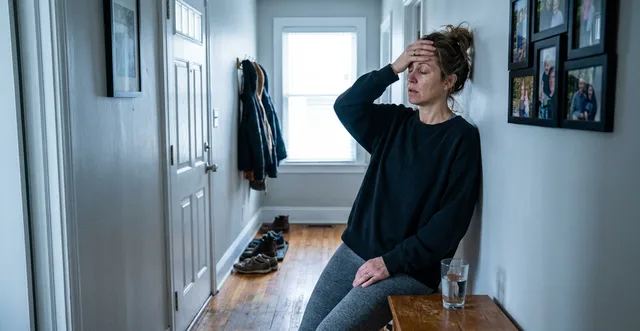
It starts without warning. Your eyes open at 3am. Your heart is pounding. You're not sure why. There's no immediate danger, no noise, no obvious trigger. But your body believes there is. Your palms sweat. Your mind races. You check the time obsessively. You wonder if something is wrong with your heart. You think about tomorrow's presentation and suddenly it feels impossible. You replay a conversation from three days ago and convince yourself you said something humiliating. The mind spins. The body stays activated.
Or it happens differently. You're at the supermarket. The store feels too bright, too loud, too full of people. A shelf wobbles and suddenly you feel lightheaded. Your chest tightens. The air feels thin. You abandon your basket and head to the car, where you sit for fifteen minutes trying to breathe normally, stunned by the intensity of what just happened. You'd never had a panic attack before.
This is menopause anxiety. And you're not alone. Between 15% and 50% of women experience it during the perimenopause and early menopause years. That wide range reflects how differently anxiety shows up: some women experience mild worry, others face panic attacks that feel life-threatening.
The question that haunts many women is simple but urgent: Is this real anxiety, or am I just having a rough patch from hormones? And the answer is both more reassuring and more complex than you might expect.
What's Actually Happening in Your Brain
To understand menopause anxiety, you need to know what estrogen and progesterone actually do in your brain. They're not just reproductive hormones. They're neuromodulators, meaning they influence how your brain cells communicate.
During your reproductive years, estrogen stabilizes serotonin levels and supports the production of GABA, a neurotransmitter that calms the nervous system. Progesterone has an anxiolytic (anxiety-reducing) effect. You've been living in a neurochemical environment where your brain is primed to feel relatively stable.
Then, gradually, those hormones begin to decline. In the years leading up to menopause (perimenopause, which can last 4 to 10 years), hormone levels become erratic. Some days are high, some are very low. Your brain doesn't know what to expect.
When estrogen drops, serotonin production drops with it. GABA becomes less available. At the same time, the brain becomes more sensitive to stress signals. Cortisol, the stress hormone, may stay elevated longer or spike more readily. The amygdala, your brain's alarm system, becomes more reactive. You're literally neurologically more prone to anxiety.
But there's a second layer. The physical symptoms of menopause themselves create anxiety. Erratic hot-flashes mean your body temperature regulation is faulty. You wake at 2am drenched in sweat. Night-sweats destroy sleep quality, and poor sleep is a major anxiety amplifier. Your heart races during a hot flash and you think you're having a cardiac event. This feeds the anxiety: now you're not just worried, you're worried about your health too.
Add brain-fog, the cognitive fuzziness many women report, and the picture becomes clear. You can't think straight, you're exhausted, your body feels like it's malfunctioning, and your nervous system is running hot. Anxiety isn't a personality flaw or a mental weakness. It's a predictable response to a major biochemical transition.
The Real Difference: Menopause Anxiety vs. Anxiety Disorders
Here's where clarity matters. Not all anxiety during menopause is new anxiety caused by menopause. And not all anxiety caused by menopause is the same as an anxiety disorder.
Menopause-triggered anxiety is anxiety that emerges during perimenopause or menopause in a woman who had no significant anxiety history before. It's driven by hormonal fluctuations. The anxiety may feel intense, but it's tied to the menopause timeline. It usually improves once hormones stabilize.
Pre-existing anxiety disorder is different. If you've had generalized anxiety disorder, panic disorder, or social anxiety for years, menopause may worsen it temporarily. Your anxiety symptoms may intensify during perimenopause because your brain chemistry is already prone to anxiety, and now you've lost the hormonal support that was helping keep it managed.
The difference matters for treatment. Menopause-triggered anxiety may improve significantly with HRT alone. Pre-existing anxiety disorder usually requires therapy, medication, or both, regardless of whether you use HRT.
So how do you know which one you have? Ask yourself:
- Did anxiety feel manageable before age 40 or 45?
- Did you have long periods (years or decades) without significant worry?
- Has the anxiety emerged or dramatically worsened in the last 2 to 3 years?
- Are your anxiety symptoms tied closely to your menstrual cycle or hot flashes?
- Do you have a family history of anxiety or depression?
If you answered yes to the first three and no to the last one, menopause-triggered anxiety is likely your primary issue. If you have a history of anxiety or if it's not tied to menopause timing, you may have pre-existing anxiety that menopause has amplified.
This distinction affects how you approach treatment.
Medical Treatments That Work
Hormone Replacement Therapy (HRT)
For menopause-triggered anxiety, HRT can be remarkably effective. When you restore estrogen and progesterone to stable levels, you restore the neurochemical stability you've lost. Serotonin production normalizes. GABA becomes more available. Your nervous system settles.
Not every woman on HRT will see anxiety disappear, but research shows significant improvement in many. The catch: HRT carries risks. It slightly increases the risk of blood clots, stroke, and breast cancer in some women. These risks are small but real, and they increase with duration of use and with certain risk factors like smoking or a history of clots.
This means HRT is a decision you make with your doctor, weighing your anxiety severity and symptom burden against your personal health history. For some women, the relief HRT provides makes the small risk worthwhile. For others, it doesn't.
If you do try HRT for anxiety, allow at least 4 to 6 weeks before assessing whether it's working. Hormonal adjustment takes time.
SSRIs and SNRIs
Selective serotonin reuptake inhibitors (SSRIs) and serotonin-norepinephrine reuptake inhibitors (SNRIs) are antidepressants that work by increasing available serotonin and norepinephrine in the brain. They're not sedatives. They don't work instantly. But over 2 to 4 weeks, they often reduce anxiety significantly.
Common SSRIs used for menopause anxiety include sertraline, paroxetine, and citalopram. Common SNRIs include venlafaxine and duloxetine. The advantage of these medications is that they work regardless of whether you have hormonal anxiety or pre-existing anxiety. They also address other menopause symptoms like mood-changes and depression.
Side effects can include sexual dysfunction, weight gain, or initial anxiety before improvement (a few people feel worse for the first week or two). These side effects are often manageable by adjusting the dose or switching medications.
SSRIs and SNRIs are also safe with HRT. Some women use both for more complete symptom relief.
Cognitive Behavioral Therapy (CBT)
CBT is the gold-standard psychological treatment for anxiety, and evidence shows it's particularly effective for menopause-related panic attacks and generalized anxiety. CBT isn't vague positive thinking. It's structured work: identifying the automatic thoughts that fuel anxiety, examining whether those thoughts are accurate, and deliberately practicing new responses.
For menopause anxiety, a CBT therapist might help you:
- Recognize that a racing heart during a hot flash is not a heart attack.
- Develop grounding techniques to use when panic starts.
- Challenge catastrophic thoughts ("I'll feel like this forever" becomes "This is temporary and I have tools to manage it").
- Reduce avoidance behaviors that reinforce anxiety.
CBT typically requires 12 to 20 sessions. You can do it with a therapist in person, via video, or increasingly, through guided online programs. Research shows CBT plus medication is more effective than either alone.
When to Consider Medication
Your doctor might suggest medication if:
- Anxiety is severe or disabling.
- It's affecting your work, relationships, or quality of life.
- You've tried lifestyle interventions for 4 to 6 weeks with minimal improvement.
- You have a history of anxiety or depression.
- You're not a candidate for HRT.
There's no shame in needing medication. Anxiety during menopause is a medical condition, not a character flaw.
Lifestyle Strategies That Actually Reduce Anxiety
While medication and therapy address the core drivers of anxiety, lifestyle strategies give you tools you can use immediately and build your resilience.
Sleep
Sleep-disruption and anxiety are bidirectional: poor sleep increases anxiety, and anxiety disrupts sleep. Night-sweats destroy this already fragile system.
What helps:
- Keep your bedroom cool (around 65 to 68 degrees Fahrenheit). Night-sweats are worse in warm environments.
- Wear moisture-wicking sleepwear and use a moisture-wicking pillowcase on one side.
- Aim for consistent sleep and wake times, even weekends.
- Avoid screens for one hour before bed.
- Limit caffeine after 12pm (it has a long half-life).
- If you lie awake anxious, don't fight it. Get up, go to another room, do something boring until you feel sleepy.
Sleep improvement often takes 2 to 3 weeks to show real benefit. Be patient.
Exercise
Aerobic exercise is one of the most evidence-backed anxiety treatments available. It lowers cortisol, increases serotonin, improves sleep, and gives you a sense of control. A 30-minute walk, run, swim, or dance session can reduce anxiety for hours afterward.
You don't need to be intense about it. Brisk walking is enough. The key is consistency: aim for 150 minutes of moderate aerobic activity per week, spread across most days.
Strength training also helps. Building strength provides a tangible sense of capability, which counters the helplessness anxiety often brings.
What You Consume
Caffeine amplifies anxiety. During perimenopause, your sensitivity to caffeine often increases. Consider cutting back or eliminating it, especially if you're prone to panic attacks. Even one cup of strong coffee can trigger a racing heart and feed anxiety.
Alcohol is also problematic. While it feels calming in the moment, it disrupts sleep architecture and increases anxiety rebound the next day. If you drink, limit it to one drink, several hours before bed.
Sugar and refined carbohydrates cause blood sugar spikes and crashes that can feel like anxiety or panic. Stable blood sugar, achieved through protein, fat, and fiber, helps stabilize mood.
Stress Management
Menopause-era anxiety often means your nervous system is already activated. Techniques that activate the parasympathetic nervous system (your calm-down system) are essential.
Box breathing: Inhale for 4, hold for 4, exhale for 4, hold for 4. Repeat 5 to 10 times. This is not fluffy. It triggers the vagus nerve and settles your physiology.
Progressive muscle relaxation: Systematically tense and release muscle groups from toes to head. This teaches your body the difference between tension and relaxation.
Yoga and tai chi combine breathing, movement, and mindfulness. Research specifically shows mindfulness-based stress reduction (MBSR) reduces anxiety and improves some menopause symptoms.
Five minutes of any of these daily is more effective than occasional intense practice. Build the habit.
Social Connection
Isolation amplifies anxiety. Talking to friends, family, or a support group normalizes what you're experiencing and reduces the sense that you're alone or broken. The shared experience of menopause anxiety is powerful.
How to Handle an Anxiety Spike or Panic Attack
When anxiety or panic arrives, you need tools that work right now, not in a few weeks.
If you feel panic starting:
- Stop and name what's happening: "This is anxiety. It's uncomfortable but not dangerous."
- Ground yourself: Notice 5 things you see, 4 you can touch, 3 you hear, 2 you smell, 1 you taste.
- Breathe: 4 in, hold for 4, out for 4, hold for 4. Repeat 5 to 10 times.
- Move: Walk, stretch, shake out your body. Physical movement discharges adrenaline.
- Get cool: Splash cool water on your face, open a window. Overheating amplifies panic.
If you're prone to panic attacks:
- Carry a small object you can ground yourself with (a stone, a piece of ice you keep in your bag).
- Have a list of grounding techniques written down to refer to when your mind goes blank.
- Tell someone you trust about your panic attacks so they can help you when it happens.
- Practice breathing techniques when you're calm so your body knows how to do them under stress.
These aren't permanent solutions. They're stabilization tools while longer-term treatments work.
When to See a Doctor
Talk to your doctor about anxiety if:
- Anxiety has emerged or worsened in the last 2 to 3 years.
- It's happening frequently (multiple times a week or daily).
- It's affecting your work, sleep, relationships, or ability to do things you enjoy.
- You're having panic attacks.
- You're having thoughts of self-harm.
- Lifestyle changes alone haven't helped after 4 to 6 weeks.
Be specific about your symptoms. Rather than saying "I'm anxious," describe what happens: "My heart races at night. I wake at 2am convinced something is wrong with my health. It takes me an hour to calm down." Specific descriptions help your doctor understand the pattern.
Mention your menstrual history, any hot-flashes or night-sweats, and how long this has been happening. Ask specifically whether your doctor is trained in menopause medicine. A menopause-informed doctor will understand that anxiety during perimenopause is legitimate and medical, not psychological weakness.
If your doctor dismisses anxiety or suggests it's "all in your head," seek a second opinion. A menopause specialist, reproductive psychiatrist, or therapist experienced with menopause can provide the support you need.
Your Timeline and What to Expect
Menopause anxiety doesn't last forever. For most women, it improves as perimenopause progresses into postmenopause (typically 5 to 10 years after the last period). But the timeline is individual.
With treatment, many women see improvement in weeks. Without treatment, it might take months or years.
Here's what a typical trajectory looks like:
Weeks 1 to 4 with medication: Some medications (like benzodiazepines) work within hours or days, but they're used short-term only. SSRIs and SNRIs take 2 to 4 weeks to reach full effect.
Weeks 4 to 8: If your chosen treatment is working, you'll notice the intensity of anxiety decreasing. Panic attacks may still happen, but they're less severe or less frequent.
Months 3 to 6: Anxiety becomes more manageable. You're sleeping better. You're exercising. You're using coping tools automatically. Life feels more normal.
After treatment (medication, therapy, or HRT) stops: For hormonal anxiety, improvement from HRT often continues once hormones stabilize. For medication, discontinuing too quickly can cause withdrawal or return of anxiety. Always work with your doctor on a gradual taper if you decide to stop.
The key is consistency and patience. Anxiety treatment is not linear. You might have a terrible day after several good ones. This doesn't mean you're failing or the treatment isn't working. Menopause itself is erratic, and so is recovery.
Menoa: Support Throughout Your Transition
Menopause anxiety is real, it's treatable, and you don't have to navigate it alone. Menoa provides symptom tracking, evidence-based information about treatments, and access to a community of women managing the same challenges.
Track your anxiety patterns: When does it happen? What triggers it? What helps? This data reveals patterns and gives you evidence to discuss with your doctor.
Access treatment information tailored to your situation: Whether you're considering HRT, exploring therapy, or looking for lifestyle tools, Menoa provides the evidence and the guidance.
Connect with community: Knowing other women are experiencing this, that it's temporary, and that treatment works, changes everything.
Menopause is hard, but you don't face it alone.
Frequently Asked Questions
Q: Can menopause anxiety feel like a heart attack?
A: Yes. Panic attacks often include chest tightness, shortness of breath, and rapid heartbeat, which can feel identical to a cardiac event. If you've never experienced panic before, it's reasonable to see your doctor to rule out cardiac causes. Once cardiac issues are ruled out, you can focus on managing anxiety, knowing the physical symptoms are real but not dangerous.
Q: Will HRT completely eliminate my anxiety?
A: For some women, yes. For others, HRT significantly improves anxiety but doesn't eliminate it entirely. Some need medication or therapy in addition to HRT. HRT isn't a magic cure, but it can be a significant part of the solution.
Q: How long do SSRIs take to work?
A: Most people feel some improvement in 1 to 2 weeks, but full effect takes 4 to 6 weeks. Don't give up if you don't feel better immediately.
Q: Is it safe to take SSRIs with HRT?
A: Yes. SSRIs and HRT work through different mechanisms and are commonly used together with good results.
Q: What if I'm not a candidate for HRT?
A: SSRIs, SNRIs, CBT, and lifestyle strategies are all effective alternatives. You have options.
Q: Will anxiety go away after menopause?
A: For most women with menopause-triggered anxiety, yes. Once hormones stabilize, anxiety typically improves or resolves. Pre-existing anxiety disorder may persist but can be well-managed with ongoing treatment.
Q: Is anxiety during menopause normal?
A: Absolutely. 15 to 50% of women experience it. It's not a failure, a weakness, or something you caused. It's a predictable response to a major hormonal transition.
Sources
-
Anxiety disorder in menopausal women and the intervention efficacy of mindfulness-based stress reduction. PMC. https://pmc.ncbi.nlm.nih.gov/articles/PMC10086901/
-
Does Risk for Anxiety Increase During the Menopausal Transition? Study of Women's Health Across the Nation (SWAN). PMC. https://pmc.ncbi.nlm.nih.gov/articles/PMC3641149/
-
Does menopause elevate the risk for developing depression and anxiety? Results from a systematic review. PMC. https://pmc.ncbi.nlm.nih.gov/articles/PMC10088347/
-
Perimenopause and Anxiety. Johns Hopkins Medicine. https://www.hopkinsmedicine.org/health/wellness-and-prevention/perimenopause-and-anxiety
-
Menopause and Anxiety: How to Manage. WebMD. https://www.webmd.com/menopause/features/anxiety-menopause
-
Mood Changes During Perimenopause Are Real. Here's What to Know. ACOG. https://www.acog.org/womens-health/experts-and-stories/the-latest/mood-changes-during-perimenopause-are-real-heres-what-to-know
-
Menopause and Anxiety: Causes and Treatments. Cleveland Clinic. https://health.clevelandclinic.org/is-menopause-causing-your-mood-swings-depression-or-anxiety
-
Reddit Is Talking About Perimenopause Anxiety—And It's Eye-Opening. Yahoo Lifestyle. https://www.yahoo.com/lifestyle/reddit-talking-perimenopause-anxiety-eye-142251682.html
Terms in this article
The point when you have gone 12 consecutive months without a period, marking the end of your reproductive years. It happens at 51 on average, usually between 45 and 55.
A hormone produced primarily by your ovaries that regulates your menstrual cycle, supports bone and heart health, and affects mood, skin, and vaginal tissue. Estrogen levels decline sharply during menopause, causing many symptoms.
A hormone produced primarily by the ovaries that regulates the menstrual cycle, supports mood and sleep, and protects the uterine lining; levels decline during perimenopause and menopause.
Cognitive Behavioral Therapy adapted for menopausal symptoms, a psychological intervention that modifies thought patterns and behaviors to manage hot flashes, sleep, mood, and anxiety.
Selective serotonin reuptake inhibitors and serotonin-noradrenaline reuptake inhibitors used as non-hormonal medications to manage specific menopausal symptoms including hot flashes, mood changes, and anxiety.
Hormone replacement therapy: estrogen, usually with progesterone, taken to replace the hormones your body stops making. It is the most effective treatment for moderate to severe menopause symptoms.
The transitional period leading up to menopause, typically lasting 4 to 8 years, when your ovaries gradually produce less estrogen and progesterone, causing irregular periods and a range of symptoms. Perimenopause ends when you've gone 12 consecutive months without a period.
The primary stress hormone produced by the adrenal glands that influences blood sugar, immune function, and inflammation throughout the body.
More articles
 Symptoms & Management
Menopause and Dizziness: Causes, When to Worry, and Relief Strategies
About 36% of women experience dizziness at least once a week during perimenopause and menopause. Learn what causes menopause-related dizziness, when to worry, and evidence-based relief strategies.
 Healthcare & Support
Preparing for Your Menopause Appointment: Tracking, Documentation, and Questions
A practical guide to preparing for menopause-related doctor visits. Learn how to track symptoms, organize your health history, and ask the right questions.