Menopause and Alcohol: Should You Cut Back and How Much Is Too Much
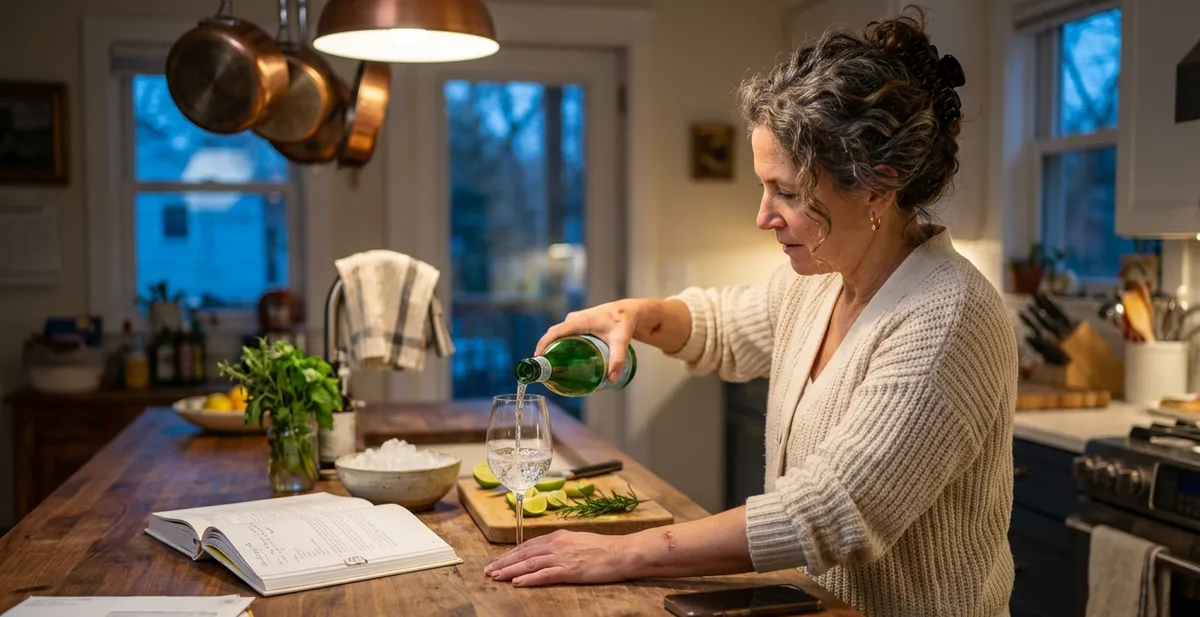
How alcohol interacts with menopause symptoms, what the research says about risk, and practical guidance for making informed choices.
Key Takeaways
- Alcohol hits differently at midlife: changes in body composition, metabolism, and declining estrogen mean the same drink has a larger effect on your body than it did at 30.
- Alcohol is a direct trigger for hot flashes and night sweats, increasing vasomotor symptom risk 3 to 4 times in some studies, likely because it dilates blood vessels and affects temperature regulation.
- Even one drink can disrupt REM sleep, and alcohol's sleep-disrupting effects are amplified during menopause when insomnia is already common-mixing them can create a vicious cycle.
- Alcohol-related breast cancer risk is real but dose-dependent: at 7 or more drinks per week, postmenopausal women have roughly double the risk of hormone-receptor-positive breast cancer compared to non-drinkers, driven by alcohol's effect on estrogen metabolism.
- Menopause creates a window of heightened vulnerability to alcohol's mood effects, including rebound anxiety and depression-not because you're more sensitive to alcohol as a substance, but because your brain chemistry is already in transition.
- Moderate drinking guidelines exist, but "moderation" may feel different during menopause, and there's no shame in reassessing your relationship with alcohol at this stage of life.
The second glass of wine hits differently now.
You might not have noticed the shift at first. The same amount that felt fine at 35 now leaves you flushed, your heart racing a little harder, your sleep fractured by 3 a.m. awakenings you can't explain. Or maybe you've always been a careful drinker, but lately one cocktail brings on a hot flash that lasts an hour. Perhaps you've found yourself thinking: Is it menopause, or am I just not tolerating alcohol anymore?
The answer is: it's menopause. And you're noticing something real.
This is not about judgment, willpower, or whether you should or shouldn't drink. It's about your body actually being different right now. The evidence is clear, the science makes sense, and you deserve to understand what's happening so you can make decisions that feel right for you.
Why Alcohol Hits Harder in Menopause
Menopause reshapes how your body processes alcohol in several overlapping ways.
Body composition changes. Women lose muscle mass and gain fat deposits during midlife, especially around the midsection. Because alcohol is less diluted in fatty tissue than in muscle, the same number of drinks results in higher blood alcohol concentration. A drink that felt mild at 30 can feel significantly stronger at 50, even if nothing else about your drinking changed.
Metabolism slows. Declining [estrogen] during [perimenopause] and menopause slows overall metabolic rate. This includes the speed at which your liver processes and clears alcohol. Studies show that alcohol dehydrogenase (ADH)-the enzyme responsible for metabolizing alcohol-becomes less active as estrogen levels drop. During your reproductive years, estrogen actually suppressed ADH activity at certain points in your cycle, but menopause brings sustained lower estrogen levels, which can paradoxically slow alcohol clearance as you age and your liver function declines overall.
Temperature regulation is already compromised. Your thermoregulatory system is already struggling to maintain stable temperature as [estrogen] falls. Alcohol further disrupts this system by dilating blood vessels-the same mechanism that triggers [hot flashes]. Adding alcohol to an already fragile system is like adding fuel to a fire that's already burning.
Estrogen itself metabolizes alcohol. Higher estrogen in younger years means more available enzymes for alcohol breakdown. With lower estrogen, that metabolic support disappears. Research from the Women's Health Initiative shows that alcohol consumption directly increases circulating estrogen levels in some postmenopausal women, particularly those using menopausal hormone therapy-creating a feedback loop where the alcohol that's harder to metabolize also raises the hormone it's supposed to help break down.
These changes aren't personal failures or signs that you've "lost your tolerance." They're biology.
Alcohol and Hot Flashes
This is the symptom women ask about most: Why does wine (especially red wine) seem to trigger hot flashes?
Alcohol is a [vasomotor symptom] trigger. Here's how:
Alcohol dilates blood vessels near the skin surface, causing blood to rush to your face and neck-that sudden redness and warmth you feel. In the context of menopause, where your body's temperature-regulation system is already misfiring, this vasodilation can tip you into a full hot flash. Your hypothalamus, which regulates body temperature, is hypersensitive right now due to the loss of estrogen's dampening effect. A normal vasodilatory stimulus becomes a noticeable thermoregulatory event.
What does the research show?
Studies consistently find a dose-dependent relationship between alcohol consumption and [hot flashes]. Women who drink 40 grams or more of alcohol per day (roughly 3 standard drinks) report significantly more vasomotor symptoms than non-drinkers. Some studies suggest alcohol increases hot flash risk 3 to 4 times. Even low-to-moderate drinkers report that specific beverages trigger symptoms-and the timing is real. You feel a hot flash within 15 to 20 minutes of drinking, not hours later, because the vasodilation happens immediately.
Interestingly, the relationship between alcohol and hot flashes is complex. A few studies found that current light alcohol use was associated with lower hot flash risk in some perimenopausal women, possibly because women who experience alcohol-triggered flashes naturally avoid it. That's selection bias: women whose bodies react badly to alcohol opt out of drinking, so the drinkers left in the study are those whose flashes weren't triggered. This doesn't mean alcohol is protective. It means alcohol's side effects are self-correcting for many women.
Which drinks are worst?
Red wine is the most common trigger, followed by white wine, then spirits. Beer is typically reported less often, though this may relate to consumption patterns and volume. The culprit isn't the alcohol alone-it's the combination of alcohol plus congeners (byproducts of fermentation that create color and flavor) and histamines in wine, which may amplify the vasodilatory effect.
Some women find that diluting alcohol with water or spacing drinks over several hours lessens the trigger effect. Others find that any amount sets off a cascade. The threshold is individual, and it's worth paying attention to your own pattern.
Alcohol and Sleep in Menopause
You already know alcohol makes you sleepy. So why does it wreck your sleep?
This is one of the most misunderstood effects of alcohol. Yes, alcohol suppresses your central nervous system, which is why you fall asleep faster after a drink. But it does something equally important: it devastates REM (rapid eye movement) sleep-the stage where you dream, consolidate memories, and wake feeling restored.
Alcohol triggers early, frequent awakenings in the second half of the night, often as your body metabolizes the alcohol and your blood alcohol level drops. This rebound wakefulness is worse in women than men, and it's worse in midlife women than younger women, because you're already losing the sleep-protective effects of [estrogen].
[Insomnia] during [perimenopause] and menopause is already extremely common-up to 40% of women in this stage report sleep disturbances. Alcohol, by fragmenting REM sleep and causing middle-of-the-night awakenings, compounds this. A nightcap that feels calming in the moment can leave you waking at 2 a.m., sweating (from night sweats triggered by alcohol and hot flashes), and unable to fall back asleep.
The research: Women who report regular alcohol use, especially moderate-to-heavy consumption, show significantly reduced REM sleep and increased sleep onset latency (the time it takes to fall asleep after lying down). This effect is pronounced in midlife women, where declining estrogen removes a natural sleep buffer. Some studies show that women with even light alcohol consumption during menopause experience worse nighttime awakenings than non-drinking peers.
The irony is brutal: many women drink alcohol because of menopause-related insomnia, not realizing they're making the underlying problem worse.
Alcohol and Mood, Anxiety, and Cognition
[Menopause] is already a time of heightened vulnerability to mood shifts and anxiety. Alcohol makes this worse, in ways that are both immediate and longer-term.
In the short term: Alcohol is a depressant. It suppresses your central nervous system, which means it dampens the very neurotransmitters-serotonin, GABA, glutamate-that are already fluctuating wildly during [menopause]. After the initial sedative effect wears off (usually 4 to 6 hours), there's a rebound. Your nervous system overshoots in the opposite direction, and you experience rebound anxiety or wakefulness or irritability. For a woman already dealing with menopause-related mood changes, this rebound can feel more intense than usual.
In the medium term: Regular alcohol consumption depletes the very neurochemicals you need to feel stable during menopause. Serotonin, dopamine, and GABA are all affected. This isn't weakness. It's biochemistry. Estrogen supports these neurotransmitter systems; when estrogen falls, alcohol further destabilizes them.
Longer-term and structural: Research on alcohol and depression shows that while modest alcohol consumption may have some association with lower depression risk in older adults (likely selection bias, as depressed people avoid alcohol or drink differently), the association flips for regular drinking. Women who drink moderately to heavily have higher rates of depression, and this risk is elevated in midlife women, where the combination of hormonal transition and alcohol's depressant effects creates compounding vulnerability.
Anxiety is similar. Alcohol disrupts the brain's fear-extinction learning-your ability to move past worry. Menopause already heightens threat sensitivity (some of this is adaptive, some isn't). Alcohol interferes with your brain's natural ability to process and release anxiety, leaving you more prone to rumination and panic.
On cognition: The research on alcohol and cognitive aging in women is evolving. Heavy drinking during midlife is associated with faster cognitive decline. Even moderate drinking shows associations with changes in brain volume in some studies. This doesn't mean one glass of wine will affect your memory. It means that if you're already noticing menopause-related brain fog, adding alcohol to the mix can sharpen that symptom.
The Breast Cancer Question
This is the question that stops many conversations: Does alcohol raise breast cancer risk? And if so, by how much?
Yes, it does. But understanding what that means requires looking at the actual numbers, not just the headline.
The evidence: Three major studies have examined this in detail.
The Million Women Study, a UK cohort following over 1.2 million postmenopausal women over an average of 17 years, found that compared with women who never drank, those consuming an additional 10 grams of pure ethanol per day (roughly one standard drink) had a 10% increase in breast cancer risk. For women drinking 7 or more drinks per week, the relative risk of hormone-receptor-positive breast cancer roughly doubled compared to non-drinkers.
The Women's Health Initiative (WHI) Observational Study examined over 80,000 postmenopausal women and found that alcohol consumption was associated with increased circulating estrogen levels-the proposed mechanism linking alcohol to breast cancer. This effect was strongest among women using menopausal hormone therapy, suggesting that alcohol's impact on estrogen may be amplified when external hormones are also present.
The Nurses' Health Study, which has followed women for decades, consistently shows that alcohol consumption, even at moderate levels, is associated with increased breast cancer risk in postmenopausal women. The relationship is dose-dependent: more alcohol equals more risk.
What do the numbers really mean?
For context: the baseline risk of breast cancer in a postmenopausal woman (age 50 to 74) over 10 years is about 2.3%. For a woman drinking 1 drink per day (7 per week), studies estimate this increases to roughly 2.7% to 3.1%-a meaningful increase, but not a certainty.
For women drinking 14 or more drinks per week, some analyses show a two-to-threefold increased risk of certain breast cancer subtypes (lobular carcinoma, which accounts for roughly 15% of all breast cancers).
The mechanism: Alcohol increases circulating estrogen and estrogen metabolites, particularly in postmenopausal women. For hormone-receptor-positive breast cancers (which depend on estrogen to grow), this matters. For other cancer subtypes, the risk is less pronounced.
This doesn't mean you must quit drinking. It means that if you drink, the risk is real and dose-dependent, and that risk may be particularly relevant if you have a family history of breast cancer, or if you're already using hormone therapy.
Important caveat: These are population averages. Your individual risk depends on dozens of factors-family history, BMI, reproductive history, estrogen receptor status of any cancer cells, metabolic health, whether you use HT. None of these studies can predict your personal risk. But they can inform your decision.
Bone Health, Liver, and Cardiovascular Effects During Midlife
Beyond hot flashes and cancer risk, alcohol affects multiple systems that are already changing in menopause.
Bone health: [Estrogen] protects bone density. As [estrogen] falls, bone loss accelerates, putting you at risk for osteoporosis. Alcohol interferes with calcium absorption and impairs bone formation. The combination of low [estrogen] plus alcohol consumption accelerates bone loss. If you have risk factors for osteoporosis (early menopause, family history, low body weight), limiting alcohol becomes more important.
Liver function: Your liver's ability to detoxify is already declining with age. Alcohol stresses this system. While one or two drinks occasionally won't damage a healthy liver, regular drinking during midlife (when liver regeneration slows) has cumulative effects. Women develop alcohol-related liver disease faster than men, at lower consumption levels, partly because they have less of the ADH enzyme to begin with.
Cardiovascular health: The relationship between alcohol and heart health in women is complex. Light drinking has been associated with some cardiovascular benefits in older women, but recent large studies (including Stanford's 2025 reanalysis of moderate drinking research) suggest this benefit is overstated and may not apply to midlife women. For postmenopausal women, heavy drinking clearly increases risk of hypertension, atrial fibrillation, and stroke. Moderate drinking shows mixed effects. The bottom line: alcohol is not a reliable tool for heart health, and any cardiovascular benefit from light drinking is small and uncertain.
What the Research Says: Key Studies
Study 1: "Current Alcohol Use, Hormone Levels, and Hot Flashes in Midlife Women" (2008)
This prospective cohort study of midlife women found that current alcohol consumption was associated with more frequent hot flashes, particularly at higher intake levels (40+ grams per day). The mechanism appeared to involve alcohol's vasodilatory effects and its disruption of temperature regulation in the hypothalamus.
Study 2: "Women's alcohol use in mid-life: Identifying associations between menopause symptoms, drinking behaviour, and mental health" (2025)
This recent UK study examined over 1,000 midlife women and found significant associations between alcohol use, menopause symptom severity (particularly vasomotor and mood symptoms), and mental health outcomes. The study noted that some women naturally reduce alcohol consumption when they realize their menopause symptoms worsen with drinking, suggesting a learned awareness of alcohol's triggering effect.
Study 3: "Alcohol and oestrogen metabolites in postmenopausal women in the Women's Health Initiative Observational Study" (2018)
This mechanistic study demonstrated that alcohol consumption is associated with higher circulating [estrogen] and [estrogen] metabolite levels in postmenopausal women, with effects varying by hormone therapy use. The authors concluded that alcohol's impact on [estrogen] metabolism may explain the observed breast cancer risk association.
Study 4: "Alcoholic beverage consumption and female breast cancer risk: A systematic review and meta-analysis of prospective cohort studies" (2024)
This meta-analysis pooling data from multiple large cohorts found a dose-dependent relationship between alcohol consumption and postmenopausal breast cancer risk, with a 10% increased risk per 10 grams of ethanol daily. The risk was strongest for hormone-receptor-positive tumors.
What Moderation Actually Looks Like
Current US guidelines define moderate drinking for women as no more than one drink per day. That's 12 ounces of beer, 5 ounces of wine, or 1.5 ounces of spirits.
But in the context of menopause, "moderation" becomes a more nuanced question.
The guideline baseline: The US Dietary Guidelines for Americans recommend that women consume no more than one drink per day if they choose to drink. The CDC offers the same definition. The UK's Chief Medical Officer recommends no more than 14 units (roughly 14 drinks) per week, with spread across multiple days.
These guidelines are derived from research on all-cause mortality and major disease risk. But they weren't designed specifically for midlife women navigating menopause, and they don't account for symptom-specific effects (hot flashes, sleep disruption) that happen at lower levels.
What the research suggests for menopause: If your goal is to minimize hot flashes and sleep disruption, the evidence suggests that 2 or fewer drinks per week-about 1 drink every 3 to 4 days-may feel more comfortable than daily drinking. Some women find that avoiding alcohol completely during certain windows (like the week before their period, or during stress) helps them sleep better.
The practical frame: Moderation isn't a fixed number. It's an honest assessment of:
- Do you notice your hot flashes get worse when you drink?
- Does alcohol fragment your sleep, leaving you exhausted the next day?
- Are you drinking to manage anxiety or mood, rather than because you genuinely want to?
- How much of your weekly alcohol comes from "just one glass" that turns into three?
- If you cut back or quit for two weeks, do you sleep better, feel more stable?
These questions matter more than the number on a guideline.
Practical Steps You Can Take This Week
If you're thinking about adjusting your relationship with alcohol during menopause, here are concrete, non-preachy steps:
Track without judgment. For one week, write down what you drink, when, and how you feel the next day. Note your sleep quality (did you wake at 3 a.m.?), hot flashes, mood, and energy. You don't need an app; a notebook works fine. The goal isn't to shame yourself; it's to gather data about your own body. You might find alcohol affects you differently than you thought, or not at all.
Identify your specific trigger. If alcohol does trigger hot flashes for you, note which drinks do it most (red wine, spirits, beer?). Some women find they can tolerate one type better than another. Some find that eating food with the drink, or spacing drinks out, reduces symptoms. Others find any amount is a hard no.
Create alcohol-free days. Commit to 3 to 4 alcohol-free days each week. This serves two purposes: it gives your liver and sleep cycles a break, and it helps you notice whether you're drinking out of habit or genuine preference. If you feel anxious on alcohol-free nights, that's data worth exploring with a doctor.
Swap, don't subtract (if you want to). If you enjoy the ritual of a drink but want to reduce alcohol's impact, try zero-proof alternatives. There are now many well-made NA wines, spirits, and cocktails. Or try sparkling water with fresh fruit. The point isn't deprivation; it's finding what actually serves you.
Watch for "solution drinking." Are you reaching for alcohol to manage menopause symptoms (anxiety, sleeplessness, irritability)? This is understandable-alcohol works quickly-but it backfires because it worsens the underlying symptoms over time. If you notice this pattern, talk to your doctor about other options (therapy, medication, lifestyle changes) that address the root issue.
If You're Thinking About Quitting or Cutting Back
First: this is brave, and it matters.
Second: there's no moral dimension here. Quitting or cutting back alcohol during menopause isn't about willpower or virtue. It's about aligning your choices with your body's actual needs right now.
How to know if this might be worth exploring:
You consistently wake up at 3 or 4 a.m. after drinking, and the middle-of-the-night awakenings are among your worst menopause symptoms.
You've noticed that alcohol reliably triggers your hot flashes, and you're tired of managing this.
You're drinking more often or in larger amounts than you intended, and you feel anxious on days when you don't drink. (This is worth discussing with a doctor.)
You're using alcohol as your primary tool for managing menopause-related anxiety or sleep, and you're ready to try something else.
Your doctor has mentioned concerns about your drinking in the context of your health (breast cancer risk, liver function, bone health).
Support resources that don't assume shame:
NIAAA Rethinking Drinking (https://rethinkingdrinking.niaaa.nih.gov/) offers self-assessment tools and reduction strategies, not just abstinence.
SMART Recovery (https://www.smartrecovery.org/) focuses on self-empowerment and science-based approaches.
Tempest (https://www.tempest.co/) is an online community and app designed for people reducing or quitting alcohol without traditional 12-step framing.
Your doctor or a therapist can discuss medication options (naltrexone, acamprosate) that reduce cravings and make reduction feel easier.
A note on problem drinking in midlife women:
Alcohol-related issues among women in midlife are rising. Women in this age group are more likely to develop alcohol use disorder than other demographics, partly because midlife often brings job stress, relationship transitions, and menopause-related mood changes that feel "solvable" with a drink. But it's not, and women often develop problematic drinking patterns before recognizing them, because midlife women tend not to match the stereotype of alcohol problems (younger, male, obvious dysfunction).
If you find yourself drinking daily, feeling anxious when you can't drink, experiencing blackouts, or hiding your drinking, these are signs worth talking about with a doctor. This isn't judgment. It's evidence that your nervous system needs support.
When to Talk to Your Doctor
Bring up alcohol and menopause in your next conversation if:
- You notice that alcohol triggers your hot flashes or night sweats, and you want strategies to manage both.
- Your sleep has become so fragmented that you're desperate for solutions, and alcohol has become part of your routine.
- You're using alcohol as your primary tool for managing menopause-related anxiety or mood changes.
- You have a family history of breast cancer, and you're rethinking your drinking habits.
- You're considering cutting back or quitting, and you want support or medication to make that easier.
- You're already using menopausal hormone therapy, and you want to understand how alcohol interactions might affect your breast cancer risk.
- You've noticed your drinking patterns have changed during menopause (more frequent, larger amounts), and you're concerned.
- You're having trouble with alcohol dependency or frequent blackouts.
Your doctor can:
- Help you assess your personal breast cancer risk based on your full health picture, not just alcohol alone.
- Discuss whether you're a candidate for medication to reduce cravings (if you're cutting back or quitting).
- Rule out other causes of your hot flashes, sleep problems, or mood changes that might need separate treatment.
- Provide referrals to therapists or support groups familiar with alcohol and menopause.
- Discuss whether your current HT or other medications interact with alcohol in ways that matter for you.
How Menoa Can Help
Menoa's menopause knowledge base has detailed articles on managing [hot flashes], improving [insomnia] during menopause, supporting your mood through this transition, and understanding your breast cancer risk factors.
We also have tools to help you track your symptoms and identify your personal triggers-including how alcohol affects your body, not just women in general.
If you're thinking about making changes to your drinking, you can use Menoa to:
- Log your sleep quality, hot flashes, and mood day by day, then compare weeks when you drank versus weeks when you didn't.
- Learn about non-alcohol strategies for managing anxiety, insomnia, and vasomotor symptoms.
- Get evidence-based information about HT and other treatment options if you want to address your menopause symptoms more directly.
- Connect with a community of women navigating these same questions.
Frequently Asked Questions
Q: I love wine. Do I have to quit completely?
A: No. Some women find they can drink moderately without significant symptom disruption. Others notice even one drink triggers hot flashes or wrecks their sleep. The key is noticing what's true for your body. If wine genuinely doesn't trigger your symptoms, and you're comfortable with the breast cancer risk at your consumption level, moderate drinking is possible. If it consistently triggers flashes or sleep problems, cutting back makes sense-not because of rules, but because you'll feel better.
Q: Is there a "safe" amount of alcohol during menopause?
A: For breast cancer risk, the research suggests that the safest amount is zero, but risk increases gradually with consumption. For hot flashes and sleep, zero is also safest, but many women tolerate occasional drinks. The "safest" amount is individual and depends on your symptoms, your breast cancer risk factors, and your personal priorities. There's no one-size-fits-all answer.
Q: Why does red wine trigger hot flashes more than other drinks?
A: Red wine contains both alcohol (the vasodilator) and congeners and histamines (fermentation byproducts that may amplify the effect). White wine, beer, and spirits don't contain the same levels of these compounds. If you want to drink, some women find spirits or beer tolerable while red wine isn't. The vasodilation from alcohol itself is the main mechanism, though.
Q: Will quitting alcohol improve my hot flashes?
A: If alcohol is a trigger for you, yes-often noticeably within a week or two. If it's not a significant trigger for you, quitting won't help with hot flashes specifically. But it may help with sleep, mood stability, and overall energy, which often improves how manageable hot flashes feel.
Q: I'm on hormone therapy. Does alcohol interact with HT?
A: Alcohol increases circulating estrogen levels, and HT already does that. The combination means your estrogen may be higher than from HT alone, which could increase breast cancer risk modestly. It's worth discussing your specific situation with your doctor, especially if you're considering long-term HT.
Q: Can I drink alcohol if I'm trying to avoid hot flashes through lifestyle changes?
A: You can, but alcohol works against you. If your goal is to minimize hot flashes, removing alcohol (or minimizing it) is one of the most effective changes you can make. It's a direct lever. That doesn't mean you can never have a drink, but it's honest to say alcohol and avoiding hot flashes are in tension.
Q: What if I drink for my anxiety or sleep?
A: This is the most important question. Alcohol provides immediate relief-it dulls anxiety and helps you fall asleep-but it worsens the underlying problem within hours. You'll find yourself needing it more often to get the same effect. Talking to your doctor about other options (therapy, medication, lifestyle changes) is worth doing sooner rather than later. Alcohol can become a crutch that actually makes anxiety and insomnia worse over time, particularly during menopause when your neurochemistry is already in flux.
Sources
BBC News and British Journal of Cancer. "Alcohol and oestrogen metabolites in postmenopausal women in the Women's Health Initiative Observational Study." Nature, 2018. https://www.nature.com/articles/bjc2017419
Breast Cancer Prevention Partners. "Alcohol." https://www.bcpp.org/resource/alcohol-2/
CDC. "About Moderate Alcohol Use." https://www.cdc.gov/alcohol/about-alcohol-use/moderate-alcohol-use.html
Davies, E.L., Burton, S., Monk, R., Murdoch, E., Pearce, E., & Rose, A.K. (2025). Women's alcohol use in mid-life: Identifying associations between menopause symptoms, drinking behaviour, and mental health. Sage Open. https://journals.sagepub.com/doi/10.1177/17455057251359767
Dietary Guidelines for Americans. "Part D. Chapter 11: Alcoholic Beverages." https://www.dietaryguidelines.gov/sites/default/files/2020-07/PartD_Ch11_AlcoholicBev_first-print.pdf
National Institute on Alcohol Abuse and Alcoholism (NIAAA). "What Are U.S. Alcohol & Drinking Guidelines?" Rethinking Drinking. https://rethinkingdrinking.niaaa.nih.gov/how-much-too-much/what-are-us-guidelines-drinking
North American Menopause Society. Position statements on menopause and nonhormone therapy. https://menopause.org/professional-resources/position-statements
Nurses' Health Study. Various publications on alcohol and breast cancer in postmenopausal women.
ScienceDirect. "Alcohol use at midlife and in menopause: a narrative review." 2024. https://www.sciencedirect.com/science/article/abs/pii/S0378512224001877
Sohi, H., et al. (2024). "Alcoholic beverage consumption and female breast cancer risk: A systematic review and meta-analysis of prospective cohort studies." Alcohol, Clinical and Experimental Research. https://onlinelibrary.wiley.com/doi/10.1111/acer.15493
Vaya, A., et al. "Alcohol Consumption and Risk of Postmenopausal Breast Cancer by Subtype: The Women's Health Initiative Observational Study." Journal of the National Cancer Institute, 2010. https://pmc.ncbi.nlm.nih.gov/articles/PMC2943525/
Women's Health Concern. "Alcohol and menopause." Fact Sheet, 2025. https://www.womens-health-concern.org/wp-content/uploads/2025/07/34-NEW-WHC-FACTSHEET-Alcohol-and-Menopause-JULY2025-A.pdf
World Health Organization. Guidelines on alcohol and cancer risk.
More articles
 Nutrition & Lifestyle
Gut Health and Menopause: Microbiome Changes and How to Support Digestion
Your gut microbiome changes during menopause, affecting digestion, weight, and even hormone levels. Learn how the estrobolome works and what you can do to support your gut health.
 Nutrition & Lifestyle
Sexual Wellness After Menopause: Reclaiming Intimacy and Pleasure
Sexual changes during menopause are real, but they're not permanent. Learn what's happening in your body, why it's happening, and practical solutions to reclaim intimacy and pleasure.