Gut Health and Menopause: Microbiome Changes and How to Support Digestion
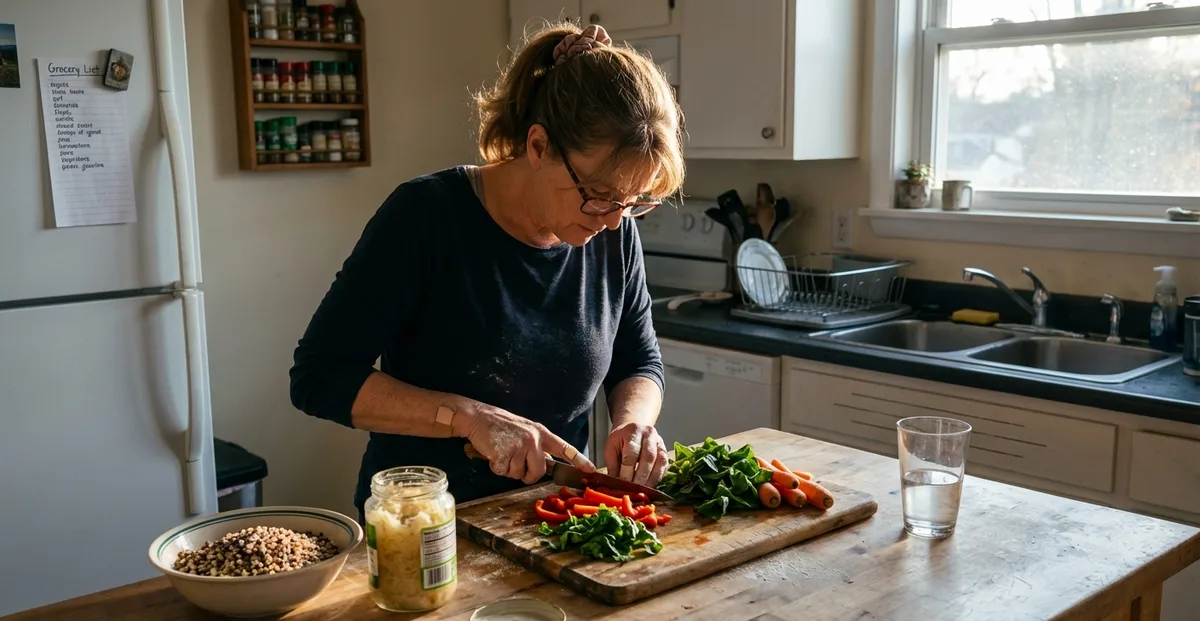
Your gut microbiome changes during menopause, affecting digestion, weight, and even hormone levels. Learn how the estrobolome works and what you can do to support your gut health.
Key Takeaways
- Your gut microbiome changes significantly during menopause due to declining estrogen and progesterone, affecting your ability to digest food and absorb nutrients.
- The estrobolome, a collection of gut bacteria that process estrogen, becomes less diverse when hormone levels drop, which can intensify digestive symptoms and menopause symptoms overall.
- Bloating, constipation, gas, and IBS flares are common during perimenopause and menopause, affecting 94% of women in some studies.
- Fiber-rich foods, fermented foods, regular movement, and stress management support your microbiome better than probiotics alone, though targeted probiotics may help.
- Research shows mixed results on probiotic supplements, but evidence supports dietary changes and lifestyle interventions for digestive relief.
Your Gut Doesn't Work the Same Way Anymore, and That's Real
If you've noticed that your stomach feels off during menopause, you're not imagining it. Bloating that hits after lunch, constipation, unexpected gas, or the return of IBS symptoms that seemed dormant for years. These aren't character flaws or something you're doing wrong. They're happening because your gut microbiome is undergoing major changes driven by the same hormonal shifts that bring hot flashes and mood swings.
In fact, 94% of women in a study of perimenopausal and menopausal women reported digestive health symptoms, with bloating affecting 77%, constipation 54%, stomach pain 50%, and acid reflux 49%. These numbers aren't small. What you're experiencing is biochemically real and increasingly recognized by researchers and clinicians as a central part of the menopause picture.
The connection between your gut bacteria and your hormones is so direct that scientists have named it: the estrobolome. Understanding what's happening in your gut during this transition can help you move from managing symptoms to actually supporting your digestive health through menopause and beyond.
The Estrobolome: Your Gut's Role in Estrogen Balance
At its core, the estrobolome is straightforward: it's a collection of gut bacteria that produce enzymes, particularly one called beta-glucuronidase, responsible for processing estrogen. Your gut bacteria don't just digest food. They actively regulate how much estrogen gets reabsorbed into your bloodstream after your liver processes and prepares it for excretion.
Here's the cycle: estrogen moves through your liver, gets conjugated (chemically bound) with other compounds, travels into your digestive tract, and then encounters your gut bacteria. Those bacteria contain beta-glucuronidase, which deconjugates the estrogen, essentially freeing it up to be reabsorbed. This is healthy and normal. Your body needs this recycling system.
But when estrogen levels fall during menopause, something shifts. The bacterial composition of your gut changes in response. Research shows that the relative abundance of beneficial bacteria such as Lactobacillus and Bifidobacteria drops significantly while harmful bacteria like Enterobacter increase. Your microbiome becomes less diverse overall, and the enzymes needed to properly process remaining estrogen become scarcer.
This creates a compounding problem. Your body is producing less estrogen, your gut bacteria can't process what little remains as efficiently, and the symptoms associated with low estrogen, including digestive distress, intensify. The estrobolome doesn't fail overnight. It erodes gradually, and your digestive system feels every step of that decline.
What Actually Changes in Your Microbiome During Menopause
The microbiome shift during menopause isn't subtle. Research comparing premenopausal and postmenopausal women shows measurable, consistent changes in bacterial communities.
Your gut loses diversity. A diverse microbiome is a resilient one. It can handle stress, dietary changes, and disruptions better. During menopause, bacterial diversity drops. Levels of Firmicutes and Ruminococcus decrease while Butyricimonas, Dorea, Prevotella, Sutterella, and Bacteroides increase. For most women, the postmenopausal microbiome becomes less diverse and metabolically different from what it was before.
Your microbiome becomes more like a male microbiome. This isn't metaphorical. Research indicates that after menopause, the composition of your gut bacteria shifts toward patterns more similar to men's. This happens because the hormones that shaped your microbiome for decades are now largely absent. Your gut bacteria respond to the hormonal environment, and when that changes, the entire bacterial ecosystem reorganizes.
Your beneficial bacteria decrease. Lactobacillus and Bifidobacteria, the bacteria often labeled "good" or "friendly," are significantly reduced during the menopausal transition. These bacteria produce short-chain fatty acids like butyrate, which feed the cells lining your digestive tract and contribute to overall gut health. When these bacteria decline, your gut lining becomes more vulnerable and inflamed.
These changes happen gradually through perimenopause and into postmenopause, which is why many women describe their digestion as "never quite the same" after menopause begins. It genuinely isn't.
Why Your Stomach Feels Worse: The Digestive Symptoms of Menopause
The changes in your microbiome and estrogen don't exist in isolation. They have direct, uncomfortable consequences for how you digest food.
Slower digestion and constipation top the list. Estrogen and progesterone both influence gut motility, the muscular contractions that move food through your digestive system. When these hormones decline, the entire process slows. Food spends more time in your intestines. More water gets reabsorbed, which is why constipation becomes so much more common during menopause. If you were never constipated before, this can feel shocking.
Bloating follows naturally from slow digestion. When food moves slowly, gases accumulate. Bacteria have more time to ferment partially digested food. The result is the bloating that many women describe as their most annoying menopause symptom. It's not vanity. It's real abdominal distention caused by gas, slow movement, and bacterial fermentation.
IBS symptoms often resurface or begin for the first time. Women with a history of IBS frequently report that their symptoms flare during the menopausal transition. Those without IBS sometimes experience it for the first time. The loss of protective estrogen, the shift in bacterial communities, and the reduction in butyrate-producing bacteria all contribute to increased intestinal permeability and visceral sensitivity.
Food sensitivities emerge or worsen. When your gut lining becomes more permeable and your microbiome is less diverse, you become more vulnerable to reactions from foods you previously tolerated. Dairy, gluten, certain raw vegetables, or foods high in FODMAPs (fermentable carbohydrates) may suddenly trigger bloating, pain, or changes in bowel habits.
Acid reflux and heartburn can develop or worsen. Delayed gastric emptying, combined with the effects of hormonal changes on the lower esophageal sphincter, can trigger or exacerbate GERD symptoms during menopause.
These aren't separate problems. They're all expressions of the same underlying shift: your gut microbiome and its ability to support healthy digestion are being reorganized by hormonal change.
The Gut-Brain-Hormone Axis: It's Not Just Your Stomach
Your digestion doesn't exist in a bubble. Your gut bacteria communicate directly with your brain through the vagus nerve, influence your immune system, and participate in the production of neurotransmitters like serotonin and GABA. During menopause, when your microbiome is destabilized, these communication pathways suffer.
This is why digestive problems during menopause so often accompany brain fog, anxiety, mood swings, and sleep disruption. A compromised microbiome produces less short-chain fatty acids, which means less nourishment for the cells of your gut lining and less signaling to your brain about satiety and wellbeing. Your microbiome also produces less neurotransmitter precursors. About 95% of your body's serotonin is produced or influenced by your gut, so when your microbiome shifts, so can your mood.
The inflammation that comes with a leaky gut doesn't stay local to your intestines. It enters your bloodstream and can trigger systemic inflammatory markers. Research has connected dysbiosis (an imbalanced microbiome) during menopause to higher waist circumference, elevated blood pressure, and increased cardiometabolic risk. Your digestive troubles aren't superficial. They connect to your overall cardiometabolic health.
Additionally, stress and poor sleep worsen your microbiome, which then worsens your stress and sleep. During a time when menopause itself is disrupting sleep and triggering anxiety, this vicious cycle can feel impossible to break. Addressing gut health becomes a way of interrupting that cycle.
What You Eat Matters Far More Than Most Probiotic Supplements
Let's be direct: the probiotic supplement industry has inflated expectations. The research on probiotic supplements during menopause exists but is mixed. A meta-analysis examining probiotics versus placebo did show large effects on menopausal symptoms, vasomotor symptoms like hot flashes, psychological symptoms, and vaginal health. However, the same analysis noted that the included studies had a high risk of bias, and many were small or industry-funded.
More recent research on whether oral probiotic supplementation effectively treats menopause-related dysbiosis emphasizes that further rigorous research is needed. The honest answer is: we don't know yet if probiotic supplements will reliably help you.
What we do know is that diet shapes your microbiome more powerfully than any supplement. If you want to support your estrobolome and your digestion during menopause, start with food.
Fiber is the foundation. Your beneficial bacteria, particularly Lactobacillus and Bifidobacteria, feed on fiber, especially soluble fiber. When you eat fiber, those bacteria ferment it and produce short-chain fatty acids like butyrate, which nourishes your gut lining and reduces inflammation. The recommendation is at least 30 grams of fiber daily, but add it gradually over weeks to avoid worsening bloating initially as your microbiome adjusts.
Good fiber sources include ground flaxseeds, oats, beans, lentils, whole grains, Jerusalem artichokes, onions, garlic, leeks, bananas, and raspberries. These aren't exotic. They're affordable whole foods available at any grocery store. The key is consistency and variety. Your microbiome thrives on dietary diversity, so rotating your fiber sources matters more than perfection with any single food.
Polyphenol-rich foods directly feed your beneficial bacteria. Polyphenols are plant compounds with antidepressant, anti-inflammatory, and antioxidant properties. They pass through your stomach largely unabsorbed and feed your gut bacteria. Foods rich in polyphenols include dark chocolate (aim for 70% cacao or higher), berries, nuts, green tea, red wine, and extra virgin olive oil. These are small additions that create measurable shifts in your microbiome.
A rainbow of plants supports microbial diversity. The more different plant species you eat, the more diverse your microbiome becomes. Try to eat fruits and vegetables of different colors throughout the week. Red tomatoes, orange sweet potatoes, yellow squash, green leafy vegetables, purple cabbage, white cauliflower, and brown mushrooms all contain different phytonutrients that feed different bacterial strains.
Fermented foods provide live bacteria and probiotic-like compounds. Yogurt with live active cultures, kefir, sauerkraut, kimchi, miso, tempeh, and kombucha all contain living bacteria or compounds that support your microbiome. Unlike probiotic supplements, which are hit-or-miss in terms of surviving your digestive system, the bacteria in fermented foods are numerous and diverse. You don't need to eat fermented foods at every meal, but including them regularly seems sensible.
The balance matters too. Protein supports your microbiome. Fat (especially healthy fats like olive oil, avocado, and fatty fish) is needed for hormone production and nutrient absorption. You're not just feeding your bacteria. You're nourishing your whole self.
Probiotics and Prebiotics: What the Evidence Actually Shows
If you're considering a probiotic supplement, understand what the current research says.
Specific strains show promise for specific problems. Lactobacillus rhamnosus GR-1 and Lactobacillus reuteri RC-14, taken orally for 14 days, restored appropriate vaginal flora in postmenopausal women and reduced colonization by potential pathogens and yeasts. If vaginal health is your primary concern, these strains have decent evidence. For general digestive symptoms, the evidence is fuzzier.
A probiotic formula with beta-glucuronidase activity showed promise in a randomized, double-blind, placebo-controlled trial. Women who took a probiotic formula specifically designed to maintain beta-glucuronidase activity maintained serum estrogen levels over time, while estrogen levels significantly decreased in the placebo group. This suggests that a probiotic designed to support your estrobolome function might help preserve circulating estrogen, but this research is recent and limited to one formula.
Most studies are small and industry-funded. The meta-analyses acknowledging positive effects on menopausal symptoms also acknowledge the high risk of bias in the literature. This doesn't mean probiotics don't work. It means we need better research to know who benefits, which strains matter, and at what doses.
Prebiotics (food for beneficial bacteria) may be more important than probiotics themselves. Prebiotics are types of fiber that specifically feed beneficial bacteria. Inulin, chicory root, partially hydrolyzed guar gum, and other prebiotic fibers have received less attention in marketing but more consistent support in research. If you eat fiber and fermented foods, you're getting natural prebiotics without buying supplements.
Synbiotics (probiotic and prebiotic combinations) are a newer approach that pairs beneficial bacteria with the specific fiber they need to flourish. The theory is sound. The research is still developing. If you try a synbiotic, look for one with transparent labeling about CFU counts and strain names, and give it at least 4 weeks before evaluating whether it's helping.
Fermented Foods Versus Supplements: The Case for Whole Foods
Why include fermented foods instead of just taking a probiotic?
Fermented foods contain diverse bacterial populations. A serving of sauerkraut or kimchi contains dozens of bacterial strains and species. A probiotic supplement typically contains 5 to 10 strains. Diversity is protective for your microbiome.
The bacteria in fermented foods are already established. They've survived the fermentation process and come from living cultures actively maintained. Many probiotic supplement bacteria don't survive your stomach acid and digestive enzymes well.
Fermented foods provide other nutrients. Sauerkraut gives you vitamin K2, produced by the fermenting bacteria. Miso provides amino acids and enzymes. Yogurt provides protein and calcium. You're getting more than just bacteria.
You can make fermented foods inexpensively at home. Cabbage, salt, and a jar become sauerkraut in two weeks. This isn't complicated.
That said, if you can't tolerate fermented foods due to histamine sensitivity or other reasons, a probiotic supplement designed for your specific symptom (vaginal health, IBS, general digestive support) is reasonable to try, particularly if the supplement specifies strains and CFU counts clearly.
The Practical Dietary Strategy: Build, Don't Replace
Here's what evidence and clinical experience suggest actually works during menopause: gradual dietary addition, not drastic replacement.
Start with what you eat now. Don't immediately cut out foods you enjoy. Instead, add fiber-rich, plant-forward foods.
Add fiber gradually. Jump from 15 grams to 35 grams daily in a week and your bloating will worsen. Add 2 to 3 grams of fiber per day over the course of 4 to 6 weeks. Your microbiota needs time to adapt to processing more fiber.
Include at least one fermented food daily. A small serving of sauerkraut with lunch, a yogurt as a snack, a spoonful of miso in your soup. Consistency matters more than quantity.
Eat plants with variety. Aim for 30 different plant species per week if possible. This includes grains, beans, vegetables, fruits, nuts, and seeds. Track for a week to see what you actually hit. Most people are closer to 15 species.
Stay hydrated. Increased fiber without adequate water can worsen constipation. Aim for half your body weight in ounces of water daily, minimum. If you're 150 pounds, that's 75 ounces (about 2.2 liters).
Adjust meal timing and size if bloating is severe. Instead of three large meals, eat four to five smaller meals. Sit upright after eating to give your stomach room. Chew thoroughly. Your saliva begins carbohydrate digestion, and chewing breaks food into smaller pieces so your stomach doesn't have to work as hard.
Movement: The Free and Underutilized Digestive Medicine
Physical activity directly improves gut motility and bacterial diversity. Regular movement, particularly 30 minutes of moderate activity like brisk walking, swimming, or cycling most days of the week, improves bowel regularity and reduces bloating by increasing the speed at which food moves through your gut.
Gentle yoga, particularly poses that involve twisting or abdominal work, can directly stimulate digestion. Walking after meals, a practice called "postprandial walking," improves glucose control and digestion.
More broadly, regular movement reduces stress hormones like cortisol, which have direct effects on your microbiome. When you're chronically stressed, your gut bacteria shift toward more inflammatory species. When you move regularly and manage stress, your microbiota responds by becoming more protective and diverse.
This doesn't require a gym membership. A 20-minute walk is enough. Consistency matters more than intensity.
Sleep and Stress: The Overlooked Pillars of Microbiome Health
Your microbiome has a circadian rhythm. When you sleep poorly, your microbiota becomes dysbiotic. Research shows that insufficient sleep reduces bacterial diversity and increases inflammatory species.
Aim for 7 to 9 hours of sleep nightly. If menopause-related night sweats are disrupting your sleep, addressing those (whether through HRT, cooling strategies, or other approaches) indirectly improves your microbiome.
Stress is similarly powerful. Chronic stress increases cortisol and shifts your bacteria toward Firmicutes and away from Bacteroidetes, a change associated with reduced microbiome diversity. Meditation, deep breathing, yoga, or time in nature all reduce stress signaling and allow your microbiota to stabilize.
Neither sleep nor stress management will fix a poor diet. But neither will diet alone if you're sleeping 5 hours per night and constantly anxious. These work together.
What the Research Says
The scientific consensus on gut health and menopause, based on recent literature, is surprisingly consistent:
The microbiome changes during menopause. Multiple studies confirm this. It's not variable or individual. It happens.
Estrogen and progesterone directly influence gut bacteria composition. The mechanism is clear, if not completely understood. Hormones shape your microbiota; declining hormones reshape it.
Microbiome changes contribute to digestive symptoms and may contribute to other menopause symptoms. The connection between dysbiosis and bloating, constipation, and IBS flares is well established. The links to mood, bone health, and cardiometabolic health are less definitive but increasingly supported.
Diet influences the microbiome more powerfully than supplements. While research on specific probiotic strains for menopause is mixed and often biased, research on the effects of dietary fiber, fermented foods, and plant diversity on the microbiome is robust and consistent.
More research is needed on targeted interventions. Probiotic supplements for menopause, hormone replacement therapy combined with dietary intervention, and other specific approaches need more rigorous, well-funded, independent research.
Practical Steps You Can Take Today
You don't need to overhaul your life. These are achievable, immediate actions:
Start tracking your fiber. Use an app for three days to see where you currently sit. Most women eat 12 to 15 grams daily. Know your baseline.
Add one high-fiber food. Oats, lentils, beans, or ground flaxseed. One addition. Add it to your usual meals this week.
Commit to one fermented food. Buy a small jar of sauerkraut, miso, or plain yogurt. Use it once daily for one week.
Walk after dinner. Even a 10-minute walk improves digestion and bloating. Commit to one week.
Drink more water. Calculate half your body weight in ounces and work toward that over the course of two weeks.
These five actions aren't dramatic. They're not a complete solution. But they're evidence-based and immediately within your control. Small, consistent changes compound.
When to Talk to Your Doctor
Digestive symptoms during menopause are common, but they're not inevitable, and they deserve attention if they're affecting your quality of life.
See your healthcare provider if you have constipation lasting more than a few weeks despite dietary changes, new onset IBS or IBS-like symptoms you can't trace to a specific food trigger, persistent bloating that worsens over time, signs of bleeding or blood in your stool, or unintentional weight loss alongside digestive symptoms.
Bring this up proactively even if you don't have red flag symptoms. Many women don't mention digestive changes to their doctors, assuming menopause-related digestive distress is just something to live with. It's not. Your healthcare provider can rule out other conditions, suggest targeted interventions, and refer you to a dietitian or gastroenterologist if needed.
Consider asking about HRT specifically in the context of digestive symptoms. Hormone replacement therapy can improve microbiome diversity and reduce digestive symptoms in some women, though it's not a first-line treatment for bloating alone.
How Menoa Can Help
At Menoa, we recognize that menopause is deeply interconnected. Your digestion doesn't improve in isolation. Your microbiome doesn't shift because of a supplement alone. It responds to everything: your diet, your movement, your stress, your sleep, your hormonal environment.
Menoa provides the context you need to make these connections. Our glossary helps you understand the biology. Our articles ground recommendations in evidence. Our nutrition and lifestyle category gives you concrete guidance, tested by women living through menopause.
The best approach to menopause symptoms is informed, intentional, and integrated. Menoa is designed to support exactly that approach.
Frequently Asked Questions
Q: Do I need to take a probiotic supplement during menopause?
A: Not necessarily. Evidence for probiotic supplements in menopause is mixed. A high-fiber diet with fermented foods supports your microbiome more reliably than supplements alone. If you try a probiotic, choose one with transparent labeling, specific strains (not just generic "probiotic blend"), and give it 4 to 8 weeks. If it's not helping, you've learned something about yourself and can redirect your effort.
Q: Can I reverse my microbiome changes once menopause has happened?
A: Your microbiome is responsive to diet and lifestyle changes at any age. Some research suggests that HRT can partly restore premenopausal microbiome characteristics. Regardless of whether you take HRT, dietary changes, regular movement, stress management, and sleep improvement all shift your microbiota within weeks to months. You won't return to your exact premenopausal microbiome, but you can create a healthier, more diverse microbiota that supports your current life.
Q: Is bloating during menopause permanent?
A: Bloating often improves significantly with dietary and lifestyle changes. Increasing fiber, fermented foods, movement, and water intake reduces bloating for many women within 2 to 4 weeks. If you have persistent bloating despite these changes, ask your doctor about testing for food intolerances, SIBO (small intestinal bacterial overgrowth), or other treatable conditions. Bloating isn't something you must accept as your new normal.
Sources
-
Spotlight on the Gut Microbiome in Menopause: Current Insights. PMC National Center for Biotechnology Information. https://pmc.ncbi.nlm.nih.gov/articles/PMC9379122/
-
Probiotics and Prebiotics: Any Role in Menopause-Related Diseases? PMC National Center for Biotechnology Information. https://pmc.ncbi.nlm.nih.gov/articles/PMC9974675/
-
Investigating the effects of probiotics during the menopause transition: A systematic review & meta-analysis. PubMed. https://pubmed.ncbi.nlm.nih.gov/40639456/
-
The gut microbiota in menopause: Is there a role for prebiotic and probiotic solutions? PMC National Center for Biotechnology Information. https://pmc.ncbi.nlm.nih.gov/articles/PMC12209548/
-
Digestive Health Issues More Common During Perimenopause and Menopause. The Menopause Society. https://menopause.org/press-releases/digestive-health-issues-more-common-during-perimenopause-and-menopause
-
Gut microbiota has the potential to improve health of menopausal women by regulating estrogen. PMC National Center for Biotechnology Information. https://pmc.ncbi.nlm.nih.gov/articles/PMC12183514/
-
Supplementation with a Probiotic Formula Having Beta-Glucuronidase Activity Modulates Serum Estrogen Levels in Healthy Peri- and Postmenopausal Women. PubMed. https://pubmed.ncbi.nlm.nih.gov/38742994/
-
The Estrobolome: How Your Gut Influences Menopause and Your Thyroid. Paloma Health. https://www.palomahealth.com/learn/estrobolome-gut-influences-menopause-thyroid
Terms in this article
A hormone produced primarily by your ovaries that regulates your menstrual cycle, supports bone and heart health, and affects mood, skin, and vaginal tissue. Estrogen levels decline sharply during menopause, causing many symptoms.
A hormone produced primarily by the ovaries that regulates the menstrual cycle, supports mood and sleep, and protects the uterine lining; levels decline during perimenopause and menopause.
The transitional period leading up to menopause, typically lasting 4 to 8 years, when your ovaries gradually produce less estrogen and progesterone, causing irregular periods and a range of symptoms. Perimenopause ends when you've gone 12 consecutive months without a period.
Sudden, intense waves of heat that spread through the upper body, often with flushing, sweating, and a racing heart. Hot flashes affect around 80% of women during menopause and can last anywhere from a few months to over a decade.
Hormone replacement therapy: estrogen, usually with progesterone, taken to replace the hormones your body stops making. It is the most effective treatment for moderate to severe menopause symptoms.
More articles
 Nutrition & Lifestyle
Sexual Wellness After Menopause: Reclaiming Intimacy and Pleasure
Sexual changes during menopause are real, but they're not permanent. Learn what's happening in your body, why it's happening, and practical solutions to reclaim intimacy and pleasure.
 Nutrition & Lifestyle
Mindfulness and Meditation for Menopause: Simple Practices That Work
Evidence-based mindfulness and meditation practices for menopause. How MBSR reduces hot flash distress, improves sleep, and helps manage anxiety.